Quick answer: The closest natural alternative to Pond's Cold Cream is a cleansing balm made from plant oils and beeswax, with no mineral oil, no added water, and no fragrance. Pond's is a mineral oil and water emulsion thickened with wax; the original cold cream, centuries before Pond's, was simply plant oil, beeswax, and rose water. A botanical cleansing balm is the closest thing on a modern shelf to that original idea. Below: what is actually in the jar, what it does well, and how a garden-grown balm compares.
Few products have sat on as many dressers as Pond's Cold Cream. The company traces back to 1846, when a pharmacist named Theron T. Pond began selling a witch hazel extract in Utica, New York. By the early twentieth century the brand had turned to face care, and its Cold Cream became the jar a few generations of American women reached for at the end of the day. Mothers handed the habit to daughters. Plenty of people searching for it today are really searching for the ritual: scoop, massage, tissue off, done.
So if you grew up with that jar, nothing here is an argument against it. This post is for the person who still loves the ritual, started reading labels somewhere along the way, and wants to know whether the same end-of-day habit exists in a version made from plants.
What's Actually in Pond's Cold Cream
We pulled the published ingredient list for the classic Cold Cream Cleanser and cross-checked it against two sources. As listed by retailers, it reads: mineral oil, water, ceresin, beeswax, triethanolamine, behenic acid, phenoxyethanol, cetyl alcohol, ceteth-20, fragrance, carbomer, disodium EDTA, methylparaben, iodopropynyl butylcarbamate. Fourteen ingredients, which sort into four jobs:
- The cleansing oil. Mineral oil is the first ingredient and the one doing the work. Oil dissolves oil, so makeup, sunscreen, and the day's buildup loosen into it. Mineral oil is a purified petroleum distillate: inexpensive, very stable, and without any scent of its own. We wrote a fair, full-length look at it in is mineral oil bad for your skin.
- The structure. Ceresin (a mineral wax) and beeswax turn the oil into a scoopable cream. Yes, there is real beeswax in the jar, a holdover from cold cream's much older recipe.
- The emulsion machinery. Water is the second ingredient, and oil and water do not stay mixed on their own. Triethanolamine, behenic acid, cetyl alcohol, ceteth-20, and carbomer are there to hold the two together and give the cream its cool, slippery feel.
- Preservation and perfume. Any formula with water in it needs a preservative system, and this one uses phenoxyethanol, methylparaben, and iodopropynyl butylcarbamate, with disodium EDTA as a stabilizer. "Fragrance" covers the familiar scent. Published listings from different years show slightly different preservatives, which is part of why you will see people asking whether the formula changed.
Credit Where It's Due
An honest comparison starts with what the jar gets right:
- The method is sound. Massaging an oil-based cream onto dry skin and wiping it away is one of the gentlest ways to take makeup off. There is no scrubbing, no foaming, no tight feeling afterward. Cold cream users figured that out long before "oil cleansing" had a name.
- The price is a gift. It is one of the least expensive ways to remove a full face of makeup, and it has stayed that way for decades.
- It works on stubborn makeup. Mineral oil is a very effective solvent for long-wearing and waterproof formulas.
- A fragrance-free version exists. Pond's sells one, which is more than many brands offer.
The person looking for a natural alternative usually is not disputing any of that. They are asking a different question: can I keep the ritual and change what is in the jar?
Where Cold Cream Came From
Here is the part most people never hear. Cold cream is not a twentieth-century invention. It is credited to Galen, a physician working in the second century, and his recipe was three things: rose water, beeswax, and either almond or olive oil. The name comes from the cool feeling it leaves on the skin.
That recipe was difficult to keep stable, so over the centuries makers added borax to help the beeswax hold the mixture together. Later, modern versions replaced the plant oils with mineral oil, which never goes rancid and costs far less. The cream became shelf-stable and affordable. It also drifted a long way from olive oil and beeswax.
So the search for a "natural cold cream" is really a search for the original: plant oil, beeswax, and very little else.
Why People Go Looking for an Alternative
Four reasons come up again and again:
- Mineral oil first. It is safe by the measures regulators use, and it is also a petroleum product. Many label-readers have simply decided they want plant oils on their face instead.
- Fragrance. A collective term on a label, and one of the most common things people choose to skip. Our post on why fragrance on a skincare label is a red flag explains the reasoning.
- Parabens and preservatives. Legal, common, and necessary in a water-based cream. They are also exactly what some shoppers are moving away from. A formula with no water does not need them at all, which we cover in the benefits of waterless skincare.
- They want the plants to be the product. Not a botanical extract near the bottom of the list. The oil itself.
Cold Cream vs Cleansing Balm
A cleansing balm is cold cream's closest modern relative. Both are oil-based, both go onto dry skin, both melt makeup by massage. The difference is water. A cold cream is an emulsion of oil and water. A cleansing balm is waterless: oils made solid with a wax or a butter.
Cleansing balms then split into two kinds. Most of the well-known ones contain emulsifiers, which make them turn milky when you add water. Others, ours included, leave the emulsifier out and come off with a warm, damp cloth, a rinse, or both. If you have spent years tissuing off cold cream, the cloth will feel instantly familiar. We compared the best-known emulsifying balm in a natural alternative to Clinique Take The Day Off.
What a Whole-Herb Cleansing Balm Does Differently
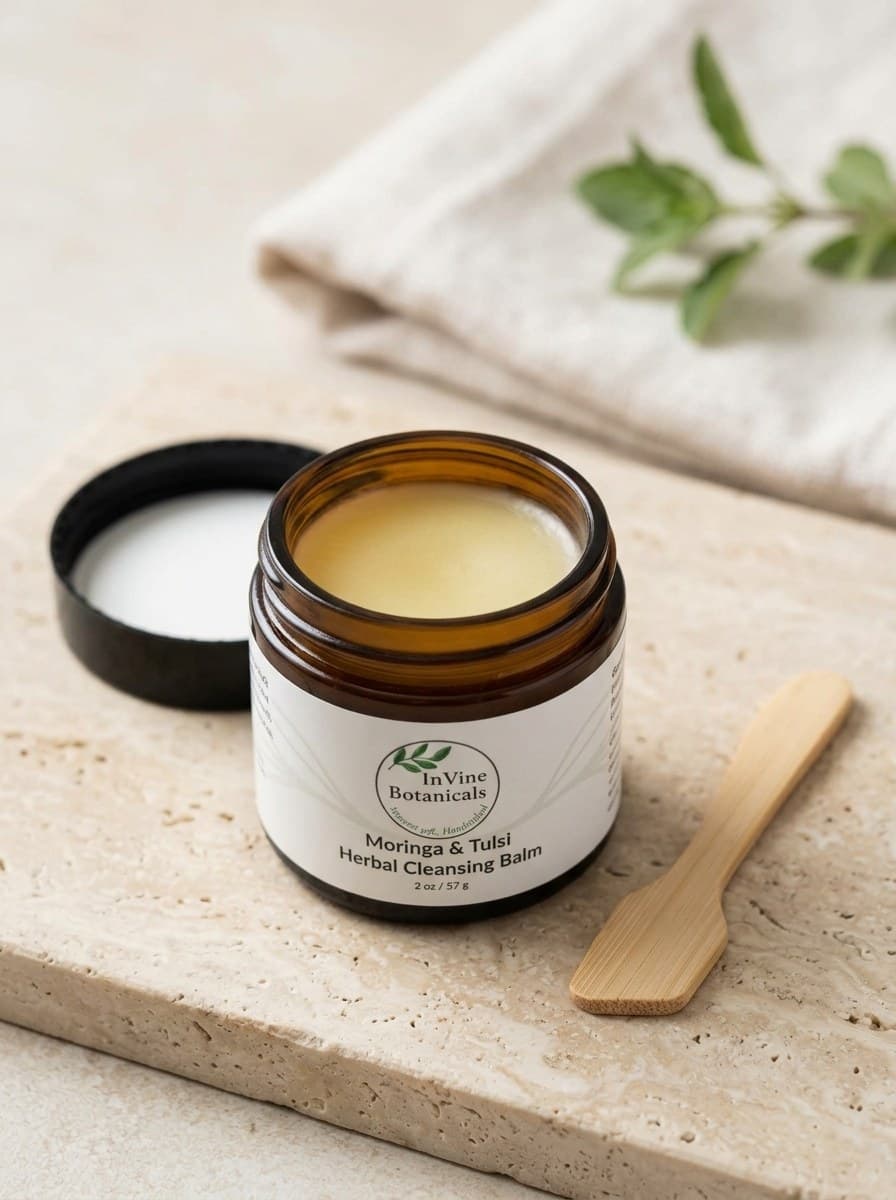
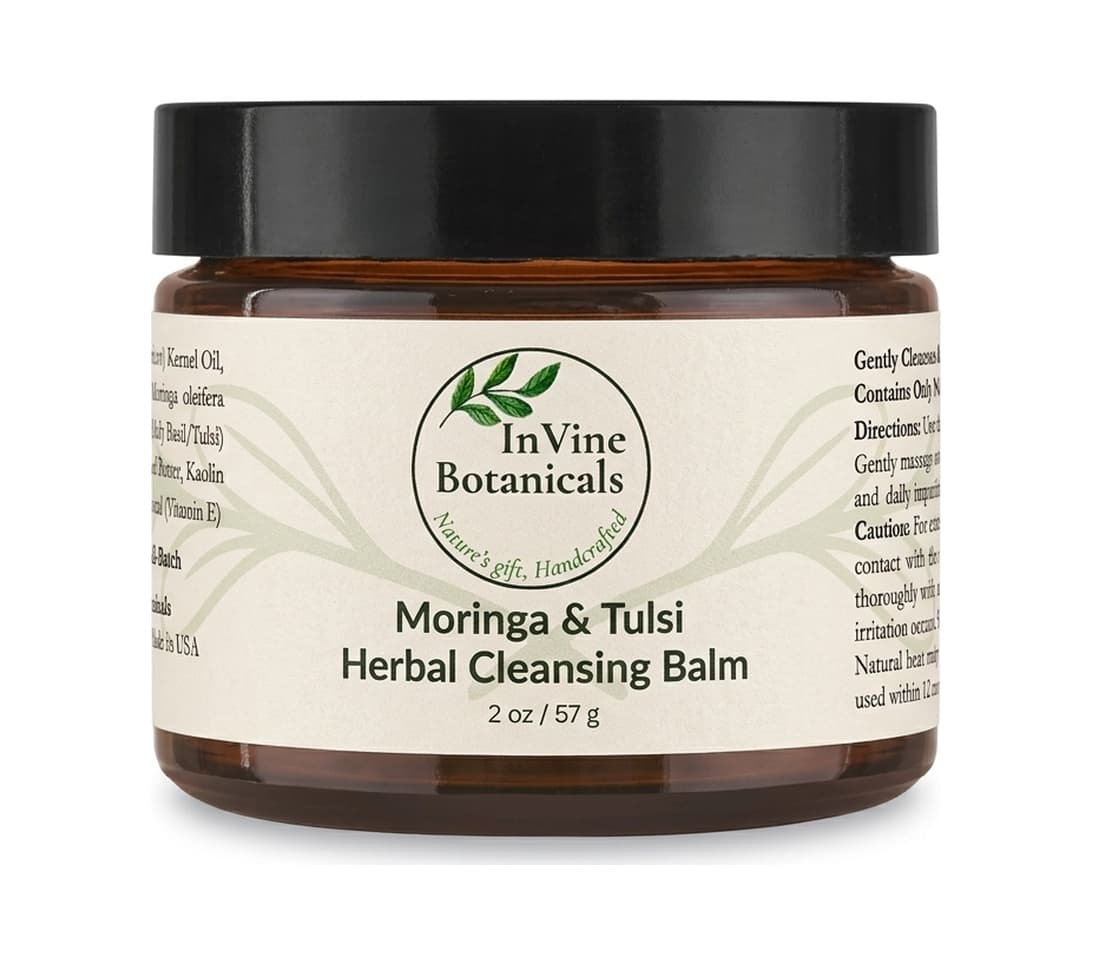
Our answer to the cold cream jar is the Moringa & Tulsi Herbal Cleansing Balm, formulated by Janice as the first step of the evening.
It starts in our Tallahassee garden. We grow the moringa and holy basil, also called tulsi, ourselves, dry them slowly, and infuse the whole herbs into apricot kernel and grapeseed oils for six to eight weeks in cool, dark conditions. That infused oil is blended with mango butter, a little fine kaolin clay, beeswax, and Vitamin E to help keep the oils fresh. Eight ingredients. No water, no mineral oil, no added fragrance. Because there is no water in the jar, there is nothing for a preservative to do. The full process is on how it's made.
You use it exactly the way you would use cold cream. Scoop a small amount with the spatula, massage it onto a dry face, and it softens into an oil that lifts makeup and the day's buildup. Take it off with a warm, damp cloth, rinse it away, or do both. Skin is left feeling clean, soft, and comfortable.
The structural comparison:
| Pond's Cold Cream Cleanser | A whole-herb cleansing balm |
|---|
| First ingredient | Mineral oil | Whole-herb infused apricot kernel oil |
| Water | Second ingredient | None |
| Ingredient count | 14 | 8 |
| What makes it solid | Ceresin and beeswax, held with emulsifiers | Mango butter and beeswax |
| Botanicals | None | Garden moringa and tulsi, infused whole |
| Preservatives | Phenoxyethanol, methylparaben, IPBC | None needed, the formula is waterless |
| Scent | Fragrance (or the fragrance-free version) | No added fragrance |
| How it comes off | Tissue or cloth, then rinse | Warm, damp cloth or a rinse, your choice |
| Price per ounce | Very low, a real strength | Higher; a small scoop does a full cleanse |
Neither column is dishonest. One is a hundred years of affordable, reliable cosmetic manufacturing. The other is closer to what cold cream was before the mineral oil: plant oils and beeswax, with herbs from one garden.
Grown in our garden, made by hand in small batches.
Meet the Moringa & Tulsi Herbal Cleansing Balm →
Other Honest Options
Ours is not the only way to do this, and it may not be the right one for you.
- A single plant oil. Olive, jojoba, or sweet almond oil on a cotton pad, followed by a warm cloth, is the simplest natural makeup remover there is. It is messier than a balm and it works. Our look at olive oil for skin covers what to buy.
- A homemade cold cream. Galen's recipe is three ingredients and people still make it. Because it contains water and no preservative, make it in very small amounts, keep it cold, and use it within days. If infusing your own oils appeals to you, our free whole-herb infusion guide walks through the method.
- Pond's fragrance-free jar. If scent is your only objection, this is the least expensive fix and a perfectly reasonable one.
Choosing by Use Case
- You want the lowest cost per cleanse. Keep the Pond's. Nothing natural competes on price, and we would rather say so.
- You love the ritual and want plant oils instead of mineral oil. A plant-oil cleansing balm is the direct swap. The motion is identical, cloth and all.
- You are avoiding fragrance and parabens. A waterless balm removes the reason for both, rather than substituting different ones.
- You do not use animal-derived ingredients. Note that both Pond's and our balm contain beeswax. A single plant oil is your route.
- You wear very little makeup. You may not need a dedicated remover at all. A warm cloth and a few drops of plain oil will do.
What matters is knowing what is in the jar and choosing it on purpose. Cold cream earned its century on the dresser. The idea underneath it, oil and beeswax and a soft cloth, is older still, and it is a good one.
The information in this post is for educational purposes and reflects published ingredient listings and cosmetic chemistry. InVine products are cosmetics, formulated to cleanse, soften, and condition the skin. They are not intended to diagnose, treat, cure, or prevent any disease.