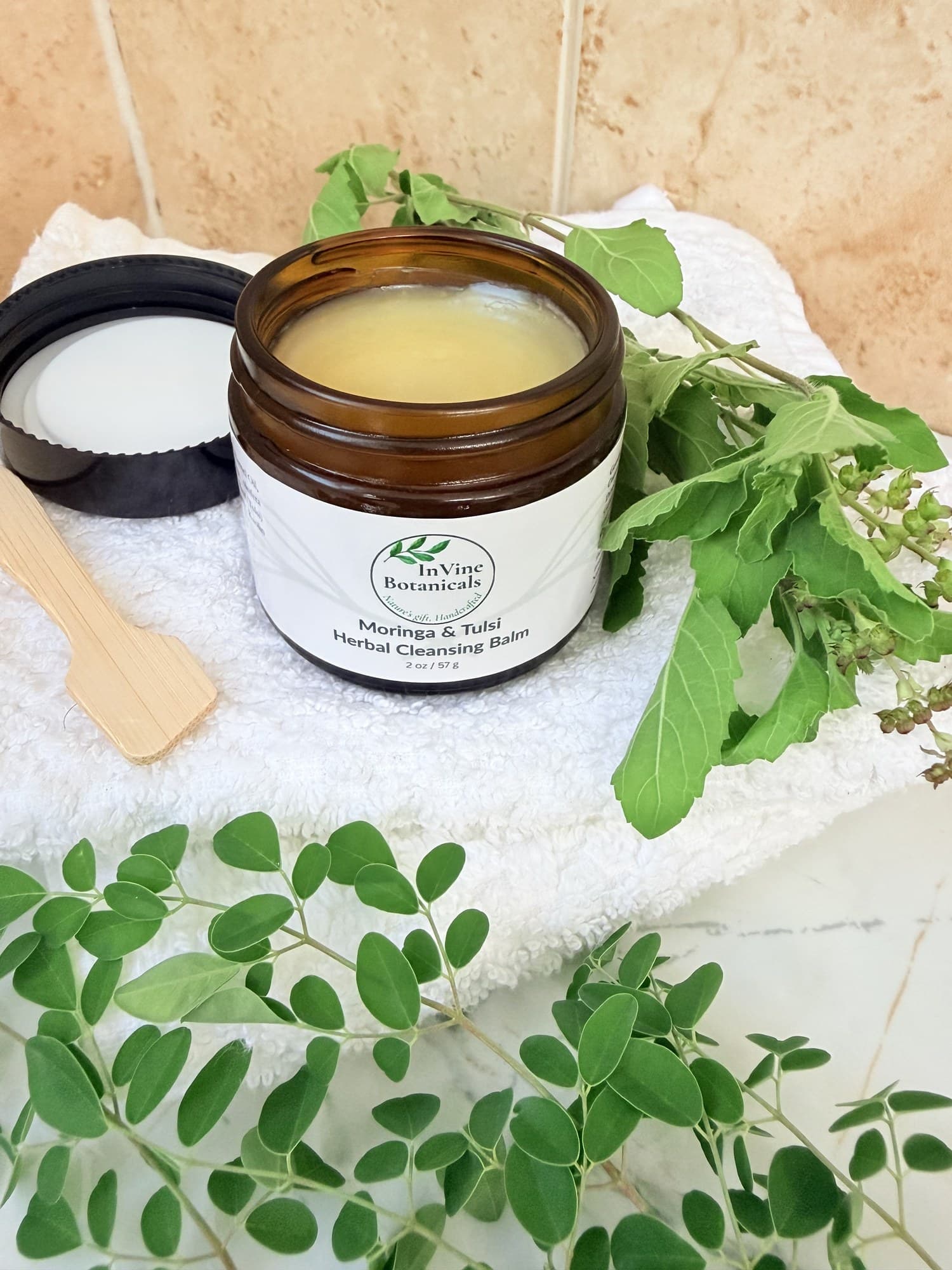
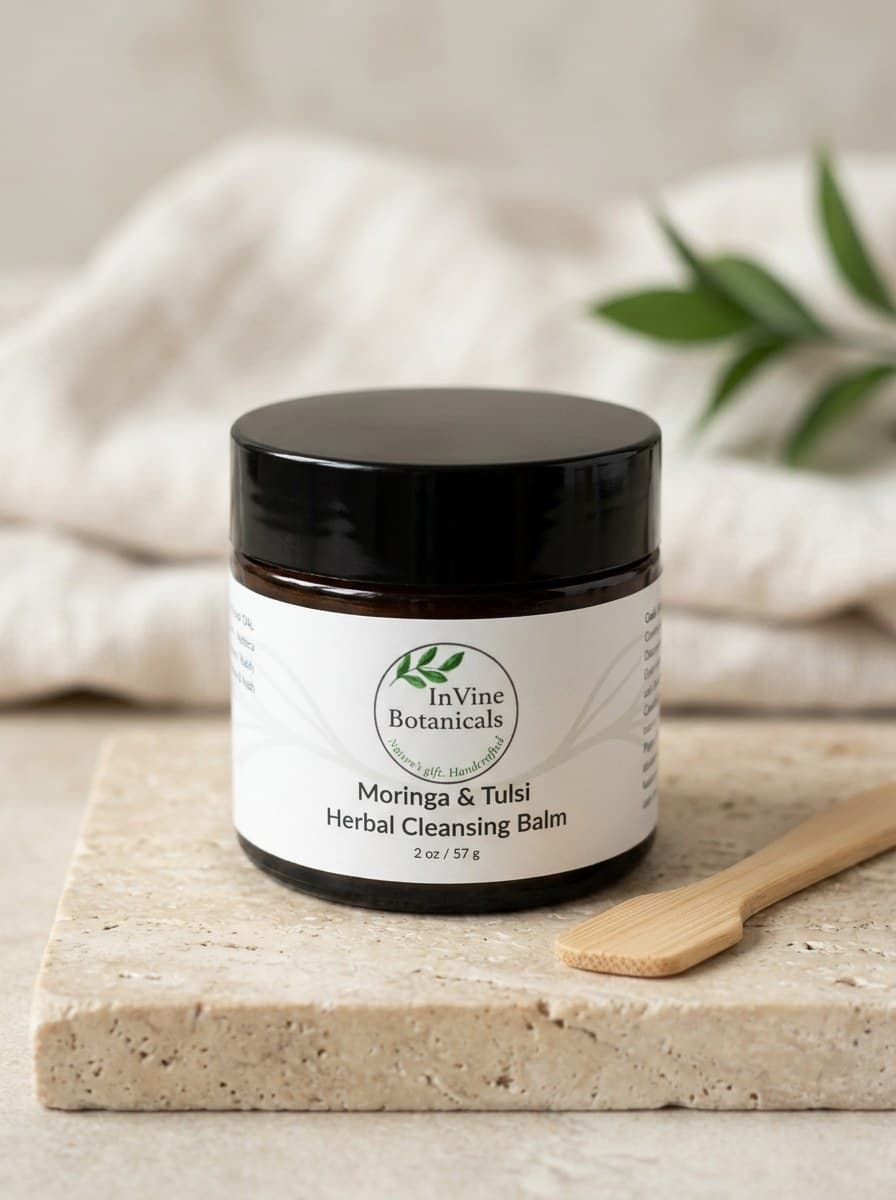
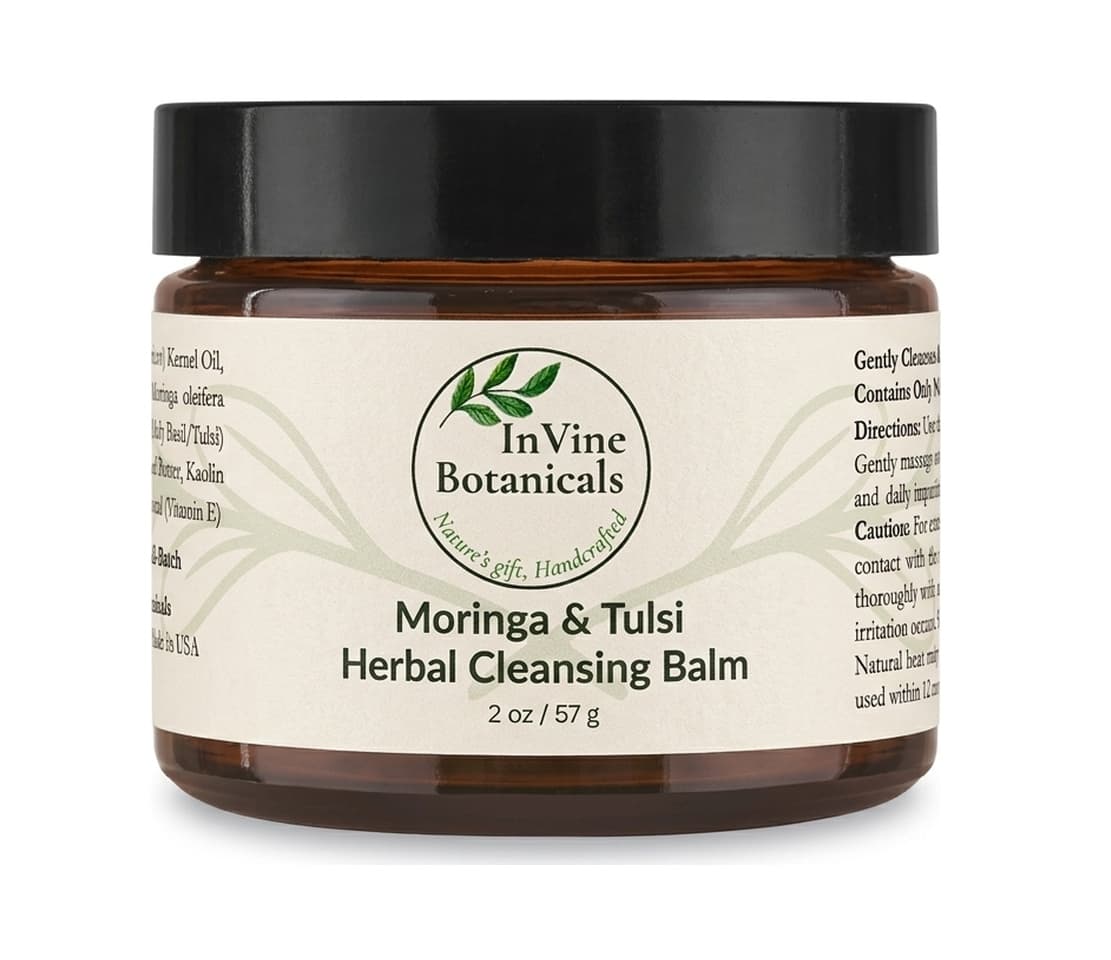
Quick answer: The best natural alternative to micellar water is oil cleansing: a cleansing balm or plant oil massaged over dry skin, then lifted away with a warm, damp cloth or a rinse. Micellar water works by suspending tiny clusters of mild cleansers in water. Oil cleansing works because oil dissolves oil, which is what makeup, sunscreen, and the day's buildup mostly are. Ours is InVine Botanicals' Moringa & Tulsi Herbal Cleansing Balm: moringa and holy basil (tulsi) from our Tallahassee garden infused whole in apricot kernel and grapeseed oils, blended with mango butter, a little kaolin clay, and beeswax, with no water and no added fragrance. Below: what is in a bottle of micellar water, what it does well, and seven natural alternatives.
Micellar water is one of the great conveniences of modern skincare. Pour it on a cotton pad, swipe, and your makeup is gone, no sink required. It sits on bathroom counters, in gym bags, and in nearly every drugstore skincare aisle, and the best-known bottle in the US is Garnier's pink-capped Micellar Cleansing Water.
This post is not an argument against it. It is for the person who has started reading labels, or is tired of a pile of used cotton pads, or wants a cleanse that leaves skin feeling soft rather than simply clean, and wonders what the plant-based options are.
What's Actually in Micellar Water
We read the label of Garnier Micellar Cleansing Water (the original, for all skin types) on Target's US listing in November 2026. It has seven ingredients:
Aqua/Water, Hexylene Glycol, Glycerin, Poloxamer 184, Disodium Cocoamphodiacetate, Disodium EDTA, Myrtrimonium Bromide.
Here is what each one does:
- Water is almost the entire bottle.
- Poloxamer 184 and disodium cocoamphodiacetate are the cleansers, called surfactants. They are very mild ones. In water, their molecules gather into tiny spheres called micelles, with an oil-loving center. When you swipe the pad across your face, those centers pick up oil and makeup. That is the whole idea behind the name.
- Hexylene glycol is a solvent that helps dissolve makeup and keeps the formula clear.
- Glycerin is a humectant, so skin feels less tight afterward.
- Disodium EDTA binds minerals in water so the formula stays stable.
- Myrtrimonium bromide is the preservative. Any product that is mostly water needs one to stay free of microbes.
It is a short, sensible label. Every ingredient is common, legal, and doing a defined job.
Credit Where It's Due
Micellar water is popular for good reasons, and Garnier's bottle earns its place:
- It is gentle. Garnier lists it as free of alcohol, oil, fragrance, parabens, sulfates, and silicones, and says it is ophthalmologist-tested for use around the eyes.
- It needs no sink. For travel, the gym, a long flight, or a night when you are too tired to wash your face, nothing is easier.
- It is inexpensive. At Target it works out to well under a dollar an ounce.
- It is certified cruelty-free. The bottle is approved by Cruelty Free International under the Leaping Bunny program.
- It is quick in the morning. A swipe to refresh skin before moisturizer is genuinely useful.
Why People Go Looking for an Alternative
The people searching for a natural micellar water alternative are usually after one of these:
- They wear long-wear makeup or sunscreen. Garnier's own guidance says that for heavier makeup or to fully remove sunscreen, you should follow the micellar water with a face wash. Oil dissolves those in one step.
- They want plants doing the work. Micellar water is mostly water and mild synthetic cleansers. Oil cleansing uses plant oils instead.
- They do not love the residue. Micellar water is designed to be left on, so its cleansers stay on your skin unless you rinse. Garnier notes you can rinse if you prefer.
- They are tired of cotton pads. A nightly habit can mean hundreds of disposable pads a year. Many oil-cleansing routines use one washable cloth.
- They want skin to feel soft afterward. Micellar water leaves a matte, clean finish. Oil cleansing tends to leave skin feeling cushioned.
Is Micellar Water Bad for Your Skin?
No. For most people, micellar water is a gentle, reasonable way to cleanse. The honest trade-offs are the ones above: it is less effective on long-wear makeup and sunscreen than oil, it is left on the skin unless you rinse, and it is a disposable-pad habit. If it suits you, there is no reason to stop. If one of those trade-offs bothers you, one of the options below may suit you better.
7 Natural Alternatives to Micellar Water
1. InVine Botanicals' Moringa & Tulsi Herbal Cleansing Balm
This is the one I formulated, so weigh my enthusiasm accordingly. The Moringa & Tulsi Herbal Cleansing Balm starts solid in the jar and softens into a silky oil as you massage it over dry skin, dissolving makeup and the day's buildup. Moringa and holy basil (tulsi) from our garden are infused whole in apricot kernel and grapeseed oils for six to eight weeks, then blended with mango butter, fine kaolin clay, beeswax, and a little Vitamin E. A warm, damp cloth or a rinse takes it all away. It is waterless, so it needs no preservative, and it has no added fragrance.
Best for: an evening cleanse that leaves skin feeling soft, not stripped.
2. A single plant oil and a warm cloth
The oldest version of oil cleansing. Massage a teaspoon of a light plant oil, such as sunflower, jojoba, or apricot kernel, over dry skin for a minute, then press a warm, damp washcloth over your face and wipe it away. It is inexpensive and very simple. It takes a little longer than a balm and can feel oilier if you rush the cloth step. If you want to infuse herbs into your oil first, our free whole-herb infusion guide shows how.
Best for: minimalists and makers.
3. A cleansing oil
A cleansing oil is plant or synthetic oils plus an emulsifier, so it turns milky and rinses off with water. It dissolves makeup the same way a balm does, in a pourable form. Read the label: many contain mineral oil or added fragrance. Our guide to cleansing balm vs cleansing oil covers the differences.
Best for: people who want an oil cleanse that rinses off at the sink.
4. A traditional cold cream
Cold cream is the original wipe-off cleanser. The first recipes were plant oil, beeswax, and rose water. Modern drugstore versions are usually built on mineral oil. Our look at a natural alternative to Pond's Cold Cream reads the classic jar's label.
Best for: people who like a creamy texture and a wipe-off routine.
5. A cleansing milk
A cleansing milk is a light lotion-like cleanser you massage in and then wipe or rinse away. It is gentle and comfortable on dry skin. Like micellar water it is water-based, so it contains an emulsifier and a preservative. Look for one with a plant oil near the top of the list.
Best for: dry skin that wants something softer than micellar water but lighter than a balm.
6. Warm water and a soft cloth, in the morning
If you used a thorough cleanser the night before, a morning cleanse rarely needs much. Warm water and a soft cloth refresh skin before moisturizer. It costs nothing and uses nothing up.
Best for: mornings, after an evening oil cleanse.
7. A plain floral water on a reusable pad
For the quick, no-sink swipe micellar water is loved for, a plain floral water such as rose water on a washable cotton round refreshes skin. Be honest with yourself about its limits: water on its own does not dissolve makeup or sunscreen, so keep this for mornings or a mid-day refresh.
Best for: travel and quick refreshes when you are not wearing makeup.
Micellar Water vs Cleansing Balm
| Micellar water (Garnier, original) | Cleansing balm (oil-based) |
|---|
| Base | Water | Plant oils and butters |
| How it cleanses | Mild surfactants form micelles that pick up oil and makeup | Oil dissolves oil, makeup, and sunscreen |
| Long-wear makeup and sunscreen | Brand suggests following with a face wash | Dissolves them in one step |
| How it comes off | Left on, or rinsed if you prefer | Warm, damp cloth or a rinse |
| Preservative | Yes (myrtrimonium bromide) | None needed if waterless |
| Added fragrance | None | Depends on the balm (none in ours) |
| Waste | A cotton pad per use | A washable cloth |
| Best at | Quick, no-sink cleansing | A thorough evening cleanse |
Many people keep both: a cleansing balm for evenings, and micellar water in the gym bag. That is a perfectly sensible routine.
How to Switch From Micellar Water to a Cleansing Balm
- Start with dry hands and a dry face. A cleansing balm is made to go on dry skin.
- Take a small scoop; that is all you need for a full cleanse.
- Massage it over your face. It softens into a silky oil that lifts makeup and the day's buildup.
- Take it away with a warm, damp cloth, or rinse with warm water.
- Follow with your usual moisturizer.
For more on what to look for on a balm label, see what to avoid in a cleansing balm.
The Whole-Herb Approach in Practice
At InVine, every formula starts in our Tallahassee garden. The herbs are harvested at their peak, dried for four to nine days in a dark, climate-controlled drying room, then slow-infused whole in plant oils for six to eight weeks in cool, dark conditions. For the cleansing balm, the strained oil is blended with mango butter, kaolin clay, beeswax, and Vitamin E, then poured and capped by hand. Because there is no water, there is nothing for microbes to grow in, so no preservative is needed; our guide to the benefits of waterless skincare explains why. Grown in our garden, made by hand in small batches. You can see every step on our How It's Made page.
If you want your evening cleanse to leave skin feeling soft, and to be plants all the way through, this is the jar I would hand you.
Meet the Moringa & Tulsi Herbal Cleansing Balm →
Choosing by What Matters to You
- You need to cleanse without a sink. Keep the micellar water for those moments. Nothing is more convenient.
- You wear long-wear makeup or daily sunscreen. Oil cleansing removes both in one step.
- You want plants doing the work. A cleansing balm or a plain plant oil.
- You want less waste. A washable cloth replaces a nightly cotton pad.
- You want the lowest cost. A single plant oil and a washcloth.
What matters is knowing what is in the bottle and choosing it on purpose. Micellar water made cleansing simple. Oil cleansing is simply a different, older answer to the same question.
The information in this post is for educational purposes and reflects published ingredient listings and cosmetic chemistry. InVine products are cosmetics, formulated to cleanse, moisturize, soften, and condition the skin. They are not intended to diagnose, treat, cure, or prevent any disease.