Quick answer: There are five things label-readers most often choose to skip in a cleansing balm: polyethylene (a plastic polymer used as a thickener), PEG emulsifiers, mineral oil, added fragrance, and the preservatives that come along whenever water is in the formula. None of them is illegal, and each is there for a reason. A balm made without them is built from plant oils, set with a natural wax or butter, and kept waterless. Below: what each ingredient does, which well-known balms contain it, and how to read any jar in ten seconds.
A cleansing balm is a simple idea. Oil dissolves oil, so a balm of oils massaged onto dry skin loosens makeup, sunscreen, and the day's buildup far more gently than a foaming wash. The whole category should be three or four ingredients long.
It usually is not. Turn over the best-selling jars and you will find esters, polymers, emulsifiers, and perfume doing most of the work. That is not a scandal; those ingredients make balms cheap, stable, and easy to rinse. But if you are choosing a cleansing balm because you want something simpler on your face, it helps to know what each one is and why it is there.
How a Cleansing Balm Is Built
Every cleansing balm has up to four parts:
- The oil. This does the cleaning. It can be a plant oil, a synthetic ester, or mineral oil.
- The structure. Something has to turn liquid oil into a scoopable solid. This is where polyethylene, synthetic wax, beeswax, or plant butters come in.
- The emulsifier, if there is one. This is what makes a balm turn milky and rinse off with water. Balms without one come off with a warm cloth, a rinse, or both.
- Everything else. Fragrance, extracts, and, if water is present, a preservative.
Nearly everything worth knowing about a jar comes from seeing which choice the maker made in each of those four slots.
1. Polyethylene
Polyethylene is a plastic polymer, the same family of material as a plastic bag, used in a wax-like form to thicken oil into the soft, sherbet texture many balms are known for. It is inexpensive and it gives a very consistent result.
It is also the reason "cleansing balm without polyethylene" is a common search. Plastic microbeads used as scrubs in rinse-off products were banned in the United States in 2015. Polyethylene as a thickener is a different form and remains legal there. The European Union's 2023 microplastics rule goes further, restricting synthetic polymer microparticles in cosmetics, with rinse-off products phased in by October 2027. How each form of polyethylene is treated is still being worked out, and some brands have already moved on: Farmacy's Green Clean once listed polyethylene and now lists sunflower seed wax in its place.
You do not have to settle the science to make a choice. If you would simply prefer not to rinse a plastic polymer down the drain every night, look for a balm thickened with beeswax, candelilla or sunflower wax, or a plant butter.
2. PEG Emulsifiers
PEG-20 glyceryl triisostearate, PEG-10 isostearate, sorbeth-30 tetraoleate: these are the ingredients that make a balm emulsify. Add water and the oil turns to milk and washes away.
They are common, permitted cosmetic ingredients, and they are genuinely useful. People skip them for two reasons. They are synthetic, which matters if you are building a plant-based routine. And they are optional: a balm does not need to turn milky to come off. A warm, damp cloth, the way cold cream was removed for generations, or a rinse will do it.
This is a preference, not a warning. If you like the way a balm turns to milk under the tap, an emulsifier is what does that, and it is a fair choice.
3. Mineral Oil
Mineral oil is a purified petroleum distillate. It is very stable, has no scent, and is safe by the measures regulators use. It is also one of the most effective makeup solvents there is, which is why it has been the base of cold cream for a century.
People avoid it mostly on principle: they would rather use a plant oil than a petroleum one. That is a reasonable preference and nothing more dramatic. We wrote a full, fair look at the question in is mineral oil bad for your skin.
4. Added Fragrance
"Fragrance" or "parfum" on a label is a collective term that can stand for many undisclosed scent ingredients. A cleanser is on your skin for under a minute and is used around the eyes, so perfume has little to offer here. Essential oils are a more transparent option, but a heavily scented balm massaged over the eye area is still not for everyone.
The simplest position is that a cleansing balm does not need to smell like anything. We explain the labeling issue in why fragrance on a skincare label is a red flag.
5. Water, and the Preservatives It Requires
Preservatives are not villains. They are safety equipment for any formula that contains water, because water is what microbes need to grow. Phenoxyethanol and parabens are in water-containing balms and cold creams for good reason.
If you would rather avoid them, the honest route is not a "preservative-free" label on a watery formula. It is a waterless balm, where there is nothing for a preservative to do. One practical note that follows from this: keep wet fingers out of any waterless jar, and use a spatula. We go deeper on the principle in the benefits of waterless skincare.
What's in the Best-Known Balms
We pulled the published ingredient listings for seven widely sold cleansers and noted how each one fills the four slots. Formulas change, so check the jar in your hand.
| Product | Main cleansing oil | What makes it solid | Emulsifiers | Fragrance |
|---|
| Clinique Take The Day Off | Ethylhexyl palmitate, safflower oil | Polyethylene | Yes (PEG and sorbeth) | None |
| Banila Co Clean It Zero Original | Ethylhexyl palmitate | Synthetic wax | Yes (PEG) | Yes |
| e.l.f. Holy Hydration Makeup Melting Balm | Cetyl ethylhexanoate | Polyethylene | Yes (PEG) | Yes |
| Elemis Pro-Collagen Cleansing Balm | Sweet almond oil | Plant waxes, PEG-8 beeswax | Yes (PEG) | Yes, plus essential oils |
| Farmacy Green Clean | Cetyl ethylhexanoate, sunflower oil | Sunflower seed wax | Yes (polyglyceryl) | Essential oils |
| Pond's Cold Cream Cleanser | Mineral oil | Ceresin, beeswax | Yes (it is an oil and water cream) | Yes; a fragrance-free version is sold |
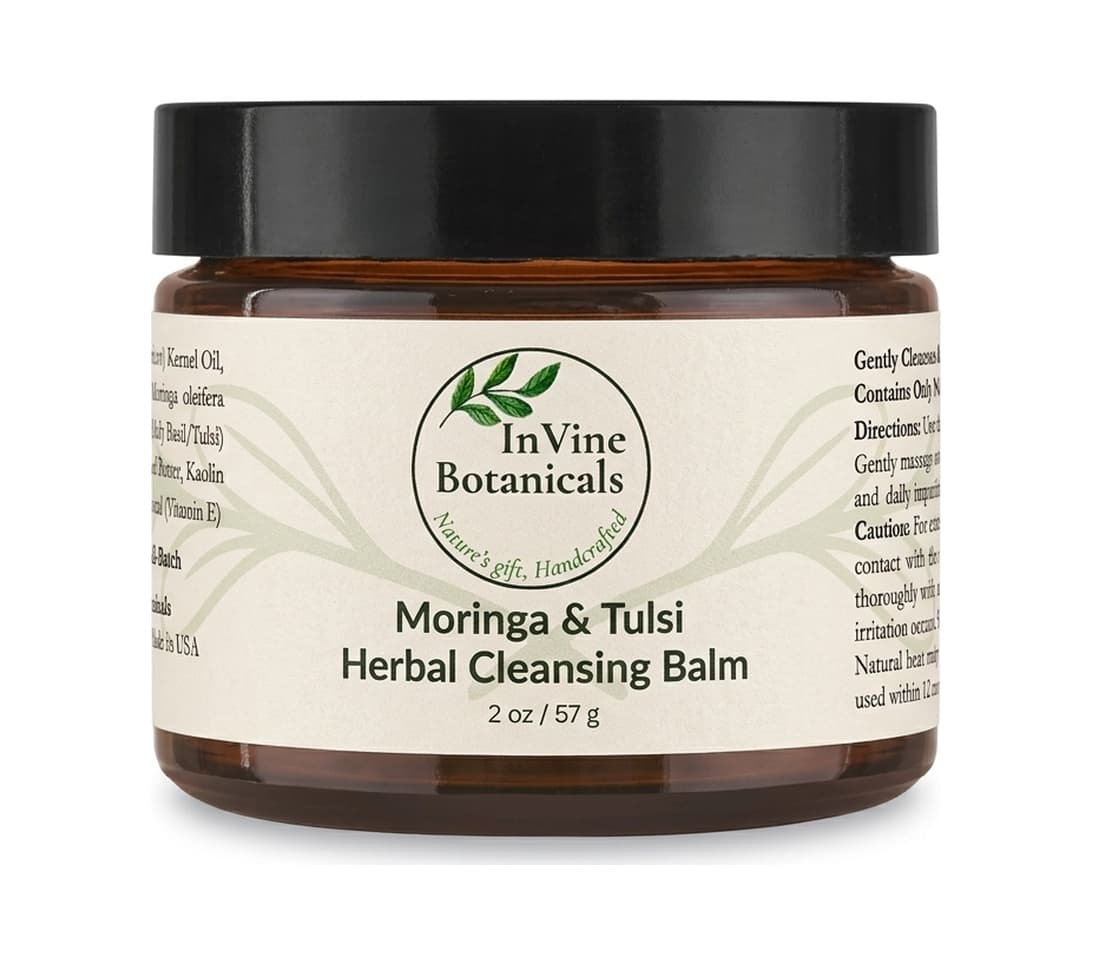
| InVine Moringa & Tulsi Herbal Cleansing Balm | Herb-infused apricot kernel and grapeseed oils | Mango butter, beeswax | None | None added |
None of these is a bad product. Each is a different set of answers to the same four questions. We looked at two of them in detail: a natural alternative to Clinique Take The Day Off and a natural alternative to Pond's Cold Cream.
What to Look For Instead
- A plant oil as the first ingredient. Apricot kernel, grapeseed, sunflower, jojoba, sweet almond, olive. If the first ingredient is an ester or mineral oil, the plants are passengers.
- A natural wax or butter for structure. Beeswax, candelilla wax, sunflower wax, mango butter, shea butter.
- A short list. A good balm can be made with fewer than ten ingredients.
- No water. Which means no preservative is needed.
- An honest answer about removal. A balm with an emulsifier turns milky in water. One without comes off with a warm cloth or a rinse. Both are fine. Just know which one you are buying.
The Ten-Second Label Test
Read the first five ingredients and ask three questions. Is the first one a plant oil? What is making it solid? Is there water? Those three answers tell you almost everything, and they take less time than reading the front of the box.
Where Ours Fits
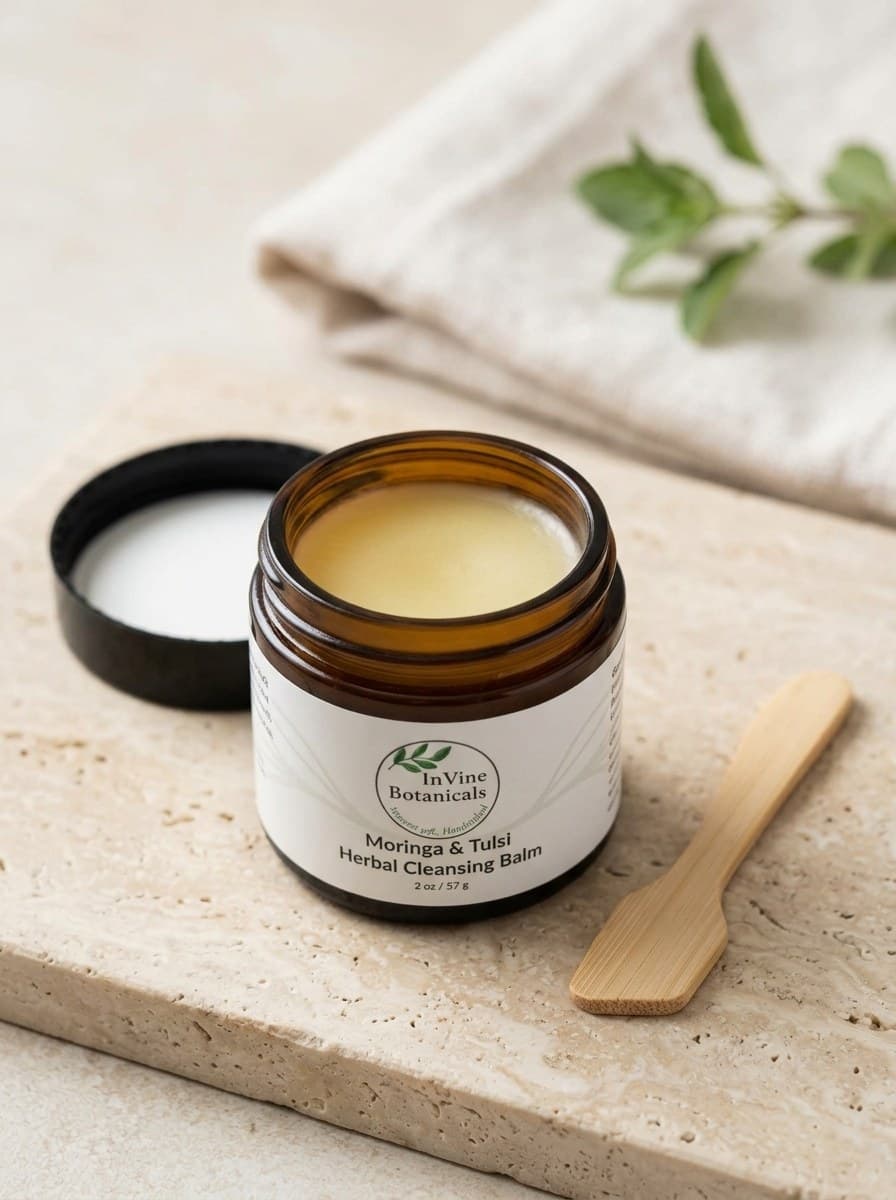
Our Moringa & Tulsi Herbal Cleansing Balm was formulated by Janice to pass that test. We grow the moringa and holy basil, also called tulsi, in our Tallahassee garden and slow-infuse the whole herbs into apricot kernel and grapeseed oils for six to eight weeks in cool, dark conditions. The infused oil is blended with mango butter, a little fine kaolin clay, beeswax, and Vitamin E to help keep the oils fresh. Eight ingredients, no water, no polyethylene, no PEGs, no mineral oil, no added fragrance.
Two honest notes. It has no emulsifier: massage it onto dry skin, then take it off with a warm, damp cloth or rinse it away, whichever you prefer. And it contains beeswax, so it is not vegan. If that rules it out for you, look for a balm structured with candelilla or sunflower wax (Farmacy's Green Clean is one), or simply use a single plant oil on a cotton pad followed by a warm cloth, which is the oldest method of all.
Grown in our garden, made by hand in small batches.
Meet the Moringa & Tulsi Herbal Cleansing Balm →
The information in this post is for educational purposes and reflects published ingredient listings and cosmetic chemistry. InVine products are cosmetics, formulated to cleanse, soften, and condition the skin. They are not intended to diagnose, treat, cure, or prevent any disease.