"Is mineral oil bad for your skin?" is one of the most-searched skincare ingredient questions, and the honest answer is more interesting than a yes or no. Mineral oil is safe by almost every measure regulators use, and it still might not be what you want in the products you reach for every day. Those are two different questions, and the confusion between them is most of the controversy.
Here is a fair look at what mineral oil is, what it does, and how it compares to a plant-oil base, written by someone who deliberately builds with the other kind.
What Mineral Oil Actually Is
Mineral oil is a clear, odorless liquid distilled from petroleum, the same crude source as gasoline and paraffin wax, but purified to a cosmetic grade far cleaner than any fuel. On an ingredient label it appears as Mineral Oil, Paraffinum Liquidum, or Paraffin Oil. Its semi-solid cousin, petrolatum, is what you know as petroleum jelly.
It has been a skincare staple for over a century because it is inexpensive, completely stable, odorless, and extremely consistent. Baby oil is essentially mineral oil with a little fragrance. It appears in countless lotions, creams, cleansers, and ointments, usually high on the ingredient list, which means it is often the base the entire product is built on.
The Honest Case For Mineral Oil
It would be easy to write a scare piece here. It would also be inaccurate. Cosmetic-grade mineral oil has real merits, and pretending otherwise helps no one:
- It is considered safe. Highly refined cosmetic mineral oil is one of the most studied and least irritating ingredients in skincare. The cancer concerns you may have read about relate to unrefined industrial grades, not the cosmetic grade used in lotions.
- It is a genuinely good occlusive. It forms a barrier on the surface that slows water loss, which is why skin feels softer and more cushioned after using it.
- It rarely triggers reactions. Because it is inert and fragrance-free in its pure form, it is gentle on very sensitive or reactive skin.
- It never goes rancid. With no fatty acids to oxidize, it stays stable for years without preservatives.
If your only goal is a cheap, stable, non-irritating barrier, mineral oil does that job well.
So Why Do So Many People Avoid It?
The case against mineral oil usually isn't about safety, it's about what it doesn't do.
Mineral oil is inert by design. The same purity that makes it non-irritating also strips it of anything active: no vitamins, no fatty acids the skin recognizes, no antioxidants, nothing for the skin to draw on. It sits on the surface and seals. That is the whole job.
For many people, that's the letdown. A product can be "moisturizing" in the narrow sense of trapping water while contributing nothing of its own. Add the petroleum sourcing and a simple preference for plant-derived ingredients, and you get the modern skepticism, not "this will harm me," but "this isn't giving my skin anything."
Mineral Oil vs. a Plant Oil: The Real Difference
This is where the choice actually lives. Both mineral oil and a plant oil can serve as the base of a product, and they behave very differently.
A cold-pressed plant oil, organic extra-virgin olive oil or unrefined coconut oil, for instance, is not inert. Olive oil carries oleic acid and its own polyphenols; coconut oil brings medium-chain fatty acids and a soft, conditioning feel. These oils are emollient and skin-conditioning in their own right, which is exactly why they are sold as standalone skincare, they bring something to the surface beyond sealing it.
Mineral oil is a barrier. A real plant oil is a barrier and an ingredient. (Here is why the carrier oil is half of any balm's formula.)
To be fair, there is a trade-off: plant oils can oxidize over time, which is why they belong in small-batch products made without long warehouse storage. That's a formulation choice, not a flaw.
What the Research Actually Says
Two claims follow mineral oil around, and the evidence supports neither in the form people repeat them.
"It's linked to cancer." The occupational-health concerns in the literature involve unrefined, industrial-grade mineral oils, metalworking fluids, machine oils, which are a different material. Cosmetic-grade mineral oil is highly refined to remove those impurities, and regulators in both the US and EU permit it in skincare on that basis. Treating the two grades as the same substance is where most of the scare content goes wrong.
"It clogs pores." Modern comedogenicity testing generally rates cosmetic-grade mineral oil as low-comedogenic. The pore-clogging reputation traces back to older studies of less-refined grades. Individual skin varies, but "mineral oil = breakouts" is not what the current evidence shows.
None of that changes the honest limitation: mineral oil is inert. It seals; it does not contribute. Both things are true at once, it is safe, and it brings nothing botanical to the skin. Which one matters more depends on what you want the largest ingredient in your product to do.
Where You'll Find Mineral Oil
Once you know its label names, you start seeing it everywhere:
- Baby oil, cosmetic-grade mineral oil with fragrance added. That is the entire formula.
- Vaseline, petrolatum, mineral oil's semi-solid sibling: same crude-oil source, refined to a jelly instead of a liquid.
- Aquaphor, 41% petrolatum with mineral oil as the texture-thinner; we broke down its formula and nine natural alternatives separately.
- O'Keeffe's Working Hands, paraffin plus mineral oil in the occlusive layer; our look at that product covers the working-hands category.
- Everyday lotions and creams, often listed as Paraffinum Liquidum, especially on European labels.
There is nothing hidden about any of this, it is all on the label, in order, once you know what the names mean.
How to Tell What's in Your Product
You don't need a lab, just the ingredient list, which is ordered by volume:
- Near the top: Mineral Oil, Paraffinum Liquidum, or Petrolatum means a petroleum-derived base. (If it's specifically petroleum jelly you're weighing, we looked at petroleum-jelly alternatives separately.)
- Near the top instead: Olive (Olea europaea) Oil, Coconut (Cocos nucifera) Oil, Shea Butter, or similar means a plant-derived base.
- Order matters: if a plant oil is listed but sits near the bottom, it's a garnish, not the base.
What We Use Instead
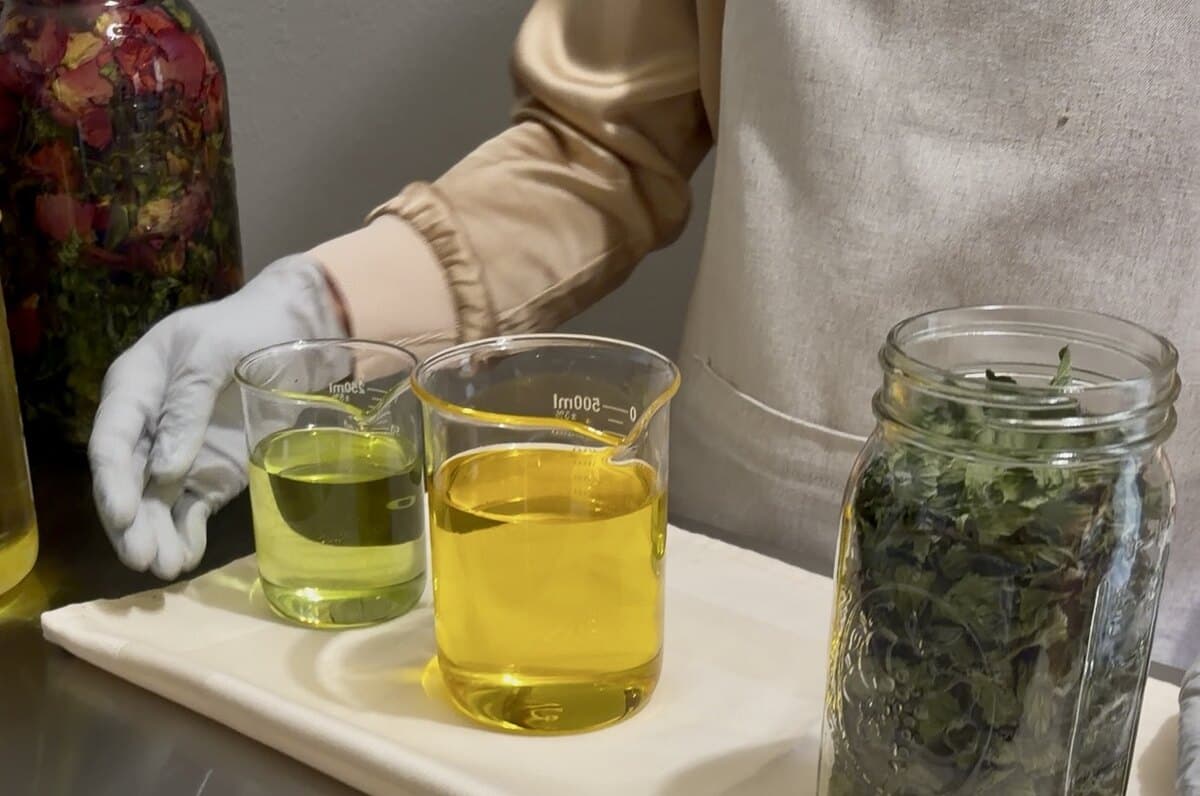
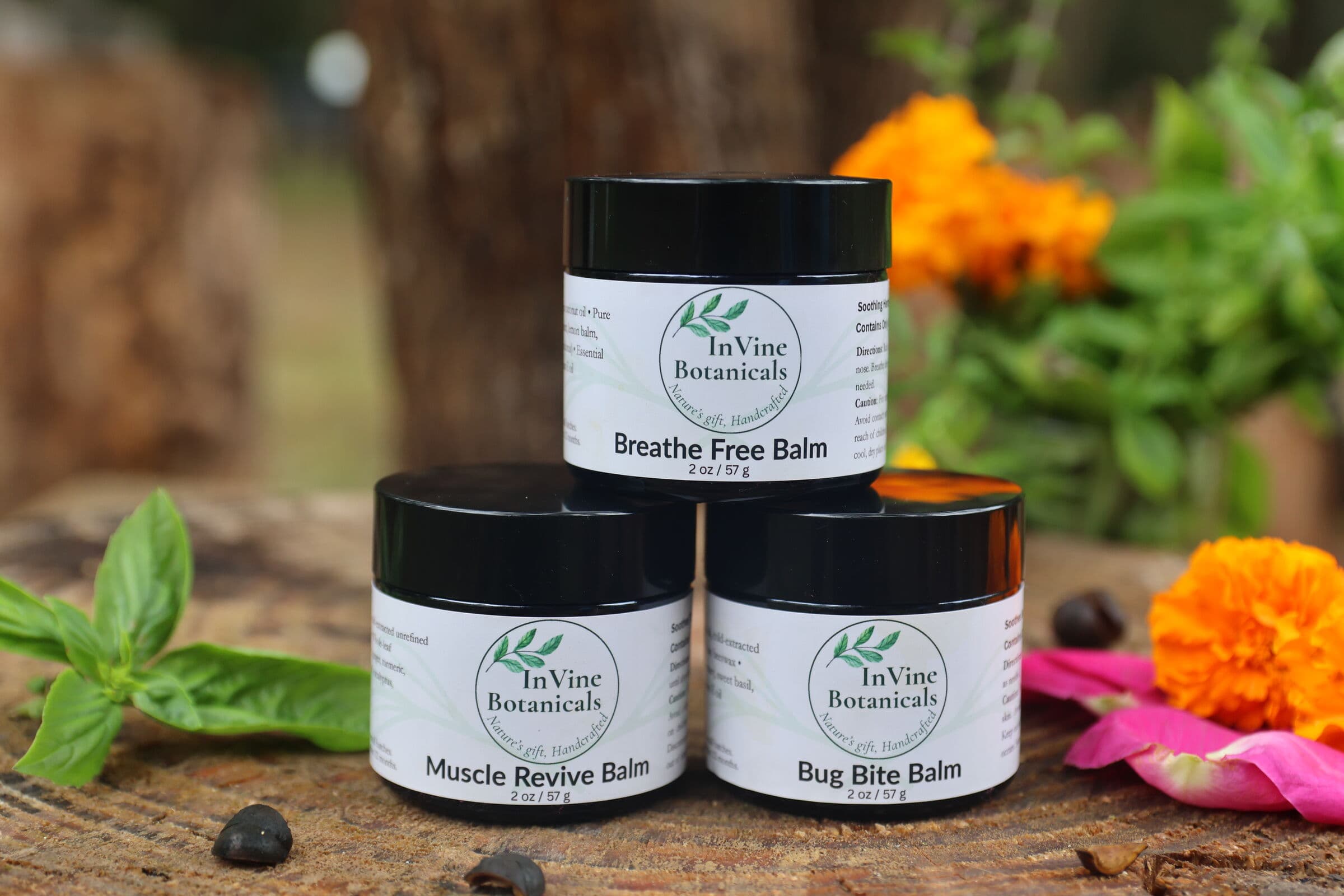
At InVine, the base is the part we spend the most on. Every balm is built on cold-pressed organic olive and coconut oil, the same oils we slow-infuse our garden-grown herbs into for six to eight weeks, so the oil itself carries the plant before a single other ingredient is added. No mineral oil, no petrolatum, no synthetic barrier.
So, is mineral oil bad for your skin? No. It's safe, and it seals well. But if you'd rather the largest ingredient in your jar actually did something for your skin, a real plant oil is a different proposition entirely.
Explore the whole-herb balms →