Herbal Education
What to Avoid in a Cleansing Balm: An Herbalist's Honest Guide
Five things label-readers skip in a cleansing balm, what each one actually does, which well-known jars contain it, and how to read any label in ten seconds.
Read article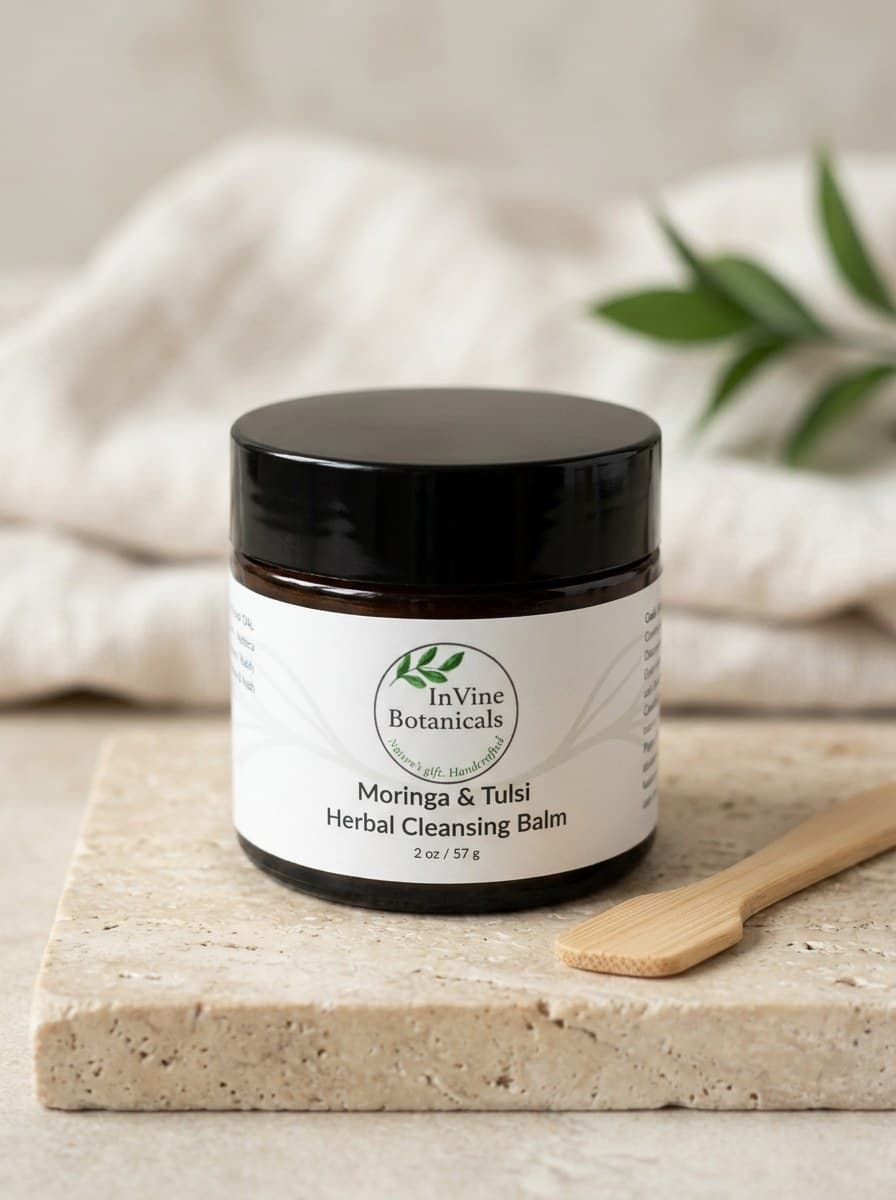
Quick answer: A cleansing balm and a cleansing oil do the same job, dissolving makeup, sunscreen, and the day's oil with more oil, and the difference is mostly texture, packaging, and how they come off. A cleansing oil is liquid and usually contains an emulsifier, so it turns milky and rinses away with water. A cleansing balm is solid in the jar and melts on contact with skin; some balms contain emulsifiers too, others are pure oils, butters, and waxes that come off with a warm cloth or a rinse. Choose an oil if you want the quickest rinse; choose a balm if you want a richer, less messy texture that travels without spilling. Ours is the Moringa & Tulsi Herbal Cleansing Balm: garden moringa and tulsi infused in apricot kernel and grapeseed oils, with mango butter, kaolin clay, and beeswax.
Oil cleansing has gone from a niche habit to the first step of half the routines on the internet, and the most common question that follows is the obvious one: balm or oil? Both are sold as the gentle, makeup-melting first step. Both are mostly oil. And the shelf does not make the difference easy to see.
The honest answer is that neither is better in general. They are two textures of one idea, and the right one depends on how you like to wash your face and what you need it to remove.
The principle under both is simple chemistry: like dissolves like. Makeup, long-wear foundation, mineral and chemical sunscreen, and the skin's own oil (sebum) are all oil-soluble. Water alone slides right over them. An oil loosens and dissolves them, so they lift away when the oil does.
That is why both balms and oils are especially popular for the first step of a "double cleanse": an oil-based cleanser to dissolve the day, followed by a gentle water-based cleanser for anyone who likes that squeaky-clean finish. Plenty of people skip the second step entirely.
A typical cleansing oil is a plant oil (or a blend) plus an emulsifier. DHC Deep Cleansing Oil, one of the best-known in the category, lists on its own product page: olive fruit oil, caprylic/capric triglyceride, sorbeth-30 tetraoleate, pentylene glycol, tocopherol, stearyl glycyrrhetinate, rosemary leaf oil, and phenoxyethanol.
It is a short, well-designed label, and the rinse-off finish is genuinely convenient.
Cleansing balms vary much more than cleansing oils do. Broadly, there are two kinds:
Our Moringa & Tulsi Herbal Cleansing Balm is the second kind. The full ingredient list is apricot kernel oil, grapeseed oil, moringa leaf, holy basil (tulsi), mango butter, kaolin clay, beeswax, and Vitamin E. The moringa and tulsi come from our Tallahassee garden and are slow-infused in the oils for six to eight weeks before the balm is made. It melts away makeup and the day, then rinses off or wipes off with a warm cloth. It comes in a 2 oz amber glass jar with a spatula.
Texture. An oil is liquid from the bottle. A balm is solid in the jar and melts as you massage it in, which many people find more pleasant and more controllable: it stays where you put it instead of running down your wrists.
How it comes off. An oil with an emulsifier rinses clean with water alone. An emulsified balm does the same. A botanical balm without an emulsifier comes off with a warm cloth, which adds a gentle, soft-buffing step that many people love, or with a warm-water rinse.
Packaging and travel. Oils need a pump bottle and can leak in a bag. A balm in a jar does not run, which makes it the easier traveler (in real heat it can soften; a few minutes in the fridge brings the texture back).
Formula. Because a cleansing oil is mostly oil with an emulsifier, the labels in the category look fairly similar. Balms range from very simple plant formulas to long lists with synthetic waxes and several emulsifiers, so reading the label matters more.
Feel afterward. An emulsified oil rinses off and leaves a light finish. A botanical balm removed with a cloth can leave a softer, more conditioned feel, which is either exactly what you want or a reason to follow with a second cleanse.
| Cleansing oil | Emulsified cleansing balm | Botanical cleansing balm | |
|---|---|---|---|
| Texture in the container | Liquid | Solid, melts on skin | Solid, melts on skin |
| Usually contains an emulsifier | Yes | Yes | No |
| How it comes off | Rinses milky with water | Rinses milky with water | Warm cloth or warm-water rinse |
| Travels without spilling | Needs a secure pump | Yes | Yes |
| Typical label length | Short to medium | Medium to long | Short |
| Best for | The fastest rinse | A rich texture with a rinse | A short label and a cloth ritual |
At InVine, the cleansing balm starts in our Tallahassee garden. The moringa and tulsi are harvested at their peak, dried for four to nine days in a dark, climate-controlled room, then slow-infused whole in apricot kernel and grapeseed oils for six to eight weeks in cool, dark conditions. The strained oil is blended with mango butter, kaolin clay, beeswax, and Vitamin E, then poured and capped by hand. Grown in our garden, made by hand in small batches. You can see every step on our How It's Made page.
If you want a cleansing balm with a short, plant-based label, this is the jar we would hand you.
Meet the Moringa & Tulsi Herbal Cleansing Balm →
Cleansing balm vs cleansing oil is not a contest between a good product and a bad one. It is a choice between two textures of the same idea. An oil is the faster rinse; a balm is the richer, tidier ritual. Read the label, notice whether there is an emulsifier and what gives the balm its body, and choose the one you will actually look forward to at the end of the day.
The information in this post is for educational purposes and reflects published ingredient listings and cosmetic chemistry. InVine products are cosmetics, formulated to cleanse, soften, and condition the skin. They are not intended to diagnose, treat, cure, or prevent any disease.
Neither is better in general; they are two textures of the same idea. A cleansing oil usually contains an emulsifier, so it rinses off quickly with water. A cleansing balm is solid in the jar and melts on the skin, which many people find tidier and easier to travel with. Choose by how you like to remove it and how short you want the label.
No cleanser can promise that for every skin type, and "non-comedogenic" is not a regulated term. A cleansing balm is removed after a minute of massage, so the oils do not stay on the skin the way a moisturizer does. If you are prone to congestion, choose oils you already know your skin likes, remove the balm thoroughly, and follow with a second cleanse if that suits you.
Not necessarily. If you wear little or no makeup or sunscreen, a gentle cleanser may be all you need. A cleansing balm or oil earns its place when you need to dissolve long-wear makeup or sunscreen, or when you simply enjoy a slower evening ritual.
Five things label-readers skip in a cleansing balm, what each one actually does, which well-known jars contain it, and how to read any label in ten seconds.
Read article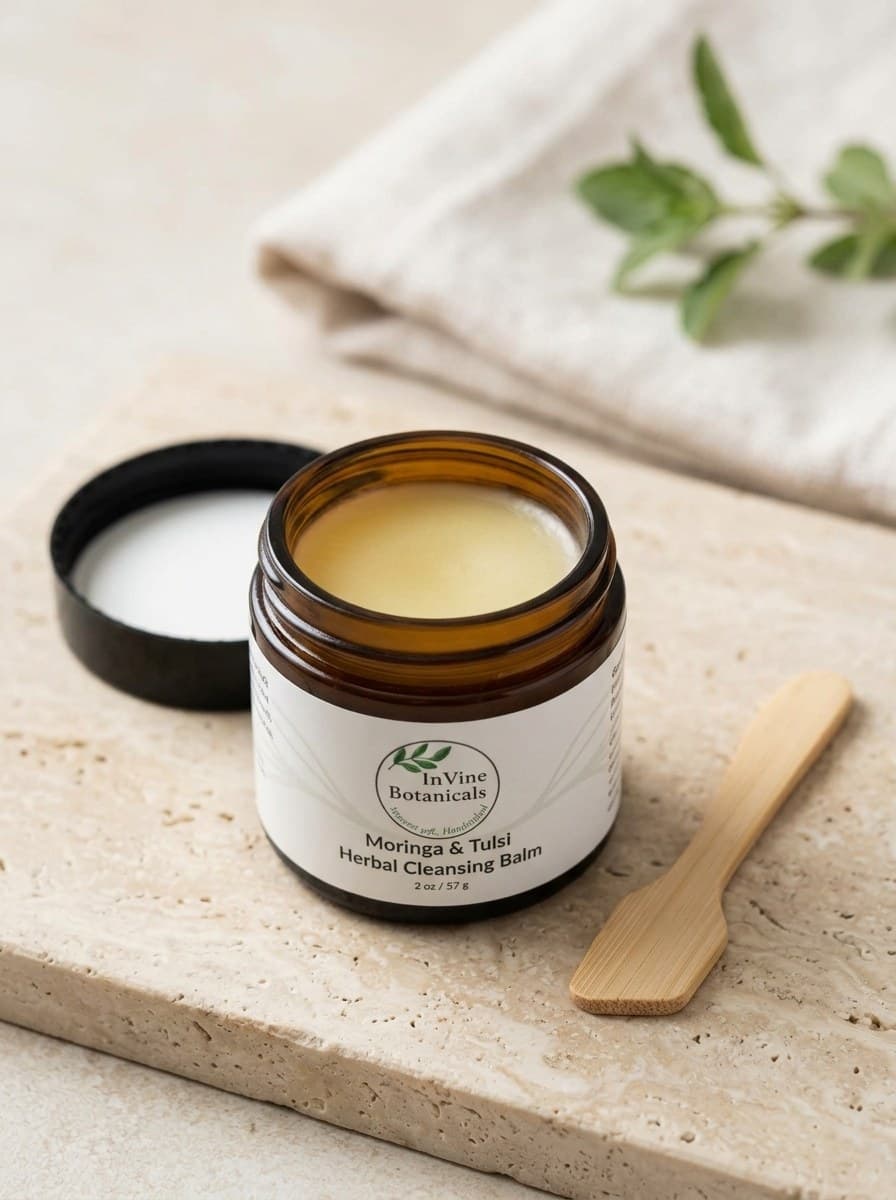
Pond's Cold Cream earned its century on the dresser, but the jar is mineral oil, water, and fragrance. The original cold cream was plant oil and beeswax. An honest comparison with a waterless whole-herb cleansing balm.
Read articleYour cart is empty
Add some products to get started.