Quick answer: The closest plant-based swap for tallow balm is a waterless crème built on plant butters and slow-infused botanical oils. Mango butter covers the same skin-compatible fatty acids that make tallow feel so rich, plant oils supply the emollience, and whole herbs add what rendered fat never can. Below: what tallow balm actually is, what it genuinely does well, and how a garden-grown alternative compares.
If your feed looks anything like ours did this year, you have seen the tins: whipped beef tallow, usually from grass-fed cows, marketed as the skincare your great-grandmother supposedly used. The pitch is compelling because most of it is the same pitch we would make. Short labels. No synthetic fillers. A single rich fat doing the work of a shelf of products. Skepticism toward long ingredient lists is exactly how many of our own customers found us.
So this is not a takedown. The tallow trend gets several big things right, and we will give it full credit. But if you are standing at the edge of it thinking "I like everything about this except the beef fat," you are the person this post is for. There is a plant path to the same virtues, and it is older than the trend.
Rebuilding your routine around simpler labels? Our guide to waterless skincare covers the formulation philosophy both approaches share.
What's Actually in a Tallow Balm
Tallow balm has no single recipe, but the popular versions are remarkably consistent. Toups & Co's Original Tallow Balm, one of the category's best-known products, lists grass-fed tallow, olive oil, and a blend of essential oils; their unscented version is just tallow and organic olive oil. Most small-batch makers follow the same pattern: rendered beef fat, softened with a liquid oil so it spreads, sometimes finished with essential oils to cover the natural scent of the fat.
Tallow itself is beef fat that has been slowly melted and filtered. Chemically, it is roughly half saturated fat, mostly palmitic and stearic acids, with around 40 percent oleic acid, the same monounsaturated fatty acid that dominates olive oil. Those names matter, because they also appear in skin's own surface lipids, and that overlap is the entire scientific case for tallow skincare: the marketing says it "matches your skin," and in fatty-acid terms there is real overlap. Grass-fed tallow also carries small amounts of fat-soluble vitamins, which brands lean on heavily in their copy.
Two honest observations about that list. First, it is genuinely short, and short labels are a virtue we share. Second, notice that every functional ingredient is either the fat itself or a carrier oil. There are no botanicals in the jar unless you count a few drops of essential oil, and essential oils are aroma, not a plant base. Whatever herbs appear on a tallow brand's website, the tin is fat.
Credit Where It's Due
The tallow revival did not come from nowhere, and several of its claims hold up:
- It is a rich, effective emollient. A fat that is half stearic and palmitic acid makes a thick, protective layer that softens very dry skin. People with rough hands, cracked heels, and weathered outdoor skin often love it for good reason.
- The labels are honest and short. Two to six ingredients, all pronounceable. That is more than most drugstore moisturizers can say.
- It is waterless. No water means no dilution and no preservative system. On this, the tallow makers and we are in complete agreement; it is exactly how we formulate.
- The sourcing ethos is real. Grass-fed, single-farm, small-batch: the instinct to know exactly where an ingredient comes from is the same instinct that has us growing our own herbs.
The people searching for a tallow alternative usually are not disputing any of that. They have simply hit a question the trend cannot answer for them: does it have to be beef?
Why People Go Looking for an Alternative
Read the forums where this question lives and the same four reasons come up:
- It is rendered animal fat. For vegetarians, vegans, and plenty of people who simply do not want beef fat on their face, this is the whole conversation. No sourcing story changes what the ingredient is.
- The face question. Tallow's richness is its selling point on body skin and its liability on the face. Dermatologists interviewed about the trend, in coverage from NBC News, Scripps Health, and MD Anderson among others, consistently raise the same caution: heavy, palmitic-rich fats can sit badly on acne-prone and oily skin, and the strongest case for tallow is very dry skin. Google's own suggested question, "Why do dermatologists not recommend tallow?", exists for a reason.
- Quality varies widely. Tallow balm is mostly a cottage industry. Rendering quality varies, the natural scent of the fat varies with it, and dermatologists quoted in that same coverage note that many small-batch animal-fat products reach market without stability or microbial testing.
- A plant-based routine wants a plant-based answer. If everything else on the shelf is botanical, a beef-fat moisturizer is a philosophical outlier, however clean its label.
The Part of Tallow Worth Keeping Is the Fatty-Acid Profile
Here is the useful insight buried in the trend: skin likes stearic and oleic acids. Tallow delivers them. So do plants.
Mango butter, the fat that gives our crèmes their body, runs roughly 33 to 48 percent stearic acid and 35 to 50 percent oleic acid, numbers that overlap tallow's profile, with only a fraction of the palmitic acid. It is pressed from mango seeds, melts on skin the same way, and brings the same rich-but-dry finish that makes whipped tallow so pleasant to apply. Shea and cocoa butters play in the same family. This is why a well-built plant butter formula does not feel like a compromise next to tallow: chemically, it is playing the same instruments.
And a plant formula can do something rendered fat cannot: carry botanicals. Fat from a steer is the end of its story. A plant oil is a beginning, because you can infuse whole herbs into it for weeks and the oil takes up what the plant has to give. That is the difference between a moisturizer that is only a fat and one that is a fat carrying a garden.
What a Whole-Herb Crème Does Differently
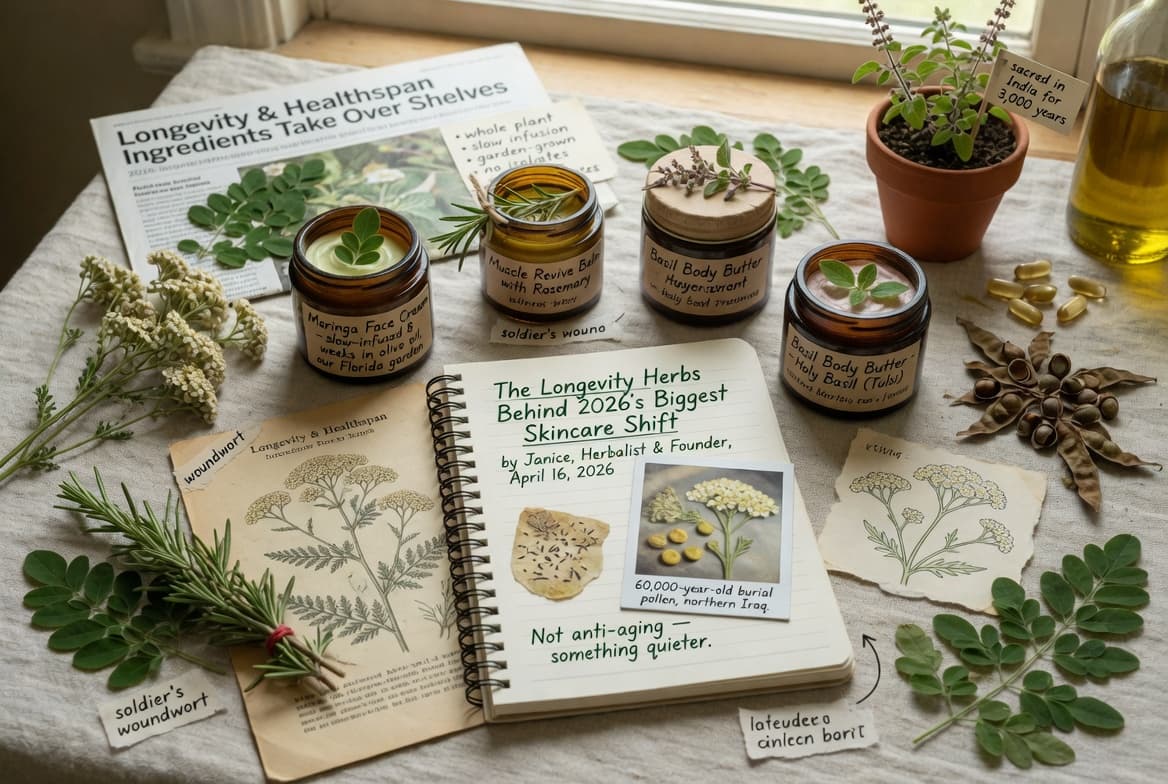
Our version of the short-label, waterless philosophy is the Moringa w/ Echinacea Face Cream, and it starts where tallow cannot: in the ground.
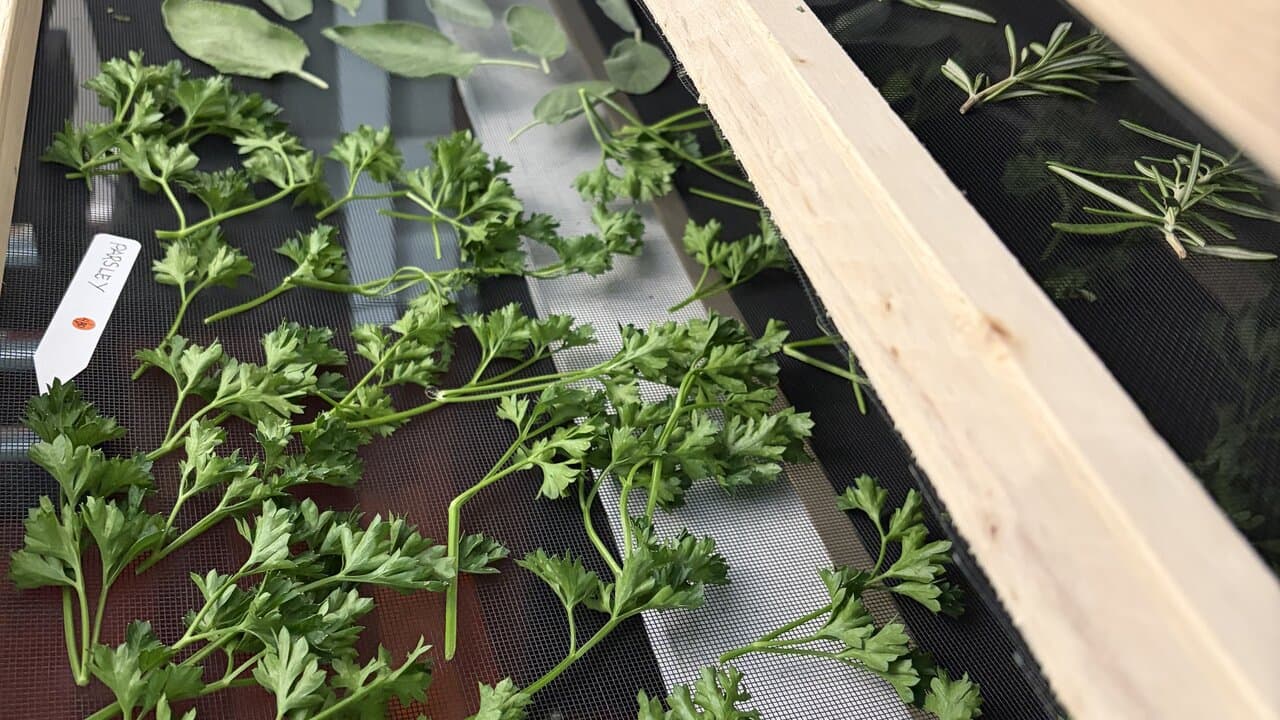
We grow moringa, echinacea, and rosemary in our Tallahassee garden, harvest them at their peak, dry them slowly, and infuse the whole herbs into organic apricot kernel and grapeseed oils for six to eight weeks in cool, dark conditions. No extracts and no shortcuts; the whole leaf and flower give their character to the oil over weeks. That infused oil is blended with mango butter for body, then enriched with two of the most prized seed oils in natural skincare, prickly pear seed oil and organic cold-pressed moringa seed oil, and finished with a whisper of lavender and a little Vitamin E. You can follow the whole process, from garden bed to bottle, on how it's made.
Like a tallow balm, it is completely waterless, so nothing in the bottle is dilution. Unlike a tallow balm, it is built for the face: lighter seed oils rich in linoleic acid balance the butter, which is why the texture absorbs instead of sitting as a film. We wrote about what moringa actually does for skin and why prickly pear seed oil commands its price, if you want the ingredient-level detail.
The structural comparison:
| Tallow balm | A whole-herb waterless crème |
|---|
| Base fat | Rendered grass-fed beef fat | Mango butter, pressed from mango seeds |
| Carrier oils | Olive oil, typically | Apricot kernel and grapeseed, whole-herb infused |
| Botanical content | None, beyond drops of essential oil | Moringa, echinacea, and rosemary, infused whole for weeks |
| Specialty oils | None | Prickly pear seed oil, cold-pressed moringa seed oil |
| Water content | None | None, both sides of this table are waterless |
| Animal-derived | Yes, by definition | No |
| Scent | Neutral to faintly beefy, or essential oils | Soft green herbs with a whisper of lavender |
| Feel on the face | Rich, occlusive, can sit heavily on oily skin | Concentrated but lighter, absorbs into skin |
Neither column is dishonest. They are two answers to the same question, how to moisturize with a short, waterless, filler-free label, and they differ on exactly one axis: whether the ingredients come from a rendering kettle or a garden.
Grown in our garden, made by hand in small batches.
Meet the Moringa w/ Echinacea Face Cream →
Choosing by Use Case
An honest read on when each belongs:
- Very dry body skin, hands, heels. This is tallow's home turf, and if the animal origin does not bother you, a well-made tallow balm will serve you there. So will a plant butter formula; our Basil Body Butter is the same anhydrous idea built from tulsi, Thai and sweet basil.
- The face, worn daily. Here the plant path has the real advantage. A face formula can be tuned lighter with linoleic-rich seed oils in a way a rendered fat cannot, which is exactly the point the dermatologists keep making about heavy fats on facial skin.
- A vegan or vegetarian shelf. The swap is total: plant butters for structure, infused plant oils for conditioning, nothing rendered.
- The ancestral-simplicity commitment. If what drew you to tallow was distrust of fillers and water-heavy formulas, know that you can keep that commitment entirely. Waterless, short-label, small-batch skincare exists on the plant side, and it was there first; herbalists were infusing oils centuries before whipped tallow had a hashtag.
- Scent as part of the ritual. Rendered fat needs essential oils to smell like anything but itself. An infused oil smells like what went into it.
Plenty of people will land on both, a tallow tin for boots-and-heels duty and a botanical crème for the face. The point is not that one is wrong. It is that you should know exactly what each jar is, and choose on purpose.
Reading a "Simple" Label in Ten Seconds
The tallow trend and the botanical tradition agree on the test: count the ingredients, and ask where each one came from. Where they part ways is the follow-up question, what is the first ingredient capable of? A fat can only soften and seal. An infused oil softens, seals, and carries the plants it steeped with. If a short label matters to you, and it should, the next thing to ask of a moisturizer is what its short label actually contains. We apply the same test to face creams for mature skin, where long luxury labels hide the same handful of working parts.
The information in this post is for educational purposes and reflects published ingredient listings, coverage of the tallow skincare trend, and cosmetic chemistry. InVine products are cosmetics, not drugs.