There are easier ways to make herbal skincare than growing the herbs yourself. Dried botanical suppliers ship next day. Bulk herb distributors offer every plant imaginable, pre-cut, pre-sifted, ready to go. For most brands, that's where the supply chain starts and ends.
We chose a different path, not because it's more romantic, but because it produces a genuinely better product.
The Potency Argument
Botanical herbs are not static raw materials. From the moment they're harvested, their active compounds begin to degrade. Volatile terpenes evaporate. Flavonoids oxidize. The rosmarinic acid in a fresh lemon balm leaf is measurably higher than in the same leaf six months later, no matter how well it was stored.
When you buy dried herbs from a distributor, you're purchasing material that was harvested weeks to months ago, processed through at least one intermediary, shipped across state lines or international borders, and stored in a warehouse before reaching you.
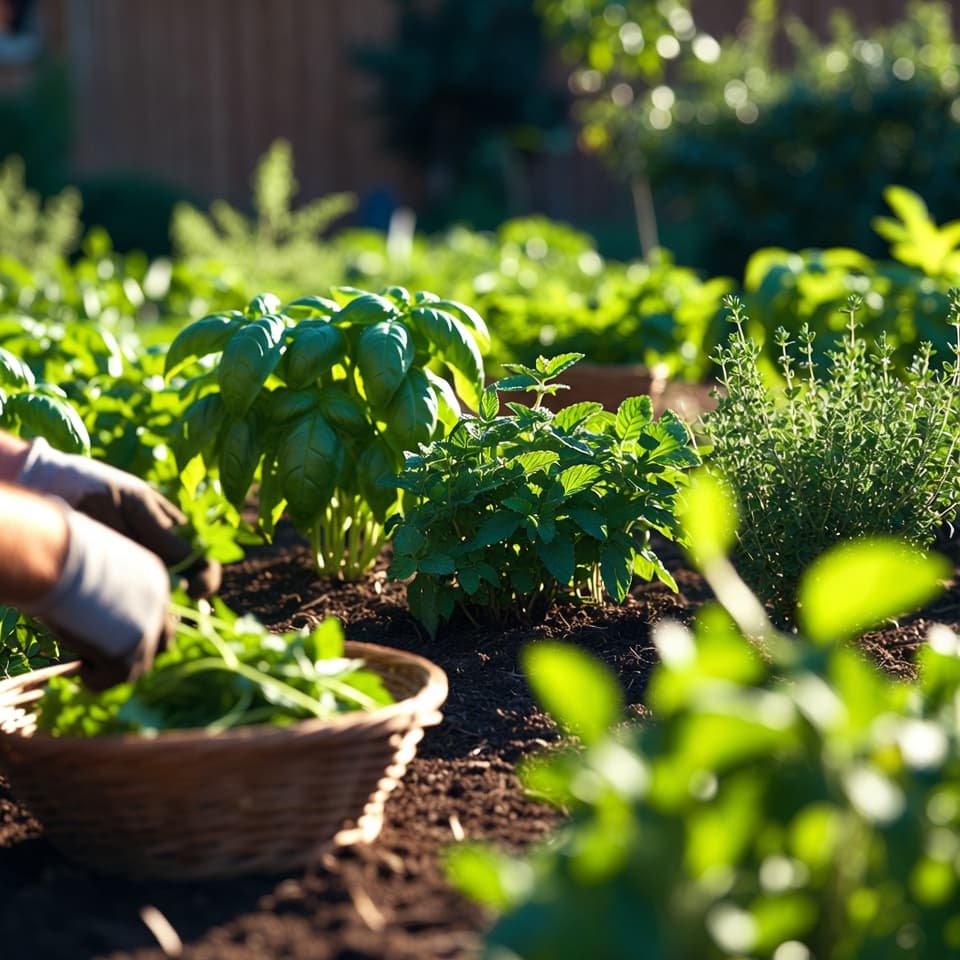
When we harvest lemon balm from our own garden, it goes from living plant to drying rack within the hour. Within days, it's in oil, beginning its slow infusion. The gap between peak potency and extraction is as short as it can physically be.
That gap matters. Not philosophically, chemically.
Harvest Timing Is Everything
Every herb has an optimal harvest window, a point in its growth cycle when the concentration of desirable compounds peaks. For most leafy herbs, that window is just before flowering, when the plant is directing maximum energy into its leaves rather than its reproductive structures.
Peppermint harvested before flowering contains significantly more menthol than peppermint harvested after. Rosemary's carnosic acid peaks in late morning when the sun has warmed the leaves but before midday heat causes volatile loss. Chamomile flowers should be picked at full bloom, not before, not after.
When you grow your own herbs, you control the harvest. You can walk out to the garden at exactly the right moment for each plant and cut what you need. When you're buying from a supplier, you take what you get, harvested on someone else's schedule, optimized for yield rather than potency.
Knowing Exactly What's in the Jar
Our garden uses no synthetic pesticides, no herbicides, and no chemical fertilizers. We know this because we're the ones tending the soil. We compost. We companion plant. We manage pests with biodiversity rather than chemistry.
When a customer asks what's in our balm, we can trace every herb back to the specific garden bed it grew in. That's not a marketing claim, it's a practical reality of growing your own supply.
This traceability also extends to what's not in the jar. No irradiation (a common treatment for commercially dried herbs to kill bacteria introduced during processing). No fumigation. No residual solvents from industrial extraction. The herbs go from soil to oil with nothing in between except sunlight, air, and time.
The Florida Advantage
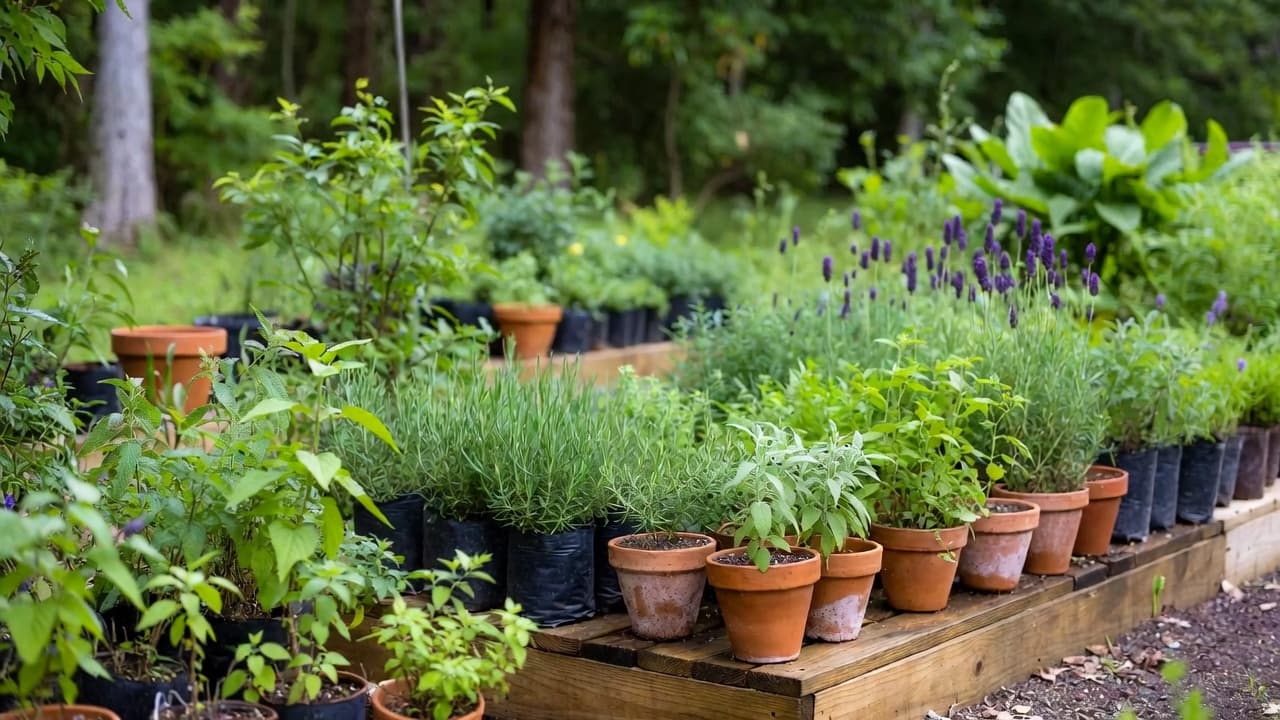
Tallahassee sits in USDA Zone 8b/9a, a climate that supports an unusually wide range of botanical herbs. Our long, warm growing season means tropical and subtropical herbs like lemongrass, turmeric, ginger, and moringa grow vigorously through the summer months. Our mild winters allow cool-season crops like chamomile, cilantro, dandelion, and dill to fill the garden through fall and spring.
The result is nearly year-round production. While a northern herb garden might produce for four to five months, ours produces for ten or more. That means fresh material flowing into infusions across most of the calendar, not a single large harvest followed by months of storage.
What We Don't Grow
Transparency requires honesty about the edges of what we can do.
Black pepper doesn't grow in our climate, it requires true tropical conditions we can't replicate in North Florida. We source it from a trusted supplier and are straightforward about that.
Our essential oils, tea tree, eucalyptus, and lavender, are sourced from established producers. These oils require industrial-scale steam distillation equipment that doesn't make sense for a small-batch operation, and the plants themselves (Australian tea tree, eucalyptus) are not native to our growing region.
Our beeswax comes from a local Tallahassee beekeeper, not our hives, but a relationship we value and maintain.
Everything else, every herb that goes into an InVine infusion, grows in our garden, is harvested by our hands, and is infused under our roof.
Why It Matters
Growing our own herbs makes everything harder. The garden demands daily attention. Weather is unpredictable. Yields vary by season. A hard freeze or a pest outbreak can set a crop back weeks.
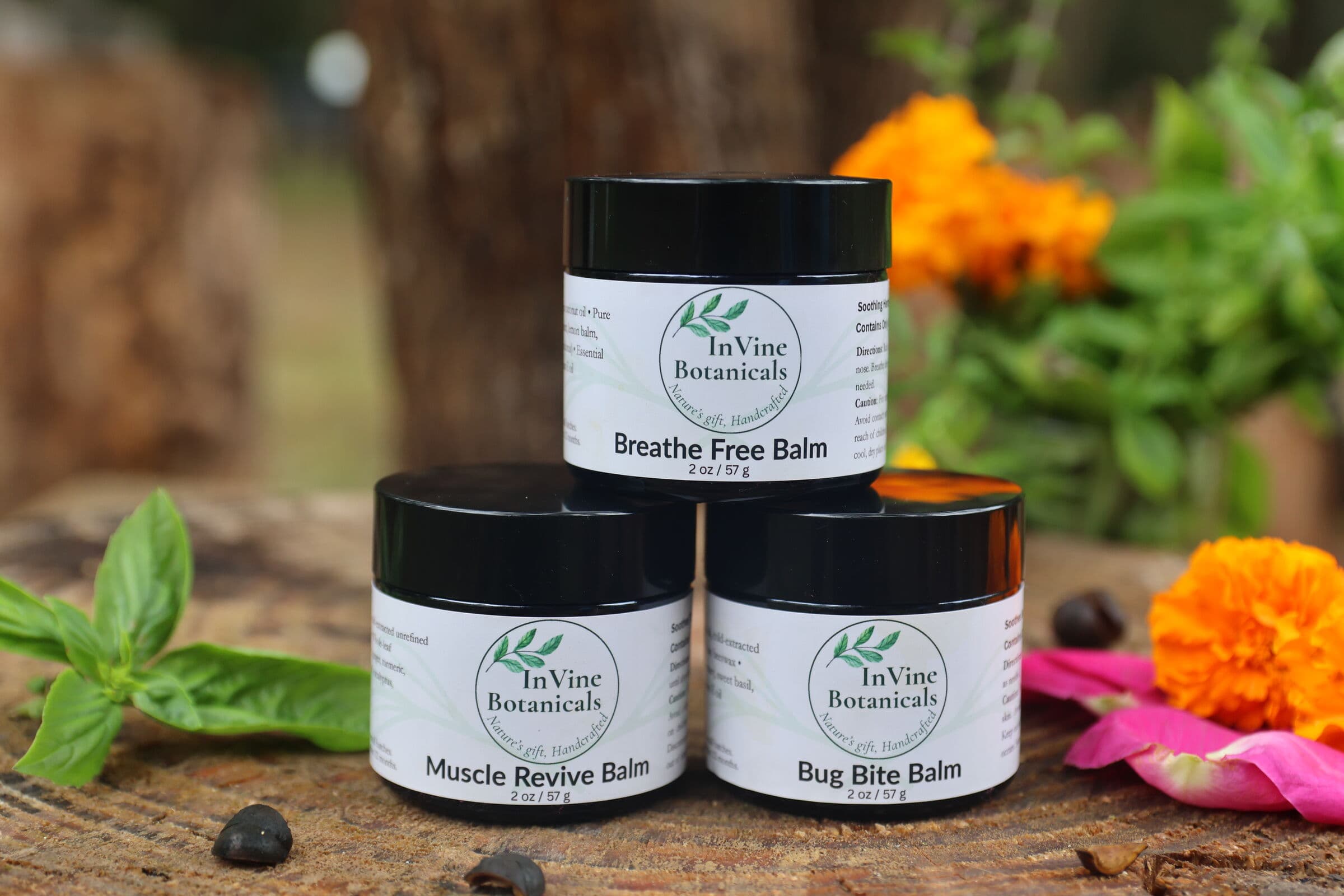
But the tradeoff is a product we can stand behind completely. When we say "garden-grown, whole-herb infused," that's not a label, it's a literal description of how every jar in the InVine shop is made.
The herbs in your balm were alive in our garden days before they went into oil. They were harvested at peak potency, dried with care, and infused slowly in the dark to draw out the full depth of what the plant has to offer.
That's not something a supply chain can replicate. It's something a garden can.
Every InVine Botanicals formula starts where ours does, in the soil, under the Florida sun, tended by the same hands that will eventually seal the jar.