
Botanical Ingredient
Chamomile
Matricaria chamomilla
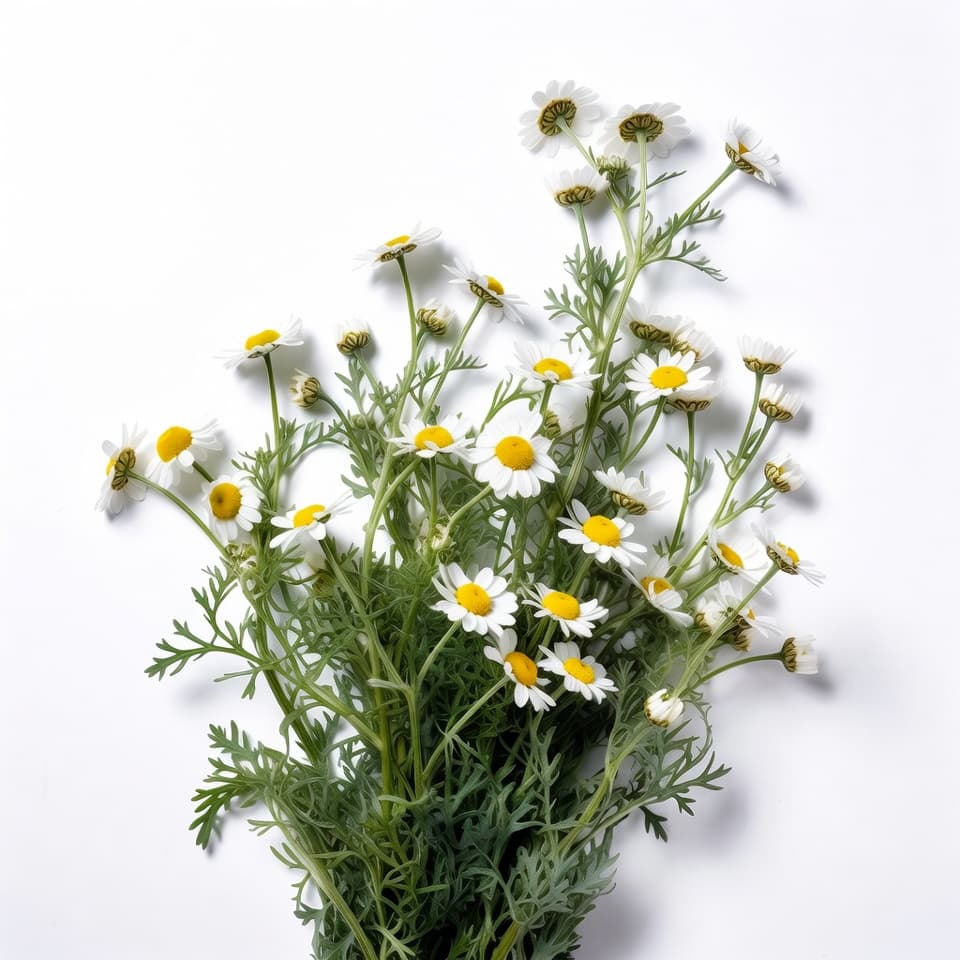
Chamomile is one of the most ancient and widely used herbs in the world, with a documented history spanning over 5,000 years across Egyptian, Greek, and Roman traditions. Its flower heads contain a rich blend of terpenoids and flavonoids, most notably bisabolol, chamazulene, and apigenin, that contribute to its gentle, skin-soothing character. Chamazulene, the compound responsible for chamomile essential oil's distinctive blue color, is one of the most studied botanical compounds in skin care.
Traditional Uses
- Traditionally used for soothing irritated and sensitive skin
- Historically valued for skin conditioning across European herbal traditions
- Traditionally used as a calming nervine and relaxation herb (internal)
- Historically valued for comforting dry, irritated skin
- Traditional gentle baby skin care herb in European folk herbalism
Key Properties
Did You Know
The ancient Egyptians dedicated chamomile to their sun god Ra and considered it the most sacred of all herbs. The word 'chamomile' comes from the Greek 'khamaimelon', meaning 'earth apple', for the apple-like scent of its fresh flowers.
Our Sourcing
Chamomile is grown in InVine's Florida garden in Tallahassee as a cool-season crop, thriving through the mild fall and winter months. We harvest the flower heads at full bloom, when bisabolol and chamazulene content peak, and dry them slowly at low temperature to preserve the volatile compounds.
Why We Use It
Chamomile is the herb I associate most with gentleness that actually works. The bisabolol and chamazulene in its flowers are not mild in their character, they are among the most valued botanical compounds in skin care. But the way chamomile delivers them is soft, suitable even for the most sensitive and reactive skin. I grow it because a botanical garden without chamomile would feel incomplete, and because it fills the cooler months beautifully when the summer herbs have gone dormant.