"Farm-to-table" became a cultural shorthand because the distance between where food is grown and where it's eaten matters, for flavor, for trust, for what's actually in the meal. The same shortening of distance is happening, slowly, in skincare. It just doesn't have the same name yet.
I run InVine Botanicals from a Florida garden in Tallahassee, and I've come to call what we do farm-to-face skincare. Every herb in our infusions grows in our beds. We harvest, we dry, we steep, we pour. The supply chain is maybe four steps long, and three of them happen on the property.
That's rare. Most "natural" or "botanical" skincare brands have a supply chain that's six or eight or twelve steps long, broker, distributor, mill, refinery, contract manufacturer, fulfillment. Each step is an opportunity for something to be added, substituted, or quietly compromised. Farm-to-face skincare is the version where the founder and the farmer are the same person.
Here's what that actually looks like, why it's worth caring about, and the questions to ask when a brand claims it.
What "farm-to-face" should mean
The phrase only earns its keep if it answers three questions concretely.
1. Is the farm a real, named place?
Not "a partner farm in Italy." Not "ethically sourced from nature." A farm with a name, a location, and a person who can describe what was harvested last week. If a brand can't point to a specific piece of ground, the farm part is metaphor.
2. Did the founder or formulator have hands on the plants?
This is the difference between knowing what you're working with and knowing about it. Plants are not static. Rosemary harvested in May smells different from rosemary harvested in September. Lemon balm dried at 76°F holds its character; lemon balm dried in the sun loses most of it. Hands-on means decisions get made by people who can see and smell the plant.
3. How short is the path between harvest and jar?
For most commercial skincare, that path involves freezing, shipping, processing, re-shipping, blending, bottling, distribution. Farm-to-face skincare collapses most of those steps into the same property.
A brand that answers all three honestly is doing farm-to-face. A brand that can only answer one is doing something else, maybe still good, but not the same thing.
The InVine version: what farm-to-face looks like in practice
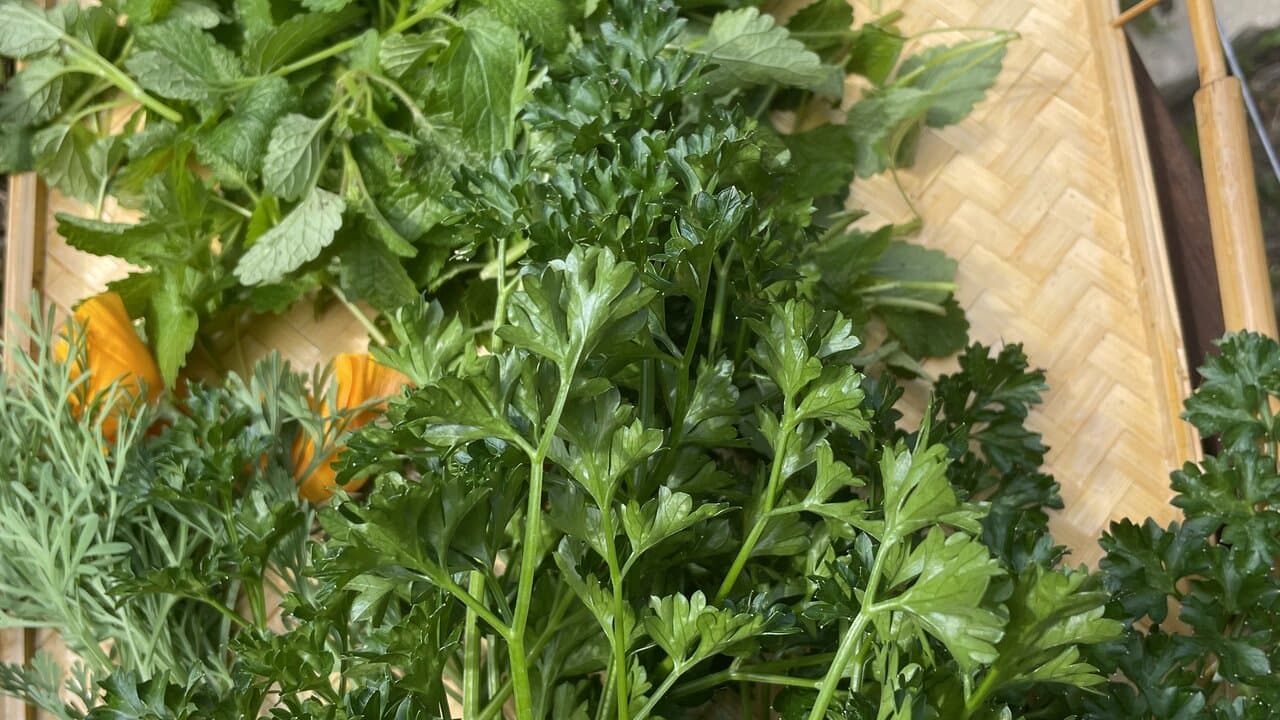
Our garden in Tallahassee grows the herbs that go into our formulas. The one exception is black pepper, it needs a more tropical climate than even Florida offers, so we source whole peppercorns from a trusted supplier. The list of garden plants currently in formula:
Lemongrass (Cymbopogon citratus), lemon balm (Melissa officinalis), rosemary (Rosmarinus officinalis), sweet basil (Ocimum basilicum), lemon mint (Monarda citriodora), peppermint (Mentha × piperita), spearmint (Mentha spicata), lemon thyme (Thymus citriodorus), ginger (Zingiber officinale), turmeric (Curcuma longa), cayenne (Capsicum annuum), moringa (Moringa oleifera), echinacea (Echinacea purpurea), holy basil/tulsi (Ocimum tenuiflorum), Thai basil (Ocimum basilicum var. thyrsiflora), and rose (Rosa).
We also grow another dozen herbs that aren't currently in product but rotate in and out, calendula, chamomile, yarrow, dandelion, oregano, sage, dill, cilantro, elderberry, stevia, mexican tarragon, horseradish, garlic, borage, california poppy, parsley.
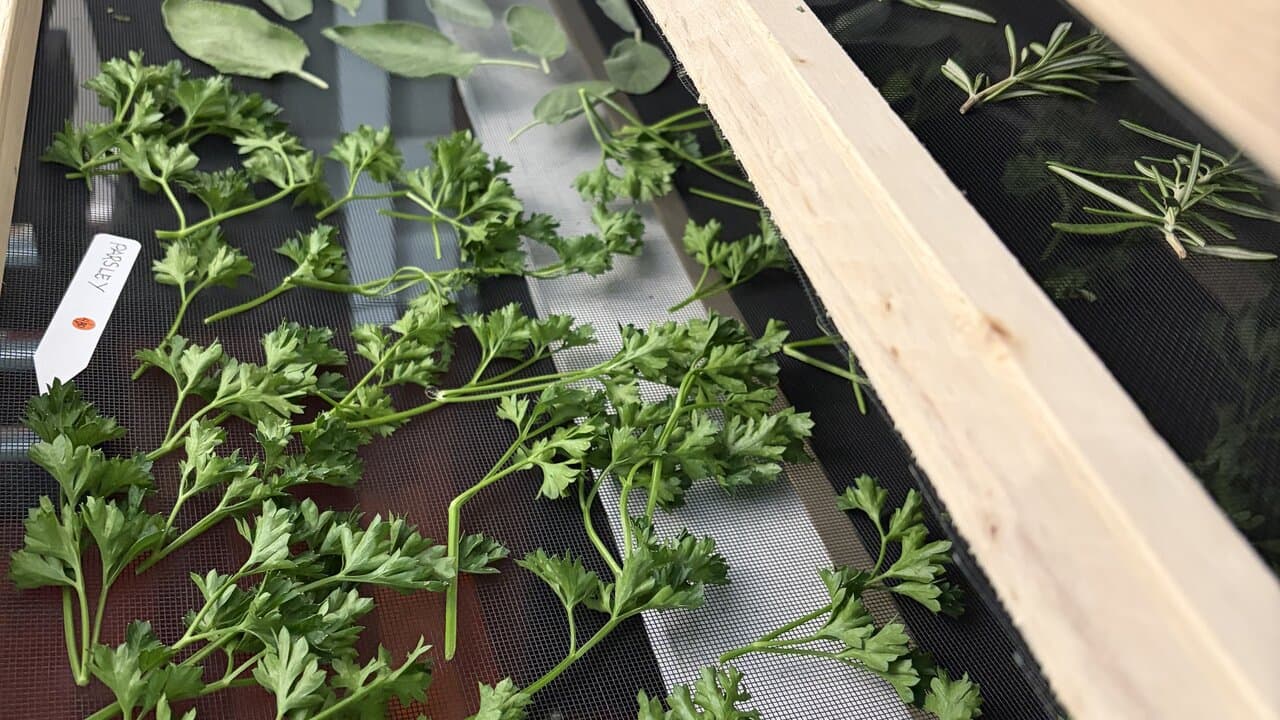
Once harvested at peak season, the herbs go into our drying room: 76°F, 35% humidity, complete darkness, fans running continuously over screen drying racks. Four to nine days, depending on the herb. Light destroys plant compounds; humidity invites mold; heat blows off the volatile aromatics. Cool, dry, dark is the right answer to all three problems.
From there, the dried herbs go into organic cold-extracted olive oil and unrefined virgin coconut oil. Six to eight weeks of slow infusion, in a separate climate-controlled room at 74°F, no light, no heat applied. The oil draws out the lipid-soluble compounds at its own pace. No shortcuts.
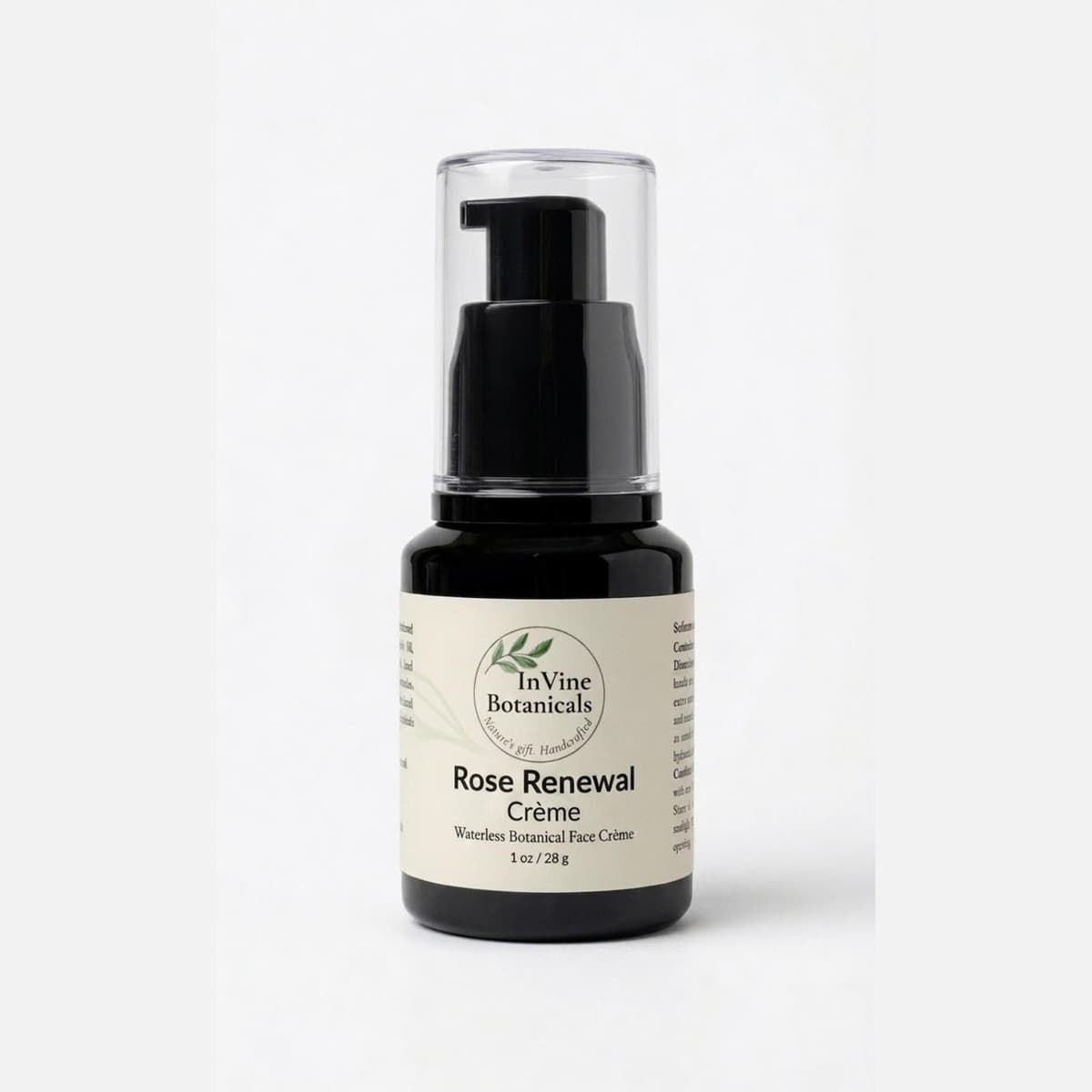
We strain the infused oil, blend with locally-sourced beeswax from a Tallahassee beekeeper we've worked with for years, and add Vitamin E as a natural antioxidant. Then we pour by hand into jars and label each batch with its infusion date and batch number.
Start to finish, from a plant in the garden to a finished jar, is roughly eight to twelve weeks. The plant has traveled maybe a hundred feet.
Why the distance matters
There are real reasons farm-to-face is more than a marketing posture.
Freshness shapes character. A plant's volatile compounds, the molecules that give it scent, color, and biochemical signature, start dissipating from the moment it's harvested. The longer the path from harvest to use, the more of that character is lost. Plants that travel a hundred feet retain more than plants that travel ten thousand miles.
Adulteration is harder to do in your own garden. The supplements industry has well-documented problems with adulterated raw materials, herbs cut with cheaper substitutes, oils thinned with lower-grade carriers. When you grow the plant yourself, you know what's in it.
Decisions get made by people who care. When I see a patch of rosemary that's stressed from a dry stretch, I know to wait two weeks. When the lemon balm has its perfect oil-content week, I know to harvest. These judgments don't survive the broker chain. A purchasing manager three thousand miles away can't make them.
The trade-off is small scale. Farm-to-face skincare can't be made at industrial volume, at least not honestly. Our garden produces what our garden produces. That's a feature: it's why we work in small batches and never stockpile. It's also why we sometimes sell out and have to put products on pre-order while the next infusion finishes.
Other brands doing real farm-to-face work
There aren't many. The brands that come closest tend to share a few traits: they're small, the founder is also the grower or formulator, and they can name the land.
A few I respect for their version of this:
- Tata Harper grows ingredients on her Vermont farm and runs formulation on-site. The volume is higher than ours and the price point is luxury, but the upstream integration is real.
- Botnia Skincare in Sonoma County grows herbs on the property and formulates them into small-batch face care, with a brick-and-mortar facial studio attached so the team works with the products every day.
- Live Botanical in Oregon is run by a clinical herbalist who sources from her own gardens and a small network of growers she knows.
These are different scales and different aesthetics from InVine, but they share the underlying premise: the people making the product have hands on the plants.
Questions to ask when a brand claims farm-to-face
If you're vetting a brand that uses the phrase, here are the questions that separate real farm-to-face skincare from marketing copy:
- Where is the farm? Can you point it out on a map?
- Who harvests the plants? Is the founder involved?
- Where is the formulation done, on-site or contracted to a manufacturer?
- How long is the lead time from harvest to finished product?
- Can I see batch numbers and harvest dates on the labels?
If the brand can answer four of those five, you're probably looking at the real thing. If they can answer two, it's still a small brand worth supporting, just not strictly farm-to-face. If they can answer none, the phrase is decoration.
The honest limit
Farm-to-face skincare will never scale to mass market. It can't. A two-acre garden can supply a few thousand customers, not a million. That's the honest constraint, and it's why we're a small batch brand that doesn't stockpile.
If you want to know how this corresponds to what's actually in our jars, the plant-based skincare collection walks through every product and which garden herbs went into it.
The shortest supply chain is the one where the founder, the grower, and the formulator are the same person, and they're walking out to the garden in the morning. There's no marketing language that can substitute for that.