Quick answer: For everyday dry skin, the closest natural alternative to Vanicream Moisturizing Cream is a waterless plant butter, where plant oils, butter, and beeswax do the softening instead of water and petrolatum. Ours is InVine Botanicals' Basil Body Butter: three basils from our garden infused whole in apricot kernel and grapeseed oils, with mango butter, moringa oil, and beeswax. Eleven ingredients, no water, no petroleum. One honest limit up front: Vanicream is made without botanicals or essential oils on purpose, and ours is made of them. If that is why you buy Vanicream, keep buying it. Below: what is in the tub, what it does well, and where a garden-grown butter fits.
Vanicream is the quiet favorite of the skincare aisle. It has no celebrity, no scent, and very little packaging design, and it has a loyal following among people with sensitive skin. The company behind it, Pharmaceutical Specialties, Inc., was started by two hospital pharmacists who worked closely with dermatologists, and the product still reads like something a pharmacist would make: short, plain, and built around what is left out.
If you love it, you do not need to be talked out of it. This post is for the person who turned the tub over, saw petrolatum second on the list, and wondered what a plant-based version of a simple, no-nonsense moisturizer would look like.
Vanicream Alternatives at a Glance
Start with where you use it:
- Dry, rough places on the body (elbows, knees, heels, shins): a waterless body butter. Ours is the Basil Body Butter.
- Face: a waterless face crème. Ours is the Moringa w/ Echinacea Face Cream.
- Hands: a hand cream you will actually reapply. Ours is the Spearmint Hand Cream.
- You need a formula with no botanicals, no essential oils, and no scent of any kind: stay with Vanicream. That is exactly what it is for.
What's Actually in Vanicream Moisturizing Cream
We read the ingredient list on the brand's own product page on November 16, 2026. It lists ten ingredients, in this order: water, petrolatum, sorbitol, cetearyl alcohol, propylene glycol, ceteareth-20, simethicone, glyceryl stearate, PEG-30 stearate, and sorbic acid.
- The base. Water is first, so it is the largest single component. It is what makes the cream spread easily and feel light.
- The moisturizing engine. Petrolatum is second. It is the same petroleum-derived ingredient that makes up Vaseline, and it works by sitting on the skin and slowing water loss.
- The humectants. Sorbitol and propylene glycol draw and hold water.
- The structure. Cetearyl alcohol is a fatty alcohol that gives the cream body. Ceteareth-20, glyceryl stearate, and PEG-30 stearate are emulsifiers, the ingredients that keep water and petrolatum from separating.
- The silicone. Simethicone is a silicone-based ingredient, here in a small supporting role.
- Preservation. Sorbic acid closes the list. Any cream that contains water needs a preservative, and this is a widely used one.
There are no plants anywhere on the list. That is not an oversight. The brand states it plainly: no botanical extracts or essential oils.
Credit Where It's Due
- The list is short. Ten ingredients is rare for a water-based cream. Most run to twenty or thirty.
- It leaves out what many people react to. The brand says its products are free of dyes, fragrance, masking fragrance, lanolin, parabens, and formaldehyde releasers. For someone who has spent years finding out what their skin will not tolerate, that list is the whole point.
- It is honest about scent. The brand notes that with no fragrance or masking fragrance, the cream simply smells like its ingredients.
- It has outside recognition. The Moisturizing Cream carries the National Eczema Association's Seal of Acceptance.
- It is easy to find, in sizes from a travel tube to a pump tub.
Why People Go Looking for an Alternative
- Petrolatum is the second ingredient. If you are moving away from petroleum-derived skincare, that is the part you are moving away from. We wrote more about that in our guide to natural alternatives to Vaseline.
- Nothing in it grew. Vanicream is plant-free by design. Some people want the opposite: a formula where plants are the base, not an absence.
- Water, emulsifiers, and a preservative. These are normal and safe in a cream. They are also the ingredients a waterless formula does without.
None of this is a flaw. Vanicream is a carefully made product doing a specific job. The question is whether that job is the one you are buying it for.
Are CeraVe and Vanicream the Same Thing?
No, though they sit side by side on the shelf and share a few ingredients. We read CeraVe Moisturizing Cream's list on cerave.com the same day. It has 24 ingredients. Water is first there too, followed by glycerin, and petrolatum is seventh instead of second. CeraVe adds three ceramides, sodium hyaluronate, cholesterol, and dimethicone, and it is preserved with phenoxyethanol. Vanicream's own page says its Moisturizing Cream does not contain ceramides.
So the two take different roads: CeraVe adds ingredients that mimic the skin's own lipids, and Vanicream keeps the list as short as it can. A plant butter is a third road, with no water and no petroleum at all.
| Vanicream Moisturizing Cream | CeraVe Moisturizing Cream | InVine Basil Body Butter |
|---|
| What it is | Water-based cream | Water-based cream | Waterless plant butter |
| First ingredient | Water | Water | Basil-infused apricot kernel oil |
| Where petrolatum sits | Second | Seventh | Not in the formula |
| Ingredient count | 10 | 24 | 11 |
| Plant ingredients | None, by design | None | Three garden basils, mango butter, moringa oil |
| Silicone | Simethicone | Dimethicone | None |
| Preservative | Sorbic acid | Phenoxyethanol | None needed, the formula is waterless |
| Scent | No fragrance | No fragrance | Light lavender and peppermint essential oils |
| Best for | Skin that needs the fewest possible ingredients | People who want ceramides in a cream | Softening dry, rough places on the body |
What a Whole-Herb Butter Does Differently
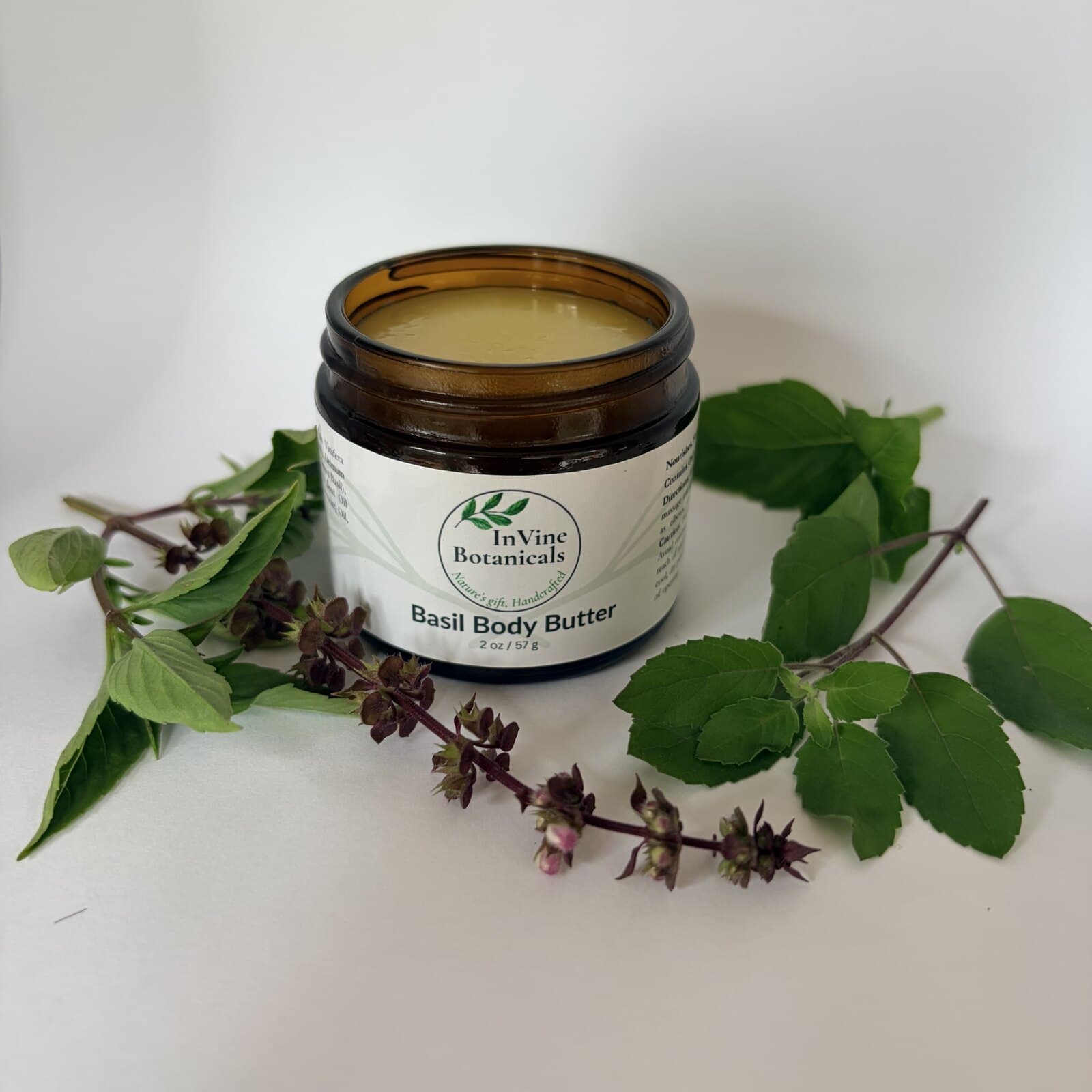
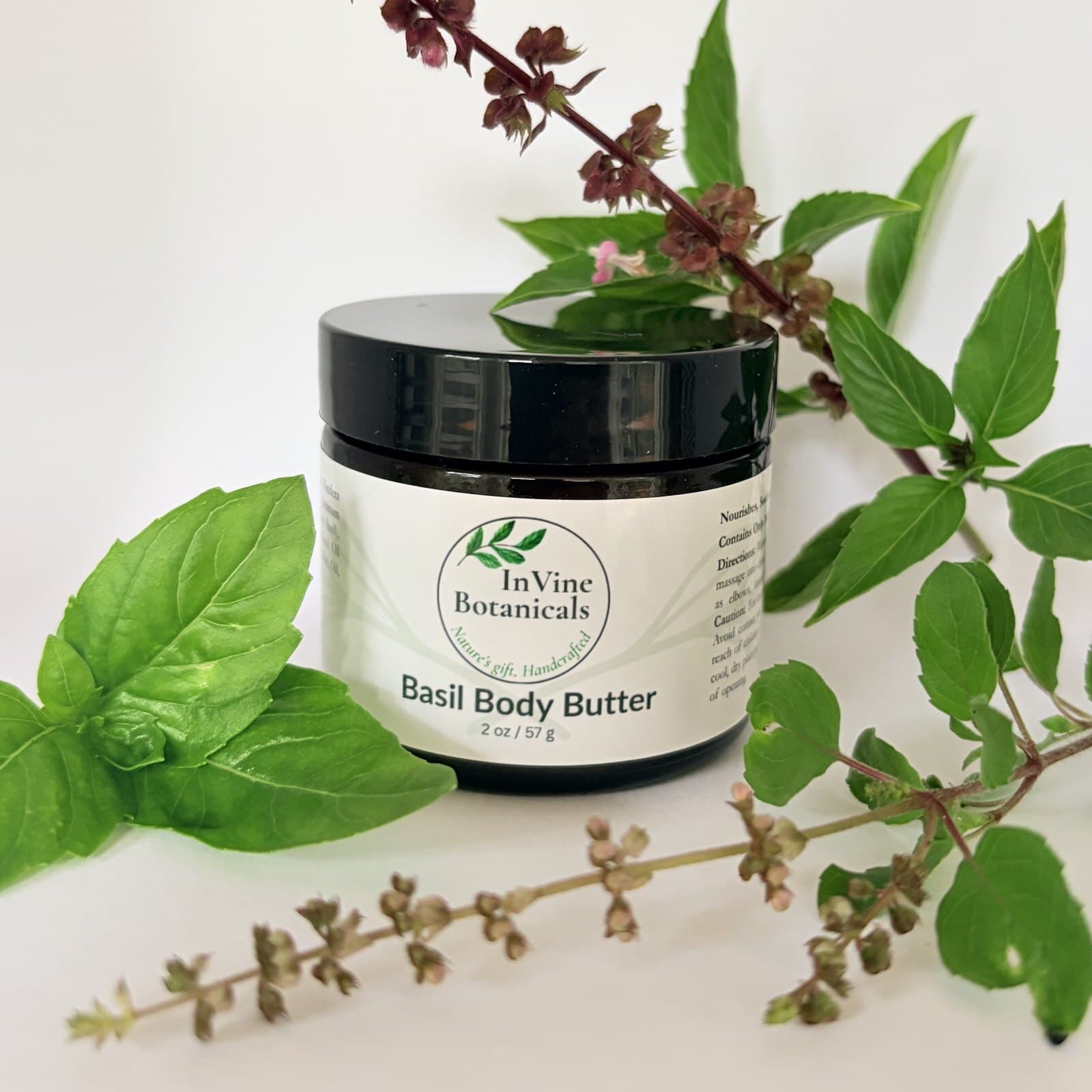
Our Basil Body Butter, which I formulated for the driest places on the body, starts in our Tallahassee garden. We grow sweet basil, holy basil, and Thai basil, harvest them at peak, dry them slowly, and infuse the whole herbs into organic apricot kernel and grapeseed oils for six to eight weeks in cool, dark conditions. The infused oil is blended with mango butter, moringa oil, and beeswax, then finished with lavender and peppermint essential oils and a little Vitamin E. That is the whole label. The full process is on how it's made.
There is no water in it, so it needs no preservative and no emulsifier. There is no petroleum and no silicone. The mango-butter body melts on contact and leaves skin soft and smooth, and the scent is light and fresh, never perfumey. A little goes a long way: one 2 oz jar typically lasts months of regular use.
It is made for elbows, knees, heels, and anywhere skin runs rough. Warm a small amount between your hands and massage it into clean, dry skin.
Grown in our garden, made by hand in small batches.
Meet the Basil Body Butter →
When Vanicream Is the Right Tool
We would rather tell you this than have you find out:
- Your skin reacts to botanicals or essential oils. Vanicream contains neither. Our butter is made of herbs and finished with two essential oils. It is the wrong jar for you, and that is fine.
- You avoid all scent. Vanicream has no fragrance and no masking fragrance. Ours has a light essential-oil finish.
- A dermatologist or allergist told you to use it. Keep using it, and follow their advice.
- You want a light, quick cream for large areas. A water-based cream covers a whole body faster than any butter.
- You are buying for a baby. Vanicream makes a version for babies. Ask your pediatrician.
And when a plant butter is the better fit:
- You use Vanicream mostly as an everyday moisturizer for dry elbows, knees, heels, and shins, and no particular ingredient has ever bothered your skin.
- You want to leave petroleum out.
- You want plants to be the formula. In our jar the basil-infused oil is the first ingredient.
- You like a little scent, as long as it comes from the plant and not from a perfume blend. Our post on fragrance on a skincare label explains the difference.
If you have reactive skin and want to try any new product, ours included, test a small amount on your inner arm for a day or two first.
Comparing the fragrance-free pump bottles as well? See a natural alternative to Aveeno lotion.
Reading a Simple Moisturizer Label in Ten Seconds
Three quick checks work on any tub that calls itself simple or gentle:
- Read the first three ingredients. They are most of what you are buying. On Vanicream they are water, petrolatum, and sorbitol. On a plant butter they should be oils and butters you recognize.
- Count the list, then ask what the short list is made of. Short is good. Short and made of things you want on your skin is better. Ten ingredients and eleven ingredients can be two very different jars.
- Look for what was left out, and why. Vanicream leaves out fragrance, dyes, and plants so that there is less for skin to react to. A waterless butter leaves out water, so it can also leave out the preservative and the emulsifiers. Both are honest reasons. They serve different people.
How to Switch for Everyday Dry Spots
If you decide to try a butter for the everyday job, keep it simple. Use it after a shower on clean, dry skin, on the places that are always rough. Start with less than you think you need, warm it between your hands first, and give it a few evenings before you judge it. Keep the Vanicream tub where it is. Plenty of households will use both: the tub for the whole family and the days skin wants nothing extra, and the jar by the bed for elbows and heels.
For more comparisons from the same shelf, see a natural alternative to Cetaphil Moisturizing Cream and a natural alternative to CeraVe Healing Ointment, and for help choosing a butter, our guide to herbal body butter.
The information in this post is for educational purposes and reflects ingredient listings published on the brands' own websites as of the date noted. InVine products are cosmetics, formulated to moisturize, soften, and condition the skin. They are not intended to diagnose, treat, cure, or prevent any disease.