Quick answer: The closest natural swap for CeraVe Healing Ointment is a beeswax-based, whole-herb balm. Beeswax and plant butters do the moisture-sealing work of the ointment's petrolatum and waxes, slow-infused plant oils supply the emollience, and the botanicals on the label are actually in the jar. Below: what's really in the tub, what it genuinely does well, and how a garden-grown alternative compares.
CeraVe is the brand that made "ceramides" a household word. Developed with dermatologists and recommended in their offices ever since, it built its reputation on a simple promise: skin-identical lipids, no fragrance, no fuss, drugstore price. The Healing Ointment is CeraVe's entry in the classic ointment category, the same shelf where Vaseline and Aquaphor live, and if you go by online skincare communities, it may be the most recommended of the three for "slugging," the practice of sealing your evening skincare under an occlusive film.
We respect what CeraVe got right, and this formula gets real things right. But if you've started reading skincare labels the way you read food labels, the ingredient list raises an honest question: you came for the ceramides, how much of the tub is actually ceramides, and how much is petroleum? Here's what's actually in it, what it does well, and what a balm built from whole herbs does differently.
Comparing the wider Cetaphil and CeraVe families? We read Cetaphil Moisturizing Cream's label too.
What's Actually in CeraVe Healing Ointment
CeraVe Healing Ointment is regulated as an over-the-counter skin protectant, which means its label separates one "active ingredient" from everything else. From the FDA label filing:
- Petrolatum, 46.5% (the active ingredient), petroleum jelly, the same substance as Vaseline, doing the same job: an occlusive film that sits on top of skin and slows water from evaporating out. Nearly half the tub is this one ingredient.
- Mineral oil, a second petroleum derivative, listed first among the inactives. It thins the petrolatum so the ointment spreads more easily than straight Vaseline.
- Microcrystalline wax, paraffin, and synthetic wax, three more petroleum-derived waxes. Where beeswax structures a natural balm, these structure this one.
- Ceramides NP, AP, and EOP, the ingredients on the front of the tub. Ceramides are lipids of the same families skin's own barrier is built from, and CeraVe's are produced in a lab rather than extracted from plants or animals. They're real, and they're also well down the ingredient list, after the petroleum base and waxes.
- Hyaluronic acid, panthenol, cholesterol, and phytosphingosine, the supporting humectant-and-lipid cast, also lab-made, also present in small amounts.
- Glycerin, water, and the formulation crew, carbomer, triethyl citrate, sodium lauroyl lactylate, xanthan gum, caprylyl glycol, tocopherol, and benzoic acid (a preservative), which hold the emulsion together.
Nothing in that list is scandalous, every ingredient is legal, common, and doing a defined job. But notice what the list adds up to: the active ingredient is petroleum jelly, the first inactive is mineral oil, and the structure comes from three petroleum-derived waxes. The ceramides that give the brand its name are real and present, as a finishing touch on what is, by composition, mostly a petroleum product. The plant kingdom isn't represented at all.
Credit Where It's Due
CeraVe Healing Ointment didn't become the internet's favorite slugging ointment by accident:
- The occlusion works. A petrolatum film over damp skin is the most-proven way in conventional skincare to slow moisture loss. That's why it's an FDA-recognized skin protectant.
- It's genuinely fragrance-free and lanolin-free. This is the formula's quiet advantage over Aquaphor, whose lanolin alcohol is a known trigger for people with wool sensitivities. CeraVe skipped both fragrance and lanolin, which is exactly why dermatology forums steer reactive-skin readers here.
- The ceramide idea is honest science. Skin's own barrier really is built from ceramides, cholesterol, and fatty acids, and researchers have explored these lipids extensively. Whether a petroleum-sealed film needs them on top is debated; that they belong in skincare conversation is not.
- It's affordable and everywhere. Drugstore price, every pharmacy in America, a tub lasts months.
The people searching for an alternative usually aren't questioning whether CeraVe Healing Ointment works. They're questioning what it works with.
Why People Go Looking for an Alternative
Three reasons come up again and again in the forums and comment threads where this question lives:
- The petroleum base. Slugging made millions of people read an ointment label closely for the first time, and many were surprised to find that the ceramide brand's ointment is, by composition, mostly petroleum derivatives, petrolatum plus mineral oil plus three petroleum waxes. If you've moved the rest of your routine to plant-based formulas, the ointment is often the last holdout. (We took a longer look at the mineral-oil question in Is Mineral Oil Bad for Your Skin?, the honest answer is "safe, but inert.")
- Lab lipids vs. plant lipids. CeraVe's ceramides are synthesized to mimic what skin already makes. Some people prefer that precision. Others want their skincare to come from materials they can picture, a leaf, a flower, a beehive, rather than a lab bench. Neither instinct is wrong; they're different answers to what "good ingredients" means.
- Petroleum gives nothing to skin. Petrolatum and mineral oil are superb at holding moisture in and famously inert, they add nothing of their own. A plant-oil-and-beeswax balm takes the opposite approach: the oils themselves carry fatty acids and the character of whatever was infused into them, so the balm is both the seal and the substance.
What a Whole-Herb Balm Does Differently
A botanical balm worth the name starts from the opposite end: plants first.
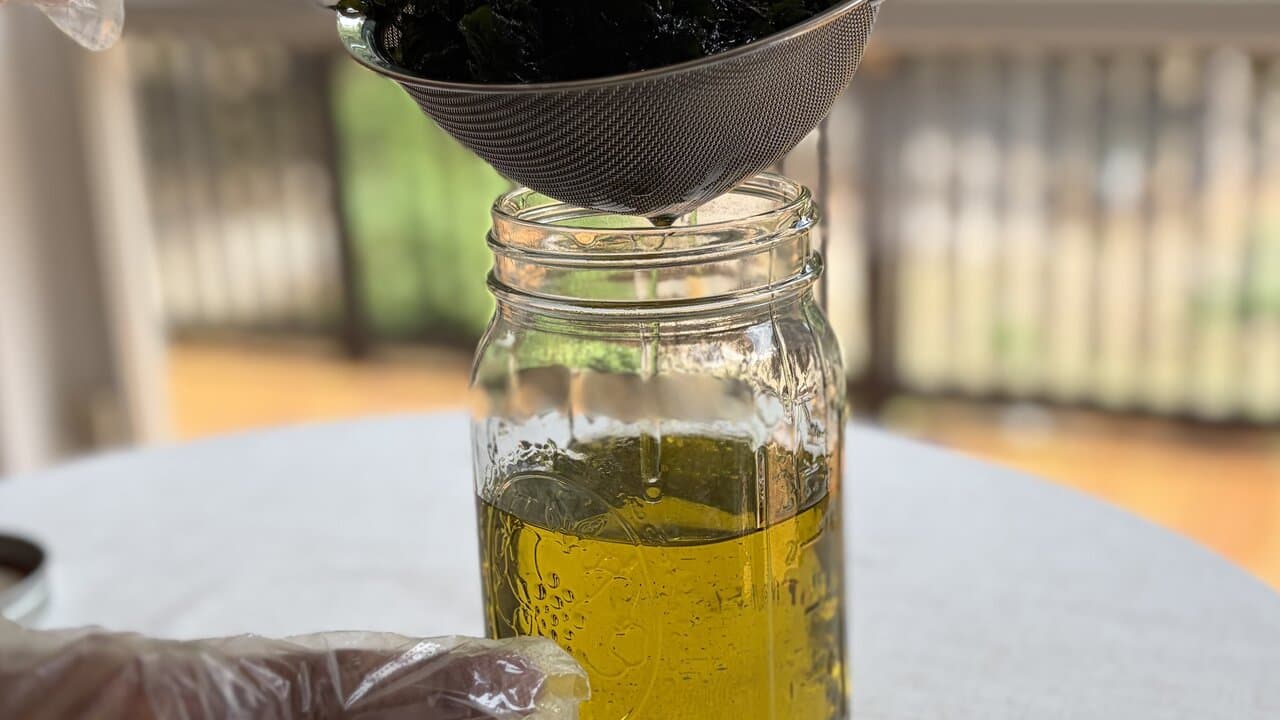
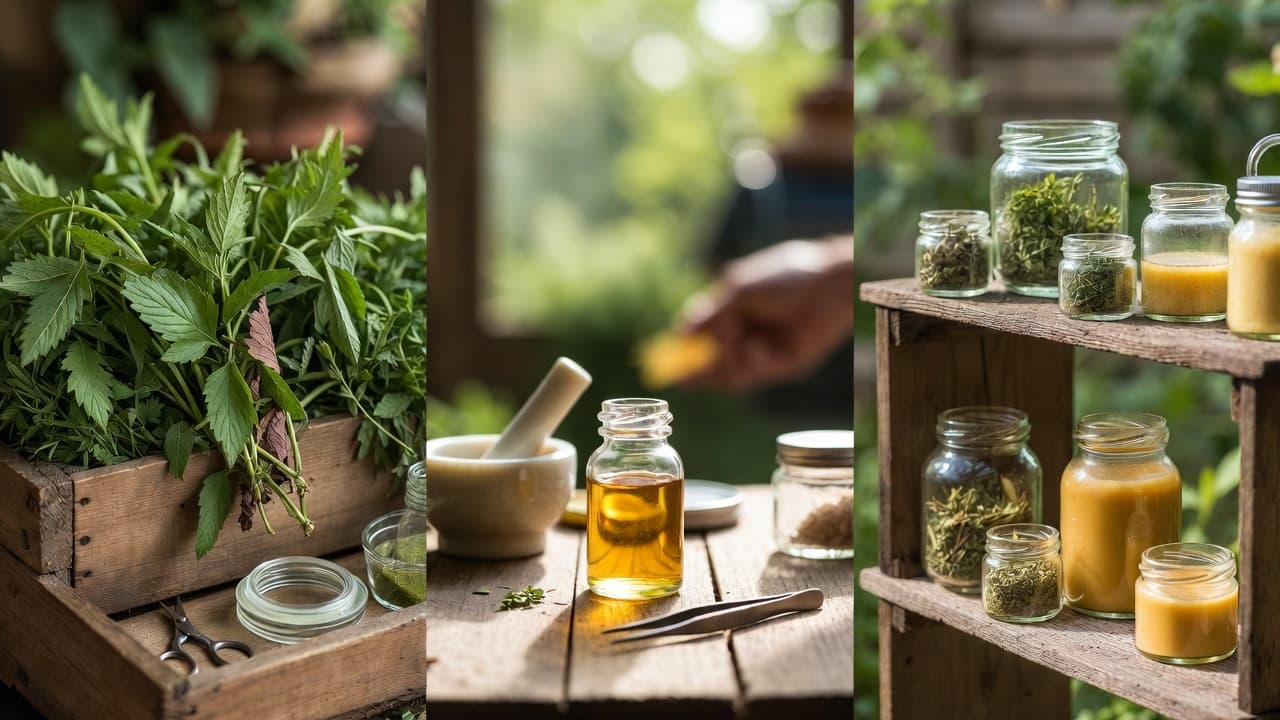
Ours starts in our Tallahassee garden. We grow the herbs ourselves, lemongrass, rosemary, peppermint, spearmint, and two dozen others, harvest them at their peak, dry them slowly, and infuse the whole herb into organic olive and coconut oils for six to eight weeks in cool, dark conditions. No extracts, no shortcuts: the whole leaf gives its character to the oil over weeks. That infused oil is blended with beeswax from a local Tallahassee beekeeper, which does exactly the structural job CeraVe's three petroleum waxes do, and protected with Vitamin E, a natural antioxidant. Every jar is poured and capped by hand. You can see the whole process, from garden bed to jar, on how it's made.
The structural comparison:
| CeraVe Healing Ointment | A whole-herb balm |
|---|
| Base | Petrolatum 46.5% + mineral oil | Organic olive and coconut oils, infused with whole herbs |
| Structure | Microcrystalline, paraffin & synthetic waxes | Beeswax from a local beekeeper |
| Signature ingredient | Lab-made ceramides NP, AP, EOP | Garden-grown herbs, infused whole for 6-8 weeks |
| What the base contributes | Nothing of its own, an inert seal | Plant fatty acids and botanical character |
| Scent | None (fragrance-free) | The herbs themselves, nothing added |
| Origin | Petroleum refining + lab synthesis | A Florida garden |
The honest trade-offs run both ways. A petroleum ointment never goes rancid and costs less; plant oils are living materials with a real shelf life, and growing, drying, and slow-infusing herbs costs more than refining crude-oil by-products. CeraVe's occlusive film is heavier-duty than beeswax's, if a dermatologist told you to keep a spot covered with an ointment, follow the dermatologist. What the botanical balm offers is materials: oils that bring something to skin rather than just sealing it, herbs you can name and picture, moisture care that softens and conditions with the plants doing the work. Our whole-herb balms are built exactly this way.
One note for face-first users: if you're drawn to CeraVe's ointment for facial moisture rather than spot-sealing, a rich waterless cream may be closer to what you actually want, we make our waterless crèmes with mango butter and botanical infusions for exactly that use, no petroleum and no water to dilute them.
When CeraVe Is the Right Tool
Honesty cuts both ways, so: keep the tub if what you want is maximum drugstore occlusion with zero fragrance and zero botanicals, for slugging over an evening routine, it's purpose-built, and the fragrance-free formula is a genuine gift to reactive skin. And if a doctor recommended it for aftercare, that's a medical conversation, not a skincare-label one, follow your doctor.
But if the reason you're reading this is that the label surprised you, that the ceramide brand's ointment turned out to be mostly petroleum, then you're the person the botanical alternative was made for. The question isn't whether petroleum works. It's whether you want your daily moisture care built from refinery by-products with lab lipids added, or from plants, beeswax, and time.
Frequently Asked Questions
Is CeraVe Healing Ointment the same as Vaseline?
No, but they're close relatives. Vaseline is 100% petrolatum; CeraVe Healing Ointment is 46.5% petrolatum thinned with mineral oil, structured with three petroleum-derived waxes, and finished with lab-made ceramides, hyaluronic acid, and panthenol. The core strategy is identical, an inert petroleum film that slows water loss, CeraVe adds skin-identical lipids on top and keeps the formula fragrance-free.
What is a natural alternative to CeraVe Healing Ointment?
A balm built on beeswax and slow-infused plant oils does the same moisture-sealing job with botanical materials: beeswax replaces the petroleum waxes, and olive and coconut oils infused with whole herbs replace the petrolatum and mineral oil. Look for a short label of oils, beeswax, and botanicals you can actually name, and expect it to soften and condition rather than just seal.
What is better than CeraVe Healing Ointment?
"Better" depends on what you're asking the jar to do. For pure drugstore occlusion with no fragrance, CeraVe is already at the top of its own category, that's the honest answer. If you want plant-based materials, oils that contribute something of their own, and a formula whose signature ingredients grew in a garden rather than a lab, a whole-herb beeswax balm is the better fit. Different definitions of better, different jars.
This article is for educational purposes. InVine Botanicals products are cosmetics, they moisturize, soften, and condition skin, and are not intended to diagnose, treat, cure, or prevent any disease. CeraVe Healing Ointment's label facts are drawn from its FDA over-the-counter drug label filing.