Quick answer: The closest natural swap for Olay Regenerist is a waterless botanical crème where plant oils and butters, not water and silicones, make up the base. Regenerist's real actives, niacinamide and peptides, are genuinely good ingredients riding in a synthetic chassis of roughly thirty components. A whole-herb alternative flips the ratio: the botanicals are the formula. Below: what is actually in the red jar, what it does well, and how a garden-grown crème compares.
The red jar has earned its place on a million bathroom counters. Olay Regenerist Micro-Sculpting Cream is one of the best-selling facial moisturizers in America, consumer-testing outlets have famously ranked it above creams many times its price, and dermatologists recommend it often enough that the brand puts the fact in its advertising. If you have been using it for years and your only complaint is the ingredient list, this post is for you.
Because that is the pattern we hear from people searching for a natural alternative to Olay Regenerist: it is not that the cream failed them. It is that somewhere along the way they started reading labels, counted thirty ingredients, hit the synthetic preservatives and "fragrance," and wondered what a version of this would look like if plants did the heavy lifting.
Weighing several creams at once? Our honest guide to natural face creams for mature skin compares options at every price, most of them not ours.
What's Actually in Olay Regenerist
Olay has updated the Micro-Sculpting Cream; its product page now describes it as formulated with a "triple collagen peptide." We pulled the current published ingredient list from olay.com (checked October 14, 2026) and sorted its thirty entries into four jobs:
- The chassis. Water first, then glycerin and isohexadecane, a lightweight synthetic emollient, then distarch phosphate, a modified starch for texture, with dimethicone and dimethiconol, the silicones that give the cream its signature glide. Like most conventional moisturizers, the bulk of the jar is this water-and-silicone vehicle, held together by fatty alcohols, cetearyl glucoside, and PEG-100 stearate.
- The actives, and they are real. Niacinamide (vitamin B3) sits fifth on the list, impressively high for an active. It is one of the best-documented ingredients in all of cosmetic science, studied for skin tone, texture, and the look of pores. Beside it ride three peptides: Palmitoyl Pentapeptide-4, the peptide the industry knows as Matrixyl, plus Palmitoyl Dipeptide-7 and Tripeptide-3, which together make up Olay's "triple collagen peptide," along with panthenol for conditioning. This is a genuinely serious active lineup.
- The optics. Titanium dioxide and mica, light-reflecting minerals that soften how skin looks the moment the cream goes on. There is nothing wrong with that, makeup does it proudly, but it is worth understanding that part of the instant effect is optical, delivered by particles sitting on the surface rather than by conditioning underneath.
- Preservation and perfume. Phenoxyethanol and hydroxyacetophenone, supported by ethylhexylglycerin, keep the water-based formula stable, and "fragrance," the collective term that can stand for many undisclosed scent compounds, sits near the end (the fragrance-free version leaves it out). A water-based formula genuinely needs robust preservation; this is the cost of a water-first design, not carelessness.
If your jar is older, its label may read differently. Earlier versions of the formula, still listed on ingredient databases such as INCIDecoder, included three parabens (methyl-, ethyl-, propyl-), nylon-12, polyethylene, and small amounts of green tea, aloe, and dill extracts. The current list on Olay's own site has none of those, and it names no plant extracts at all.
Credit Where It's Due
An honest comparison starts by conceding the red jar's strengths:
- Niacinamide at a real concentration is not marketing. It is the active a dermatologist would most likely nod at, and Olay deserves credit for building its flagship around it years before niacinamide was trendy.
- The peptide has a pedigree. Matrixyl is among the most-studied cosmetic peptides for the appearance of fine lines, and the current formula pairs it with two more.
- The price is honest. Outperforming prestige creams in published consumer tests at a drugstore price is a consumer win, full stop.
- A fragrance-free version exists. Olay sells the same formula without perfume, which is more than many brands offer.
The person searching for a natural alternative usually is not disputing any of this. They are asking a different question: is there a way to get a serious face cream where the plants are the formula rather than the garnish?
Why People Go Looking for an Alternative
Four reasons come up again and again:
- The long list. Once you start reading labels, a formula with more emulsifiers and texture agents than actives starts to feel like buying a bottle that is mostly machinery.
- Synthetic preservatives and "fragrance." Both are legal and common, and both are exactly what many label-readers have decided to move away from. No judgment either way; it is simply the definition of the search.
- Water first. More than half of a conventional cream evaporates on contact. What stays is what you paid for, and in a water-first formula that working fraction is small. We wrote a whole guide to waterless skincare on this one point.
- Optical smoothing vs conditioned skin. The soft-focus particles work instantly and wash off nightly. Plant oils and butters work slowly and cumulatively. Different philosophies; people increasingly want the second.
What a Whole-Herb Crème Does Differently
Our answer to the red jar is the Moringa w/ Echinacea Face Cream, and it is built on the opposite theory: instead of lab actives carried in a water-and-silicone vehicle, whole botanicals carried in nothing but plant fats.
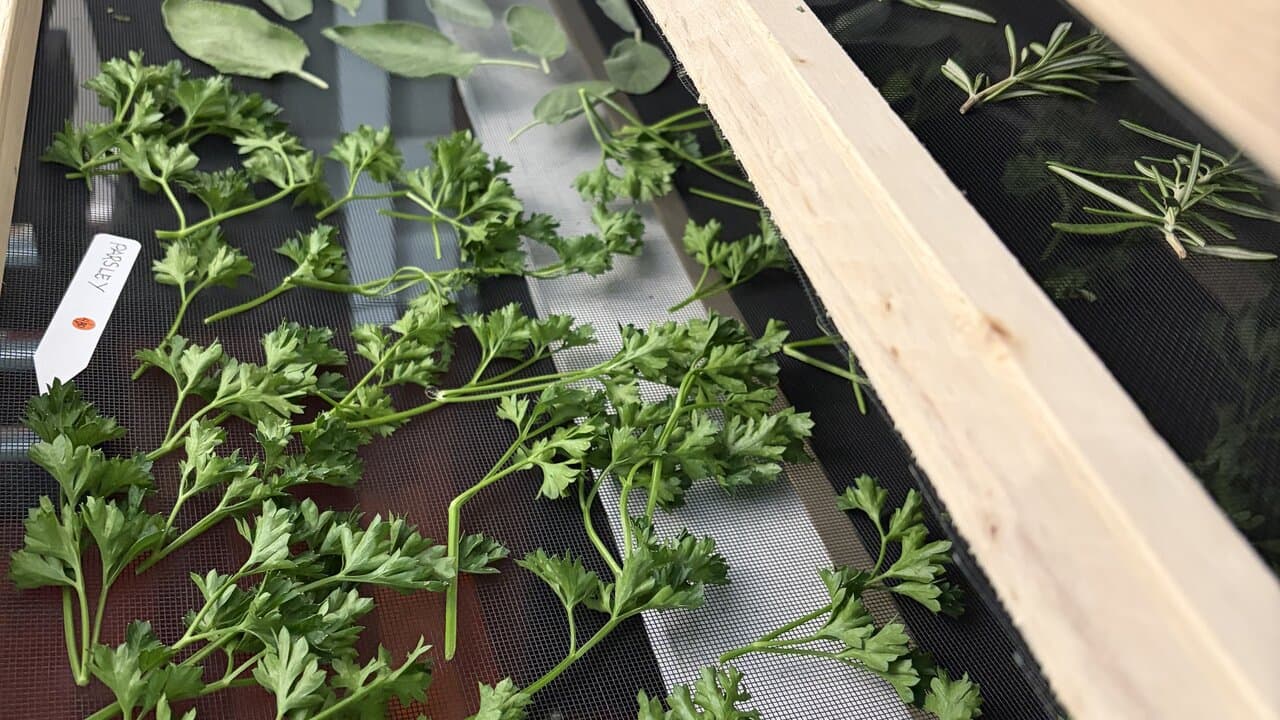
It starts in our Tallahassee garden. We grow moringa, echinacea, and rosemary ourselves, harvest at peak, dry slowly, and infuse the whole herbs into organic apricot kernel and grapeseed oils for six to eight weeks in cool, dark conditions. Moringa's leaves are among the most nutrient-dense in the plant world, studied for vitamins A, C, and E and their polyphenol antioxidants; echinacea has its own published cosmetic-science trail for hydration and the appearance of fine lines; rosemary's carnosic and rosmarinic acids help keep the oils themselves fresh. The infused oil is blended with mango butter for body, enriched with prickly pear seed oil and cold-pressed moringa seed oil, and finished with a whisper of lavender and Vitamin E. No water phase, no silicones, no preservatives, and nothing optical: what your skin looks like is what the formula conditioned it to look like. The whole process is on how it's made.
The structural comparison:
| Olay Regenerist Micro-Sculpting | A whole-herb waterless crème |
|---|
| First ingredient | Water | Whole-herb infused apricot kernel oil |
| Ingredient count | 30 | 11, all pronounceable |
| Star actives | Niacinamide, three peptides | Moringa, echinacea, rosemary, infused whole |
| Texture agents | Silicones, modified starch, fatty alcohols | Mango butter, prickly pear seed oil, arrowroot |
| Instant smoothing | Yes, partly optical (titanium dioxide, mica) | No; conditioning builds with use |
| Preservation | Phenoxyethanol, hydroxyacetophenone | None needed, the formula is waterless |
| Scent | "Fragrance" (undisclosed blend) | A whisper of lavender essential oil |
| Price per ounce | Low; a drugstore strength | Higher; concentration is the trade |
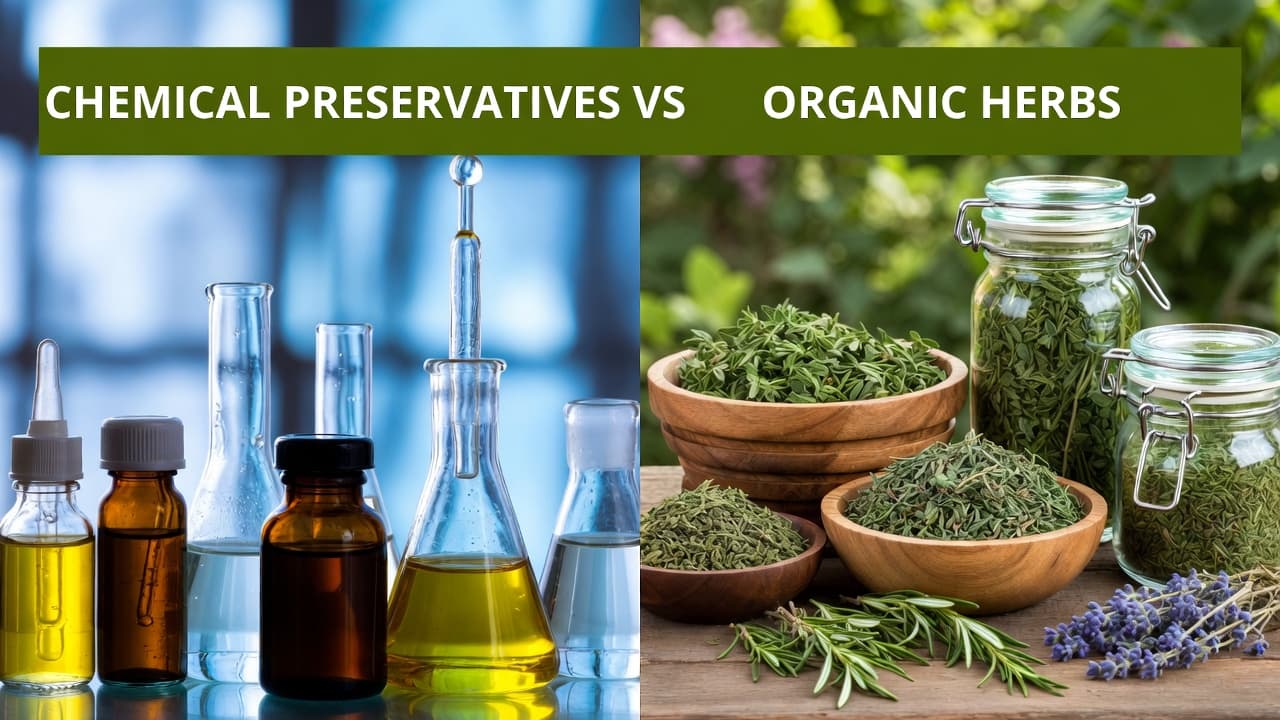
Neither column is dishonest. One is precision cosmetic engineering at scale; the other is a garden distilled into a bottle. They simply answer "what should touch my face every morning?" from opposite ends of the supply chain.
Grown in our garden, made by hand in small batches.
Meet the Moringa w/ Echinacea Face Cream →
Choosing by Use Case
An honest read on when each belongs:
- You want the most evidence per dollar. Stay with the red jar, or move to it. Niacinamide plus a studied peptide at a drugstore price is a rational choice, and we would rather say so than pretend otherwise.
- You want a formula with no preservatives at all. Then the choice makes itself; a preservative system is a non-negotiable part of any water-first design, Regenerist's included. A waterless formula removes the need for one entirely rather than swapping in a different one. (If scent is your only concern, Regenerist's fragrance-free version already solves that.)
- You want your moisturizer to be plants, not carry them. The current red jar lists no botanical extracts at all. In a whole-herb crème the botanicals are the vehicle. That inversion is the entire difference, and no single swap gets you more of it.
- You like a light, waterless texture and a quiet scent. A waterless crème applied to slightly damp skin is the more indulgent ritual; the Rose Renewal Crème is the version of ours built around garden roses if that is your lane. For the step before it, see a natural alternative to Clinique Take The Day Off.
- You judge a cream by the mirror at 9 a.m. Regenerist's optical particles genuinely deliver an instant blur no plant formula will match. We would rather tell you that than have you find out.
Some households will run both: the lab actives some mornings, the garden the rest. What matters is knowing which theory you are buying, and buying it on purpose.
Reading an "Anti-Aging" Label in Ten Seconds
Whatever the brand, find the first oil, butter, or botanical on the ingredient list and count what stands ahead of it. In the current Regenerist list no plant extract appears at all; ahead of the plants in a whole-herb crème stands nothing, because the infused oil is the first line. Neither answer is wrong, but the position of the plants on the label tells you what the formula believes in. We apply the same ten-second test across face creams for mature skin, and to what moringa specifically brings to a formula in our moringa deep-dive.
The information in this post is for educational purposes and reflects published ingredient listings and cosmetic chemistry. InVine products are cosmetics, formulated to moisturize, soften, and condition the skin. They are not intended to diagnose, treat, cure, or prevent any disease.