Quick answer: There are only two honest ways to make a preservative-free face cream: take the water out of the formula, or sterilize the formula and seal it in packaging air can never enter. Water is why creams need preservatives, so any water-based cream in an open jar claiming "preservative-free" deserves a skeptical read. Below: how to tell the honest versions apart, what Vitamin E on the label does and does not mean, and where the whole-herb approach fits.
Type "preservative-free face cream" into a search box and you will find two camps shouting past each other. One camp sells the promise on every label. The other camp, the chemists and the better skincare forums, warns that preservative-free water creams are a microbiology problem waiting to happen. Here is the uncomfortable thing: both camps are right, about different products. This guide is about telling them apart.
Why Face Creams Have Preservatives in the First Place
A conventional face cream is mostly water, often more than half the formula. Water is also what every microbe on earth needs to multiply. Put water, plant extracts, and skin contact together in a jar that gets opened twice a day in a humid bathroom, and you have built an incubator. Preservatives exist to shut that down.
So let us say something a "natural" brand is not supposed to say: preservatives are not villains. In a water-based formula they are safety equipment, doing for your moisturizer what pasteurization does for milk. The forum skeptics who warn against water-based creams with no preservative system are giving good advice. If a conventional cream lists water first and claims "preservative-free" from an ordinary open jar, one of two things is usually true: the formula quietly relies on ingredients that act as preservatives without carrying the official label (benzyl alcohol, ethylhexylglycerin, and certain "fragrance" components do this job), or the product is a genuine spoilage risk. Neither is what the label led you to believe.
The honest question is not "which cream skipped the safety equipment?" It is "which cream removed the reason the safety equipment exists?"
First, Clear Up the Vitamin E Confusion
Plenty of labels imply that Vitamin E "naturally preserves" a formula. It does not, and the distinction matters if you are shopping this category.
Vitamin E is an antioxidant: it slows the oxidation of plant oils, the slow staling that makes oils go rancid with time and air. A preservative inhibits the growth of microbes, bacteria, mold, yeast. Different threats, different tools. An oil-based formula with Vitamin E and no water can honestly say "preservative-free," because its only enemy is oxidation and Vitamin E is the right tool for that. A water-based formula cannot borrow that logic; no amount of Vitamin E will stop a microbe. We wrote a full explainer on what Vitamin E actually does in a natural formula.
The Two Honest Paths
Path one: sterilize everything and lock out the air
Credit where it is due: the French brand Avène solved preservative-free with water, and solved it properly. Their Tolerance line is made in an aseptic facility, the kind of sterile manufacturing usually reserved for injectable medicines, and sealed in a patented airless system (they call it D.E.F.I.) with a membrane that lets cream out but never lets air or fingers in. The formula stays sterile from factory to final squeeze, so it genuinely needs no preservatives despite being water-based.
The honest trade-offs: you are buying a lightweight synthetic formula, engineered for minimal ingredients rather than botanical content, and the approach only works in that special packaging. If your priority is "water-cream texture, zero preservatives, sensitive-skin minimalism," Avène earned its spot at the top of this search and we would rather point at it than pretend otherwise.
Path two: take the water out
The other path is older than preservation itself: formulate with no water at all. An anhydrous (waterless) formula, built entirely from plant oils and butters, gives microbes nothing to grow in. No water, no incubator, no preservative system needed, not even the quiet unlabeled kind. The clock on a waterless formula is oxidation, which is slower, gentler, and managed by antioxidants like Vitamin E doing the job they are actually built for.
This is the path we take with every product we make, and the deeper benefits go past preservation: with no water phase, every gram in the bottle is formula rather than dilution. Our full guide to waterless skincare covers what that concentration means in daily use, including the honest adjustment that a waterless crème works best pressed onto slightly damp skin.
What to Look For on Any Label
Ten seconds of label reading settles most of this category:
- Find the first ingredient. If it is water (aqua), the product needs a preservation strategy; look for what it is. Sterile-airless packaging is one honest answer. An ingredient doing quiet double duty is a less honest one.
- If it is an oil or a butter, the preservative-free claim is chemically plausible on its face. Then check for the antioxidant that should be minding the oils, tocopherol (Vitamin E) is the usual name.
- Count what you can pronounce. A waterless formula tends toward short labels naturally; there is no emulsion machinery to list.
- "Chemical-free" is a red flag phrase. Everything is a chemical, including water and Vitamin E. Brands that talk that way are marketing at you; the honest categories are "preservative-free," "fragrance-free," and named botanicals. Our guide to what "natural" actually means on a label goes deeper.
Honest Picks Across the Category
- Avène Tolerance Extreme, for the water-cream loyalist. Sterile-made, airless-sealed, genuinely preservative-free, and deliberately minimal. Synthetic and botanical-light by design; that is its philosophy, not a flaw.
- A single plant oil, for the ultimate minimalist. Plain jojoba or squalane in a dark bottle is one ingredient, waterless, and inherently preservative-free. The trade: an oil softens, but only weakly seals, and there is no butter body to it; many people end up layering it under something richer.
- A well-made anhydrous balm or butter, from any brand whose label is oils, butters, wax, and botanicals you can name. The format is inherently preservative-free; judge the maker on freshness and ingredient quality.
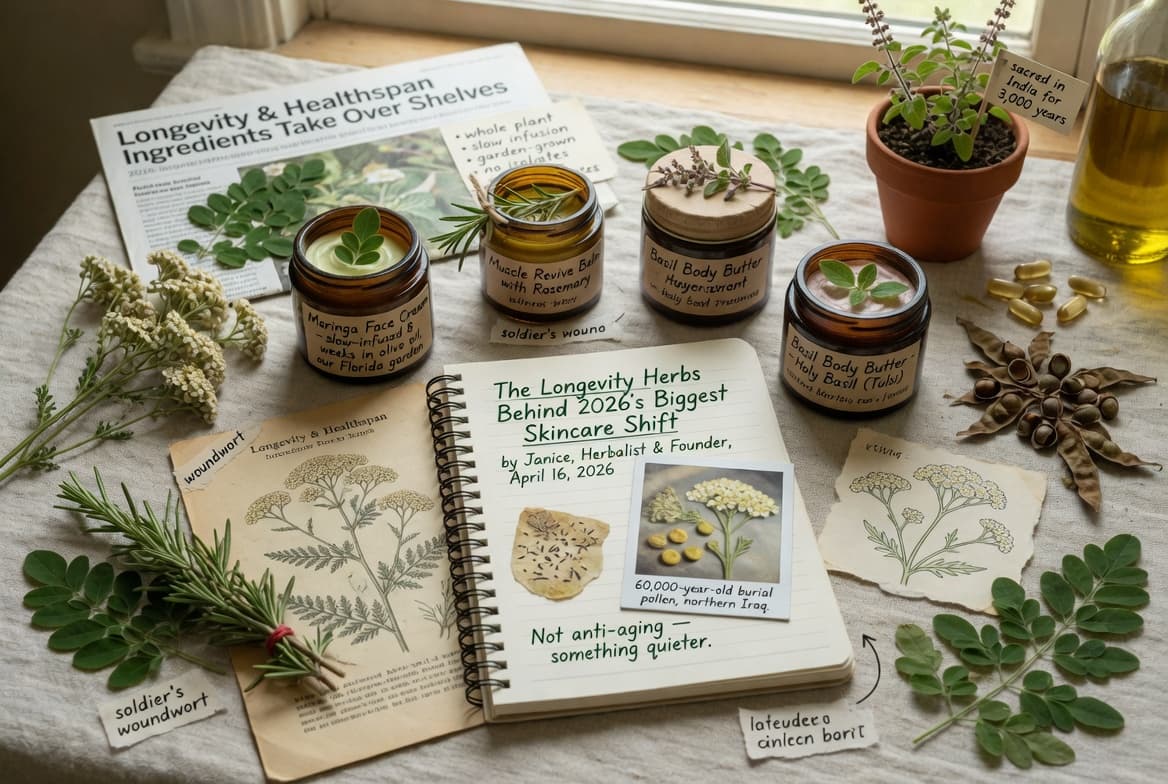
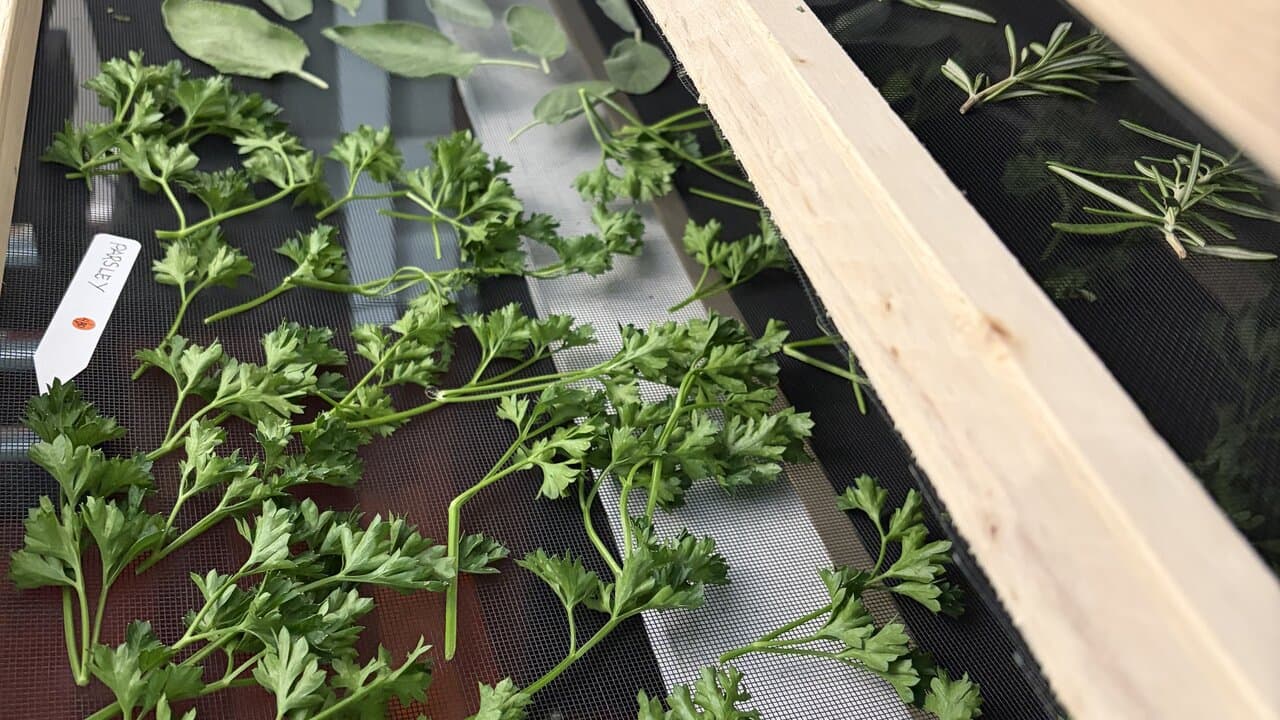
- The DIY route. Whole-herb infusion is centuries old and genuinely doable at home: dried herbs steeped in a carrier oil for weeks, strained, thickened with a plant butter. Our free whole-herb infusion guide walks through it, and because the method is waterless, your first jar needs no preservative either.
- Our Moringa w/ Echinacea Face Cream, for the botanical maximalist. The waterless path taken all the way: garden-grown moringa, echinacea, and rosemary, infused whole for six to eight weeks in cool, dark conditions into apricot kernel and grapeseed oils, with mango butter for body and prickly pear and cold-pressed moringa seed oils for richness. Ten ingredients, no water, no preservatives, because nothing in the bottle needs preserving.
The Three Routes at a Glance
| Conventional cream | Sterile-airless (Avène's route) | Waterless (our route) |
|---|
| Water in formula | Yes, usually first | Yes | None |
| Preservatives | Required for safety | None, sterility does the job | None, nothing to preserve |
| What ages the product | Microbes held off by preservatives | Nothing, while sealed | Slow oil oxidation, managed by Vitamin E |
| Texture | Light, familiar | Light, clinical | Rich, concentrated, a little goes far |
| Botanical content | Varies, often low | Deliberately minimal | The entire formula |
| Packaging demands | Any jar | Patented airless only | Any container that blocks light |
Grown in our garden, made by hand in small batches.
Meet the waterless crèmes →
The Bottom Line
"Preservative-free" is not one category; it is two honest engineering answers and a lot of wishful labeling in between. If you want the familiar water-cream feel, buy it from someone who sterilizes like a pharmaceutical plant. If you want plants to be the point, buy waterless, from us or anyone whose label survives the ten-second read. And if a water-first cream in an open jar promises you preservative-free, keep your skepticism; it is better chemistry than the label is.
The information in this post is for educational purposes and reflects published ingredient listings and cosmetic chemistry. InVine products are cosmetics, formulated to moisturize, soften, and condition the skin. They are not intended to diagnose, treat, cure, or prevent any disease.