Walk into any hardware store, pharmacy, or farm-supply shop in America and you'll find the same squat green-and-white jar near the register: O'Keeffe's Working Hands. It has earned that shelf space. The brand built its reputation on hands that work for a living, mechanics, gardeners, nurses, line cooks, and on a formula deliberately engineered for skin that gets washed, scrubbed, and gloved all day.
We respect that. But if you've started reading ingredient labels the way you read food labels, the back of that jar raises an honest question: there isn't a single botanical ingredient in it. Here's what's actually in the formula, what it does well, and what a hand cream built from whole herbs and plant oils does differently.
What's Actually in O'Keeffe's Working Hands
The jar version of Working Hands lists, in order:
- Water and glycerin, the heart of the formula. Glycerin is a humectant: it draws water into the outer layer of your skin and holds it there. It's one of the most-studied moisturizing ingredients in existence, and it works.
- Stearic acid + sodium hydroxide, these two react together in the pot to form sodium stearate, a soap that gives the cream its thick, almost putty-like structure.
- Paraffin, a wax refined from petroleum. It sits on top of the skin as an occlusive film, slowing the water the glycerin pulled in from evaporating back out.
- Allantoin, a skin-conditioning agent, synthesized for cosmetic use.
- Mineral oil, a second petroleum-derived occlusive, further down the list. It's also the texture-thinner in Aquaphor, whose petrolatum base we broke down separately.
- Diazolidinyl urea and iodopropynyl butylcarbamate, the preservative system. Diazolidinyl urea works by slowly releasing small amounts of formaldehyde into the formula to keep microbes from growing in the water phase. That's legal, standard cosmetic chemistry, and it's also a known contact allergen for some people, which is one reason "Working Hands alternative" threads keep appearing on forums.
- Texturizers and emulsifiers, hydroxypropyl methylcellulose, octyldodecyl stearate, an acrylates copolymer, polysorbate 85.
(The tube version swaps in a slightly different emulsifier system and adds dimethicone, a silicone occlusive, same strategy, thinner texture.)
None of this is scandalous. Every ingredient is permitted, common, and doing a defined job. But notice what the list adds up to: water, held in place by petroleum-derived films, structured by soap, preserved by a formaldehyde-releaser. The plant kingdom isn't represented at all, unless the glycerin happens to be plant-derived, and the label doesn't say.
Credit Where It's Due
Working Hands became the default for a reason, and pretending otherwise would be dishonest:
- The glycerin strategy is real chemistry. Pulling water into dry skin and capping it with an occlusive film produces a fast, visible change in how skin looks and feels.
- It's unscented. Nurses, cooks, and anyone who can't wear fragrance at work can use it without thinking twice.
- It's inexpensive and everywhere. A jar costs less than lunch, and hardware stores carry it as reliably as pharmacies do.
- It plays well with work gloves. The formula dries to a low-residue finish that doesn't slick up tool handles.
If your criteria are price, availability, and no scent, O'Keeffe's answers them. The people searching for an alternative usually aren't questioning whether it works, they're questioning what it works with.
Why People Go Looking for an Alternative
Three reasons come up again and again:
- The ingredient philosophy. If you've committed to plant-based or petroleum-free skincare everywhere else in your routine, the hand cream in your toolbox is often the last holdout.
- Preservative sensitivity. Formaldehyde-releasing preservatives like diazolidinyl urea are among the more common contact allergens in leave-on cosmetics. Most people never notice them; the people who do, really do.
- The water-cream cycle. A water-based cream replaces water. But hands that wash all day don't just lose water, they lose oil, the natural film that keeps the water in. Replacing water without replacing oil is why some hands feel great for twenty minutes and then ask for another application. We wrote about this cycle in our guides for nurses and gardeners, hands that wash constantly need their oil layer rebuilt, not just their water topped up.
What a Whole-Herb Hand Cream Does Differently
A botanical hand cream worth the name starts from the opposite end: plant oils first, water second.
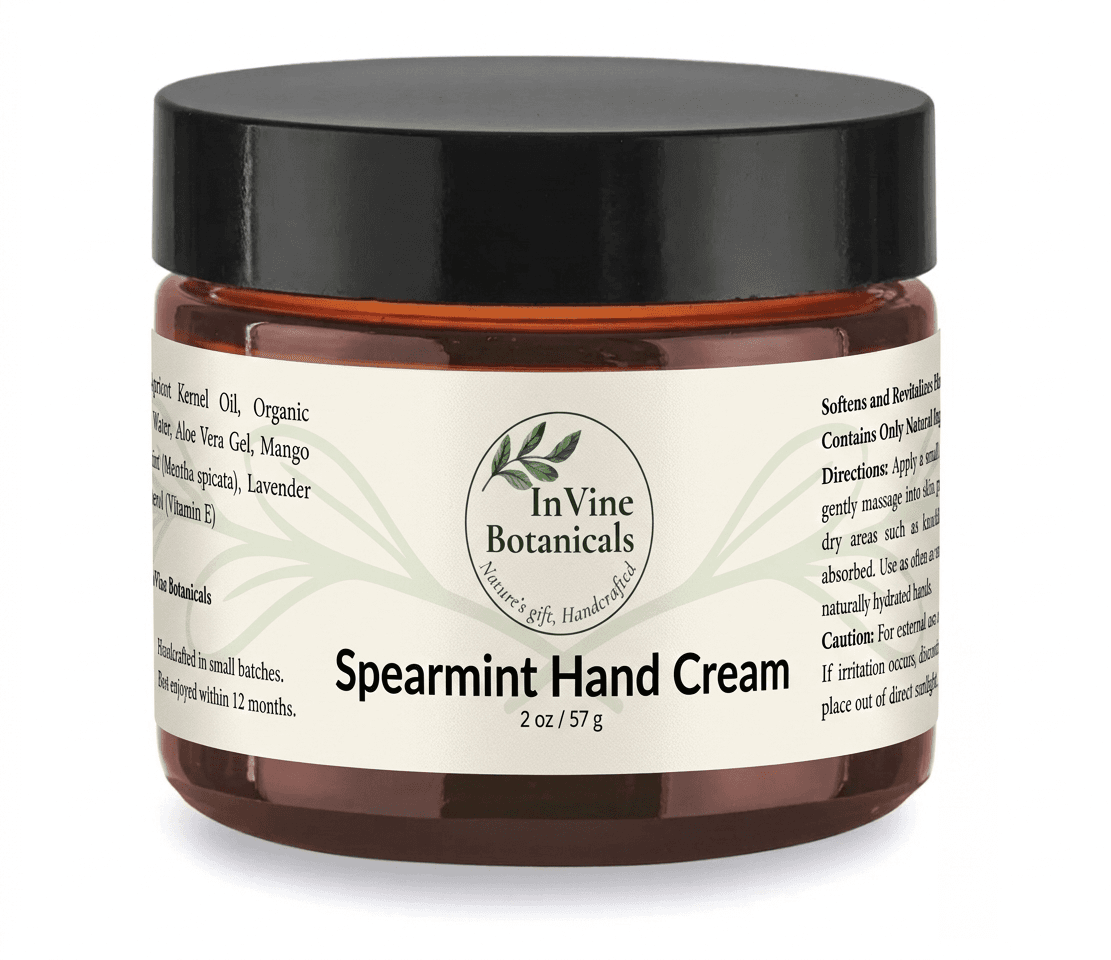
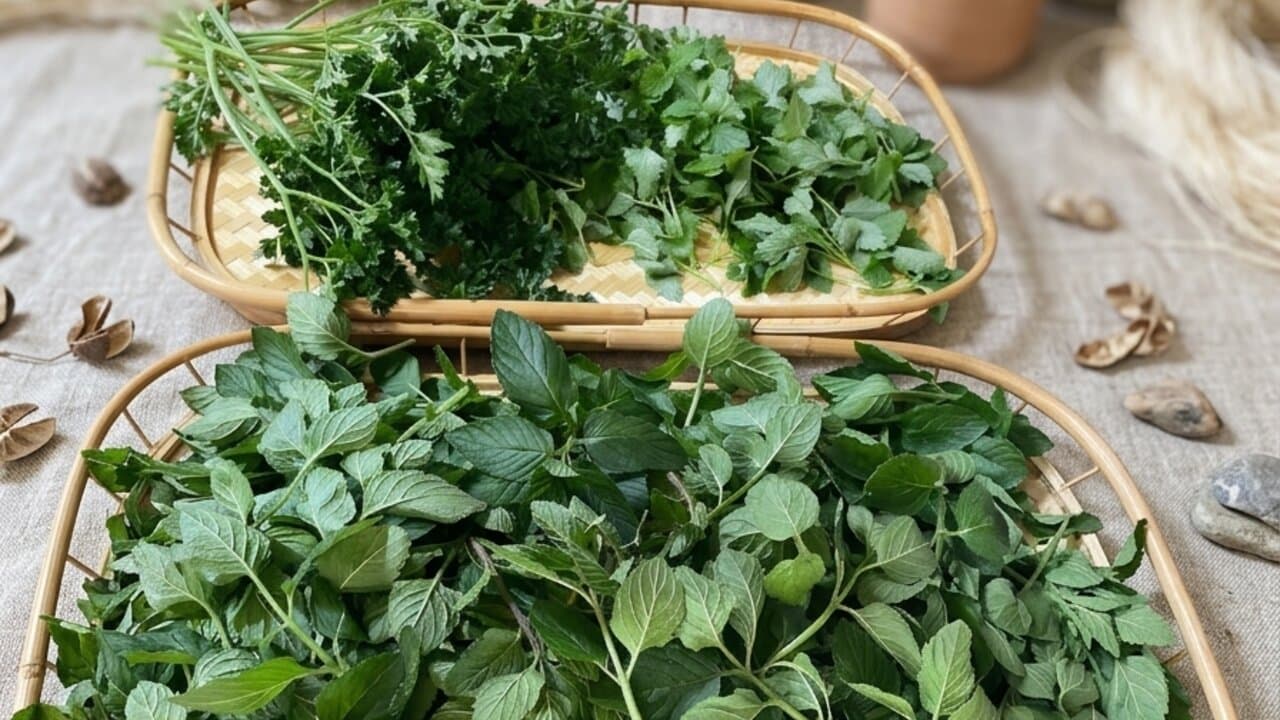
In our formula, that means spearmint leaves grown in our Tallahassee garden, slow-infused whole into organic apricot kernel and grapeseed oils for six to eight weeks. Not a drop of "spearmint fragrance" added at the end, the whole leaf gives up its cooling, aromatic character to the oil over weeks in cool, dark conditions. That infused oil is blended with mango butter and beeswax from a local Tallahassee beekeeper, softened with a touch of lavender essential oil, and protected with Vitamin E.
The structural differences from the Working Hands formula:
| O'Keeffe's Working Hands (jar) | A whole-herb hand cream |
|---|
| Base strategy | Water + glycerin, sealed by paraffin and mineral oil | Plant oils and butters, structured by beeswax |
| Occlusive layer | Petroleum-derived (paraffin, mineral oil) | Beeswax and plant butters |
| Botanical content | None listed | Whole-herb spearmint infusion, plant oils, lavender |
| Preservation | Formaldehyde-releasing preservative system | Vitamin E (antioxidant) in an oil-first formula |
| Scent | Unscented | Garden spearmint and lavender, from the plants themselves |
| Skin feel | Dries fast, low residue | Absorbs slower, leaves a soft conditioning film |
Neither column is "correct." They're two different theories of what dry, hard-working hands need, one engineered around water retention, one built around replacing the plant-oil film that work and washing strip away.
Grown in our garden, formulated by Janice, made by hand in small batches. Every bottle of our Spearmint Hand Cream is finished with a printed label marking its batch number and infusion date.
Explore our whole-herb hand cream →
Choosing by Use Case
An honest read on when each style fits:
- Under work gloves, on a job site, at the harshest end of dry. The O'Keeffe's strategy, heavy occlusion, no scent, low cost, is genuinely hard to beat here. If a cream is going to live in a truck cab in July, the petroleum-based formula doesn't care.
- The end-of-day routine. When the work is done and hands get washed for the last time, a plant-oil cream has the hours it needs to absorb fully and condition the skin, this is where whole-herb formulas do their best work.
- Scent as part of the experience. If you want your hand cream to smell like an actual garden, spearmint leaf, not "mint fragrance", only a real infusion delivers that.
- Sensitive to preservatives. A low-water, oil-first formula doesn't need a formaldehyde-releasing preservative system. If leave-on preservatives are your problem ingredient, the oil-and-beeswax end of the shelf is the place to look.
- A plant-based commitment. If petroleum derivatives are what you're moving away from, the swap is straightforward: beeswax and plant butters do the occlusive job paraffin does, with botanical company.
Plenty of people keep both, the green jar in the toolbox, the pump bottle by the kitchen sink. The point isn't that one is wrong. It's that you should know exactly what each one is, and choose on purpose.
Reading Any Hand Cream Label in Ten Seconds
The fastest way to know which theory a cream follows, whatever the brand: look at the first three ingredients. If they're water, glycerin, and an acid or alcohol, it's a water-retention formula and the plants on the front label are probably a garnish. If they're oils and butters you could name from a garden or a kitchen, it's an oil-replacement formula. We walk through this in detail in our guide to plant-based hand creams, and the carrier oils themselves matter more than most labels admit, which is its own story. And if the other classic on your shelf is the green farm-store tin, we gave Bag Balm the same honest treatment. Same for the little drugstore tube by every register: our look at Neutrogena Norwegian Formula covers the 2021 reformulation that sent longtime users label-reading.
The information in this post is for educational purposes and reflects published ingredient listings and cosmetic chemistry. InVine products are cosmetics, not drugs.