Quick answer: The closest natural swap for Bag Balm is a beeswax-based, whole-herb salve. Beeswax and plant butters do the moisture-sealing work of Bag Balm's petrolatum and paraffin, slow-infused plant oils supply the emollience, and the herbs on the label are actually in the jar. Below: what's really in the green tin, what it genuinely does well, and how a garden-grown alternative compares.
There's a green square tin with a cow's head on the lid that has been sitting on American shelves since 1899. Bag Balm was born in Vermont dairy country as a salve for cows' udders, chapped raw by cold-weather milking, and within a generation, the farmers' families were dipping into the tin themselves. It went to the North Pole with Admiral Byrd's expeditions, into soldiers' kits in World War II, and onto the paws of the working dogs at Ground Zero. A century and a quarter later it's still in feed stores, pharmacies, and grandmothers' nightstands, and it has earned every inch of that shelf space.
We respect a formula that survives 127 years. But if you've started reading skincare labels the way you read food labels, the fine print on the green tin raises the same honest question O'Keeffe's raises: where are the plants? Here's what's actually in Bag Balm, what it does well, and what a salve built from whole herbs does differently.
Comparing the udder creams? We read Udderly Smooth's label with the same honesty.
What's Actually in Bag Balm
The entire ingredient list is four items:
- Petrolatum, petroleum jelly, the same substance as Vaseline, and the base of the formula. It's a by-product of crude-oil refining and the most effective moisture-sealing (occlusive) agent in conventional skincare: it sits on top of skin as a film and slows water from evaporating out. It doesn't add anything to skin, it holds in what's already there.
- Lanolin, the wax sheep produce to weatherproof their own wool, recovered when wool is cleaned. Of Bag Balm's four ingredients, this is the one with a genuinely natural origin story, and it's an excellent emollient. It's also animal-derived and a known sensitivity for people with wool allergies.
- 8-Hydroxyquinoline sulfate (0.3%), Bag Balm's labeled antiseptic, a synthetic quinoline salt. It's the ingredient that made the original product useful in a barn, and the one you'd least expect to find in a jar marketed today as a simple skin moisturizer.
- Paraffin wax, a second petroleum derivative. Where beeswax structures a natural salve, paraffin structures this one: it's what makes Bag Balm a thick salve instead of a jelly.
That's the whole tin: two petroleum derivatives, a sheep-wool wax, and a synthetic antiseptic. Nothing in it is scandalous, every ingredient is legal, common, and doing a defined job. But notice what the list adds up to. One of Google's own suggested questions about the product is "Is Bag Balm basically Vaseline?", and the honest answer is nearly: it's Vaseline thickened with paraffin, enriched with lanolin, and dosed with an antiseptic. The plant kingdom isn't represented at all.
Credit Where It's Due
Bag Balm didn't survive since 1899 on nostalgia alone:
- The occlusion strategy works. A petrolatum-lanolin film over dry skin is a proven way to slow moisture loss, and generations of farmers, gardeners, and quilters can testify to it.
- Lanolin is the real thing. It's one of the classic skin-conditioning ingredients, natural in origin and close in character to skin's own oils.
- It's cheap, everywhere, and nearly indestructible. The tin costs about what a sandwich does, lives happily in a barn or a truck cab through a Vermont winter or a Florida July, and never goes rancid, petroleum doesn't spoil.
- One tin, a hundred uses. Hands, heels, elbows, dog paws, squeaky hinges, rusty tools. Multi-purpose is the whole brand.
The people searching for a Bag Balm alternative usually aren't questioning whether it works. They're questioning what it works with.
Why People Go Looking for an Alternative
Three reasons come up again and again in the forums and group threads where this question lives:
- The petroleum base. If you've moved the rest of your routine to plant-based formulas, the tin in the toolbox is often the last holdout, and two of Bag Balm's four ingredients are petroleum derivatives. What people want is the same salve format, built from botanical materials.
- The animal-derived question. Lanolin is natural, but it isn't plant-based, and wool-sensitive skin can react to it. (Lanolin alcohols are also part of what people flag in Aquaphor, where we broke down a very similar formula. CeraVe Healing Ointment skips the lanolin but keeps the petroleum base, we compared that one too.)
- An antiseptic in a daily moisturizer. The 0.3% quinoline antiseptic made sense for a barn product in 1899. For a jar that lives on a nightstand and gets used on lips, cuticles, and children's cheeks, plenty of people would rather their moisturizer be a moisturizer and nothing else.
What a Whole-Herb Salve Does Differently
A botanical salve worth the name starts from the opposite end: plants first.
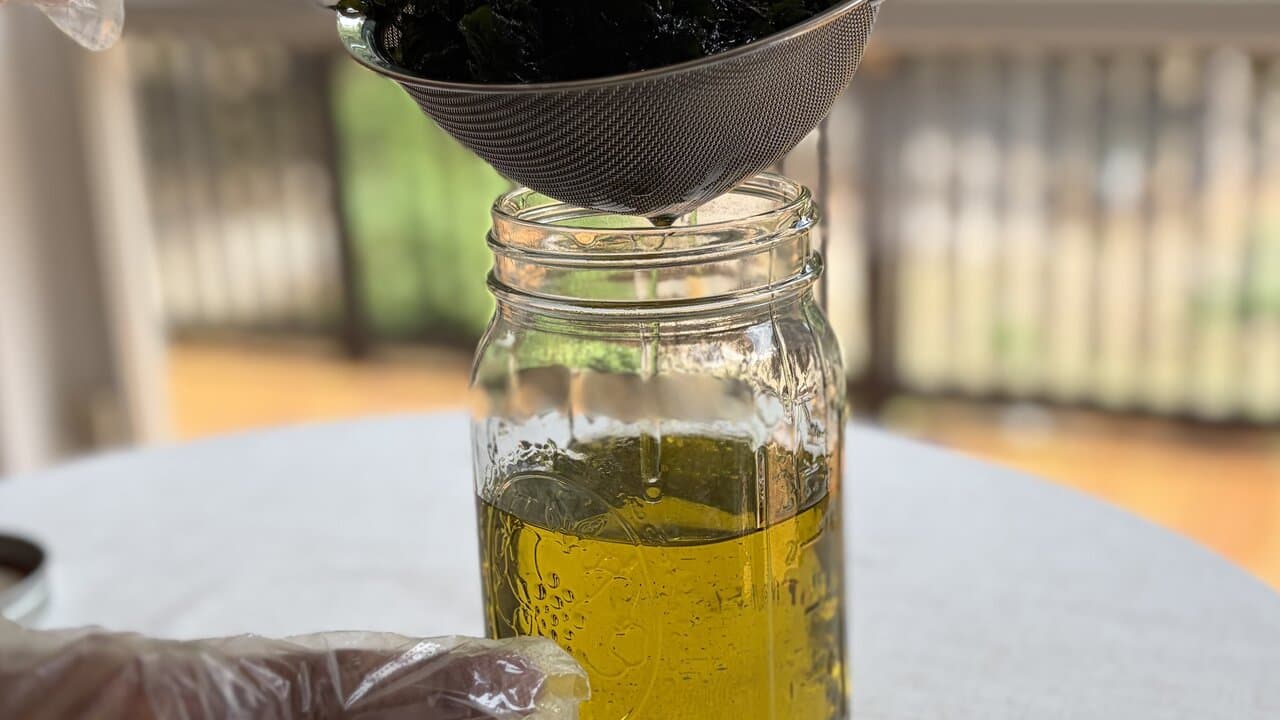
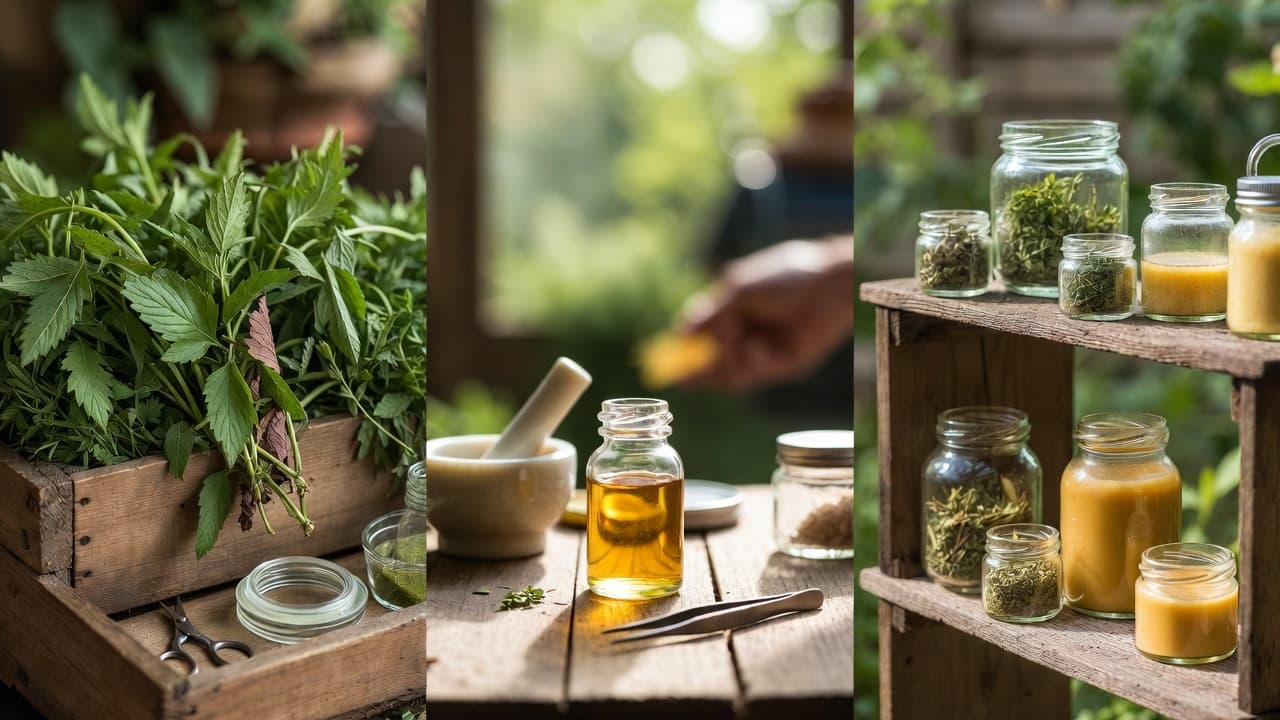
Ours starts in our Tallahassee garden. We grow the herbs ourselves, spearmint, rosemary, lemongrass, peppermint, and two dozen others, harvest them at their peak, dry them slowly, and then infuse the whole herb into organic olive and coconut oils for six to eight weeks in cool, dark conditions. No extracts, no "fragrance," no shortcuts: the whole leaf gives its character to the oil over weeks. That infused oil is blended with beeswax from a local Tallahassee beekeeper, which does exactly the structural job paraffin does in the green tin, and protected with Vitamin E. You can see the whole process, from garden bed to jar, on how it's made.
The structural comparison:
| Bag Balm | A whole-herb balm |
|---|
| Base | Petrolatum (petroleum jelly) | Organic olive and coconut oils, infused with whole herbs |
| Structure | Paraffin wax (petroleum-derived) | Beeswax from a local beekeeper |
| Conditioning agent | Lanolin (sheep's wool wax) | Plant oils and the botanicals themselves |
| Extra active | 0.3% synthetic antiseptic | None, herbs, oils, beeswax, Vitamin E |
| Botanical content | None | The whole formula |
| Scent | Faint, medicinal | The herbs in the jar, garden spearmint, rosemary, lemongrass |
| Skin feel | Heavy petroleum film, stays on the surface | Absorbs into skin, leaves a soft conditioning finish |
Neither column is "wrong." They're two theories of the same salve: one seals skin under a petroleum film that never changes and never spoils; the other conditions skin with plant oils that carry weeks of botanical character into the jar.
If Bag Balm has been your hand salve, the gardener's and quilter's use, the closest swap in our line is the Spearmint Hand Cream, garden spearmint infused whole into apricot kernel and grapeseed oils, blended with mango butter and beeswax. If it's been your everything salve, a whole-herb balm is the direct format-for-format trade: beeswax-structured, olive-and-coconut based, herbs included.
Grown in our garden, made by hand in small batches. Every jar is finished with a printed label marking its batch number and infusion date.
Explore our whole-herb balms →
Choosing by Use Case
An honest read on when each belongs:
- The barn, the truck, the toolbox. A product that costs a few dollars, shrugs off temperature swings, and never spoils is genuinely hard to beat for rough duty. This is the job Bag Balm was invented for, and it still does it.
- The nightstand and the kitchen sink. For the end-of-day ritual, hands washed for the last time, a few unhurried minutes for a salve to absorb, a plant-oil formula does its best work, and you get garden scent instead of a faint medicinal one.
- A plant-based commitment. If petroleum derivatives and animal-derived ingredients are what you're moving away from, the swap is clean: beeswax and plant butters handle structure, infused plant oils handle conditioning.
- Sensitive to lanolin. Wool-allergic skin has to read the green tin's label carefully. A lanolin-free, plant-oil salve sidesteps the question entirely.
- Scent as part of the experience. Petroleum formulas are scent-neutral at best. If you want the jar to smell like an actual garden, only a real infusion delivers that.
Plenty of households keep both, the green tin in the barn or garage, the pump bottle by the sink. The point isn't that one is wrong. It's that you should know exactly what each one is, and choose on purpose.
What About the Other Hundred Uses?
Bag Balm's folklore is really a list of uses, so it's fair to ask which of them a natural salve can take over:
- Dry hands, heels, elbows, cuticles, lips. These are the moisturizing jobs, and they're exactly what a beeswax-and-plant-oil salve is built for. Everything in the "conditioning" column transfers.
- Gardeners' and quilters' hands. The original crossover use, and the one that built the brand. A plant-oil formula trades the petroleum film for conditioning that soaks in, we wrote a whole guide for gardeners' hands, whose owners tend to be the exact people with a green tin in the shed.
- Leather boots, squeaky hinges, rusty tools. Keep the green tin. Genuinely, petroleum and paraffin are the right materials for hardware, they cost less, and there's no reason to put a garden-grown infusion on a door hinge. This is the one category where the old tin is simply the correct tool.
- Pets. We'd send you to your veterinarian rather than to either jar, our products are formulated for people.
That split is the honest shape of the answer: the skin uses transfer to a botanical salve; the barn-and-workshop uses were always petroleum jobs, and they can stay that way.
Reading Any Salve Label in Ten Seconds
Whatever the brand, the first three ingredients tell you which theory you're holding. If they're petrolatum, paraffin, or mineral oil, it's a petroleum-film formula and any botanicals further down the list are along for the ride. If they're oils and waxes you could trace to a garden, a grove, or a hive, it's a plant-oil formula. We use the same ten-second test on hand creams, and the carrier oils themselves matter more than most labels admit, which is its own story.
The information in this post is for educational purposes and reflects published ingredient listings and cosmetic chemistry. InVine products are cosmetics, not drugs.