Some hand creams are famous for what's in them. Neutrogena Norwegian Formula built its reputation on how little: a short, no-nonsense ingredient list, a tube small enough for a coat pocket, and a reputation for handling the driest hands in the room with a pea-sized dab. It has been a drugstore fixture for roughly half a century, and for decades it was the quiet default for people who wanted serious moisturizing without perfume or fuss.
Then, in August 2021, Neutrogena reformulated it. The preservative system changed, the scented original was retired, and longtime users noticed. Search for this cream today and the questions filling the results tell the story: "Is Norwegian Formula discontinued?" "Why did the formula change?" Unopened tubes of the original now sell on auction sites at collector prices.
If you're one of the people hunting for a replacement, here is an honest look at what's actually in the current formula, what it still does well, and what a hand cream built from whole herbs and plant oils does differently.
What's Actually in Neutrogena Norwegian Formula Hand Cream
The current fragrance-free formula lists exactly seven ingredients:
Water, Glycerin, Cetearyl Alcohol, Sodium Cetearyl Sulfate, Phenoxyethanol, Stearic Acid, Ethylhexylglycerin
That's the whole label. Each part has a defined job:
- Water comes first. Ingredient lists are ordered by amount, so there is more water in the tube than anything else. The famous "concentrated" texture describes the feel, not the water content.
- Glycerin is the entire moisturizing strategy. It's a humectant: it draws water into the outer layer of your skin and holds it there. It is also one of the most-studied moisturizing ingredients in existence, and it genuinely works.
- Cetearyl alcohol and stearic acid are fatty thickeners. They give the cream its dense body and a light conditioning feel. (These are the waxy, skin-friendly kind of alcohol, not the drying kind.)
- Sodium cetearyl sulfate is the emulsifier holding the water and the fatty ingredients together.
- Phenoxyethanol and ethylhexylglycerin are the modern preservative pair that replaced the original's parabens in 2021. Any formula this rich in water needs a preservative system to stay safe.
Now notice what's absent. There are no oils of any kind: no plant oils, no mineral oil, no petrolatum. No butters, no waxes, no botanicals. Unlike O'Keeffe's Working Hands, which seals its glycerin under petroleum-derived films, Norwegian Formula doesn't even do that. It is water and glycerin in a thickened base, full stop. That minimalism is part of why people love it, and it's also the formula's built-in ceiling.
The 2021 Reformulation, and Why Longtime Users Noticed
Neutrogena's own statement on the change is straightforward: the product was reformulated in August 2021, the preservative ingredients were replaced, and the fragrance was removed. The original scented version, the one with methylparaben and propylparaben on the label and that unmistakable clean scent, is no longer made.
For a product people had used daily for twenty or thirty years, that's not a small thing. Skincare forums still carry threads from users comparing notes on whether the new tube feels the same (the consensus: close, but not identical), and the discontinued original has become a minor collector's item online.
There's a lesson in that grief worth taking seriously: when you find a formula that works for your hands, the formula itself is the product. Change it and, for the people who depended on it, it's a different product in the same box. It's also why we publish the full ingredient list of every jar we make and tell you exactly where each ingredient comes from.
Credit Where It's Due
Norwegian Formula earned its half-century on the shelf, and pretending otherwise would be dishonest:
- The glycerin strategy is real chemistry. Drawing water into dry skin produces a fast, visible change in how skin looks and feels. For flaky, dehydrated hands, a strong humectant is a legitimate answer.
- The list is refreshingly short. Seven ingredients is remarkable for a mass-market cream. Fewer ingredients means fewer things for reactive skin to disagree with.
- It's fragrance-free. Nurses, cooks, and anyone who can't wear scent at work can use it without a second thought.
- It's inexpensive and everywhere. A tube costs a few dollars and lives at every pharmacy checkout in America.
If your criteria are price, availability, and a scent-free pocket tube, it still answers them. The people searching for an alternative usually aren't questioning whether it works. They're questioning what it works with, or missing a version that no longer exists.
Why People Go Looking for an Alternative
Three reasons come up again and again:
- The original is gone. For a lot of longtime users, the search for "Norwegian Formula alternative" started the day the tube changed. Once you have to switch formulas anyway, the question opens all the way up: if I'm starting over, what do I actually want on the label this time?
- The water-cream cycle. A water-and-glycerin cream replaces water. But hands that wash all day don't just lose water, they lose oil, the natural film that keeps water in. Glycerin pulls moisture into the skin, and with no oils anywhere in the formula, that moisture has nothing holding it there through the next wash. It's why some hands feel wonderful for twenty minutes and then ask for another application. We wrote about this cycle in our guides for nurses and gardeners: hard-working hands need their oil layer rebuilt, not just their water topped up.
- The ingredient philosophy. Seven clean-room ingredients, zero from a garden. If you've moved the rest of your routine toward plant-based skincare, the hand cream is often the last holdout, and this one contains no botanical ingredients at all.
What a Whole-Herb Hand Cream Does Differently
A botanical hand cream worth the name starts from the opposite end of the formula: plant oils first, and in our case, no water at all.
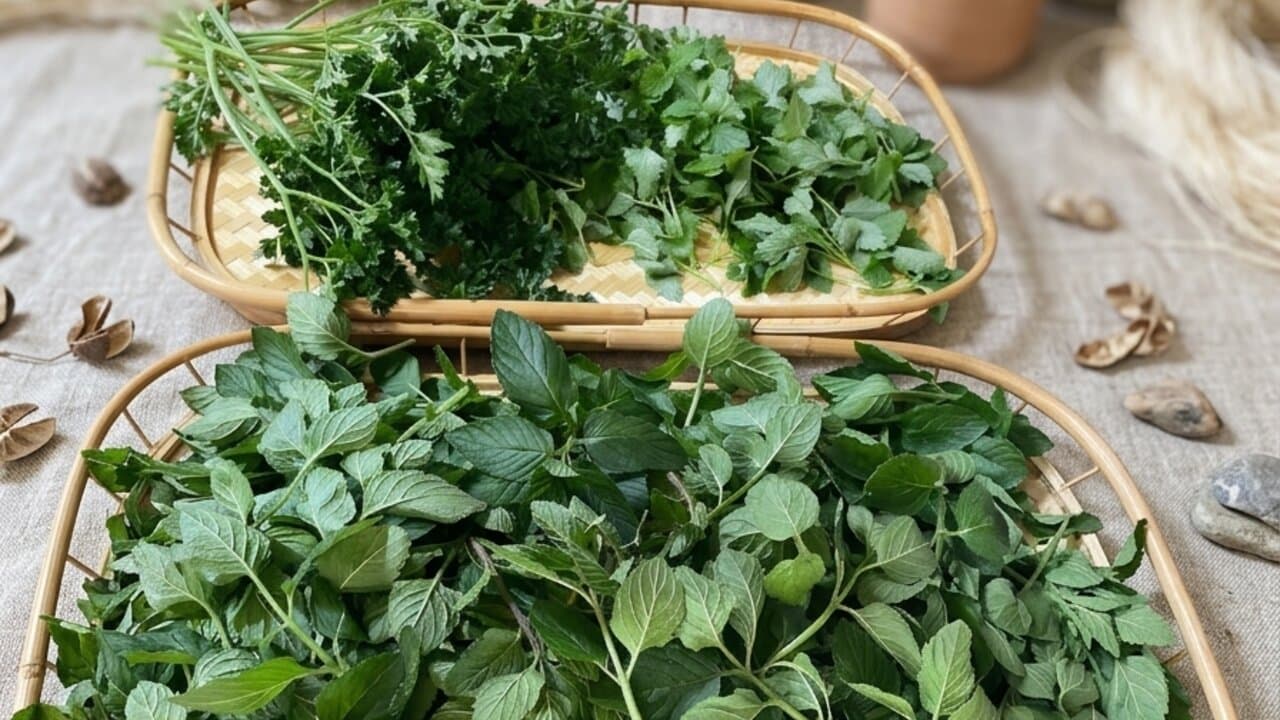
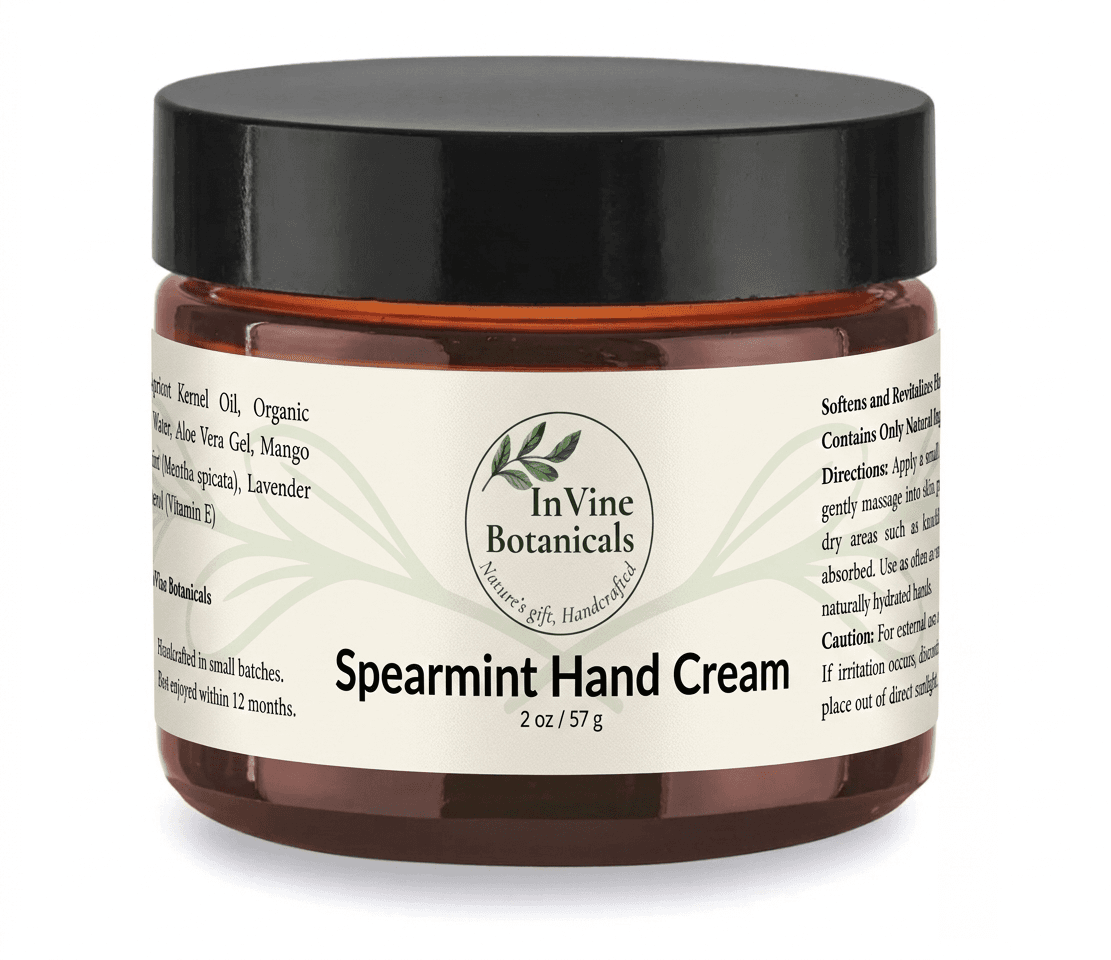
In our Spearmint Hand Cream, spearmint leaves grown in our Tallahassee garden are slow-infused whole into organic apricot kernel and grapeseed oils for 6-8 weeks in cool, dark conditions. The whole leaf gives up its cooling, aromatic character to the oil over weeks, not as a fragrance added at the end. That infused oil is blended with mango butter and beeswax from a local Tallahassee beekeeper, softened with a touch of lavender essential oil, and protected with Vitamin E.
And because the formula is waterless, the comparison with Norwegian Formula is almost a perfect mirror:
| Norwegian Formula (current) | A whole-herb hand cream |
|---|
| First ingredient | Water | Herb-infused plant oil |
| Moisture strategy | Glycerin draws water into skin | Plant oils and butters replace the oil film washing strips away |
| Oil content | None listed | Apricot kernel and grapeseed, infused with whole spearmint |
| Botanical content | None listed | Garden spearmint, lavender |
| Water content | First on the label | None |
| Preservation | Phenoxyethanol system for the water phase | Vitamin E, an antioxidant, in an oil-first formula |
| Scent | Fragrance-free | Garden spearmint and lavender, from the plants themselves |
Neither column is "correct." They are two different theories of what dry, hard-working hands need: one engineered around pulling water in, one built around restoring the plant-oil layer that work and washing remove. Plenty of people's hands have already voted on which theory lasts longer between washes.
Grown in our garden, made by hand in small batches. Every bottle of our Spearmint Hand Cream is finished with a printed label marking its batch number and infusion date.
Explore our whole-herb hand cream →
Choosing by Use Case
An honest read on when each style fits:
- Dehydrated, flaky skin that needs a fast visible change. A strong glycerin cream is a legitimate tool, and the fragrance-free minimalism makes Norwegian Formula an easy one to keep in a work bag.
- Hands that wash constantly. This is where a water-first formula runs out of road and an oil-first formula earns its keep. Rebuilding the oil film is the difference between reapplying every hour and reapplying twice a day.
- The end-of-day routine. When the work is done and hands get washed for the last time, a plant-oil cream has the hours it needs to absorb fully and condition the skin. This is where whole-herb formulas do their best work.
- Scent as part of the experience. Norwegian Formula deliberately has none. If you want your hand cream to smell like an actual garden, spearmint leaf rather than "mint fragrance," only a real infusion delivers that.
- A plant-based commitment. If you're moving your routine toward botanical skincare, this swap is one of the cleanest: the conventional formula has zero plant ingredients to give up.
Keeping both is a perfectly sane answer: the drugstore tube in the glovebox, the garden-grown bottle by the kitchen sink. The point isn't that one is wrong. It's that you should know exactly what each one is, and choose on purpose.
The Label Tells You Which Theory You're Buying
The fastest way to place any hand cream, whatever the brand: read the first three ingredients. Water, glycerin, and a fatty thickener means a water-retention formula, and any plants on the front of the tube are decoration. Oils and butters you could name from a garden or a kitchen mean an oil-replacement formula. We walk through this in our guide to plant-based hand creams, and if you want to know the herbs themselves, we grow seven of the best for dry, hardworking hands in our own garden.
The information in this post is for educational purposes and reflects published ingredient listings and cosmetic chemistry. InVine products are cosmetics, not drugs.