The hand-cream aisle is full of products labeled "natural," "plant-based," or "botanical." Most of them are water and synthetic emulsifiers with a small amount of plant oil added near the end of the ingredient list. They work for moisture in the short term, the water gives an immediate plump feeling, but they don't do much for hands that are genuinely dry, cracked, or worn down from washing.
A plant-based hand cream that actually helps dry hands is a structurally different product. Here's what makes one work, and what to look for when you're shopping.
Why most "plant-based" hand creams underperform on dry hands
Three problems show up in the cheap-and-natural hand-cream category:
Problem 1: Water as the base.
A hand cream that's 70% water by weight delivers a brief moisturizing sensation as the water evaporates. Once it's gone, dry hands are dry again. Water doesn't repair the lipid barrier that dry skin is missing, only oils and waxes do that.
Problem 2: Synthetic emulsifiers.
To mix water with oil in a hand cream, you need an emulsifier. The plant-based versions exist (cetearyl alcohol from coconut, for example), but a lot of brands use synthetic alternatives because they're cheaper. Some people with sensitive skin react to these emulsifiers, and the reaction makes hands worse, not better.
Problem 3: Inadequate plant content.
Even when plant oils are present, they're often at 5% or less. The product is plant-flavored, not plant-based. The hero ingredient on the label is doing very little structural work in the formula.
A plant-based hand cream worth using inverts all three problems. The base is oils and waxes, not water. The structure comes from a wax (often beeswax) or a plant butter. The plant ingredients are doing most of the work, not just decorating it.
What InVine's plant-based hand cream looks like
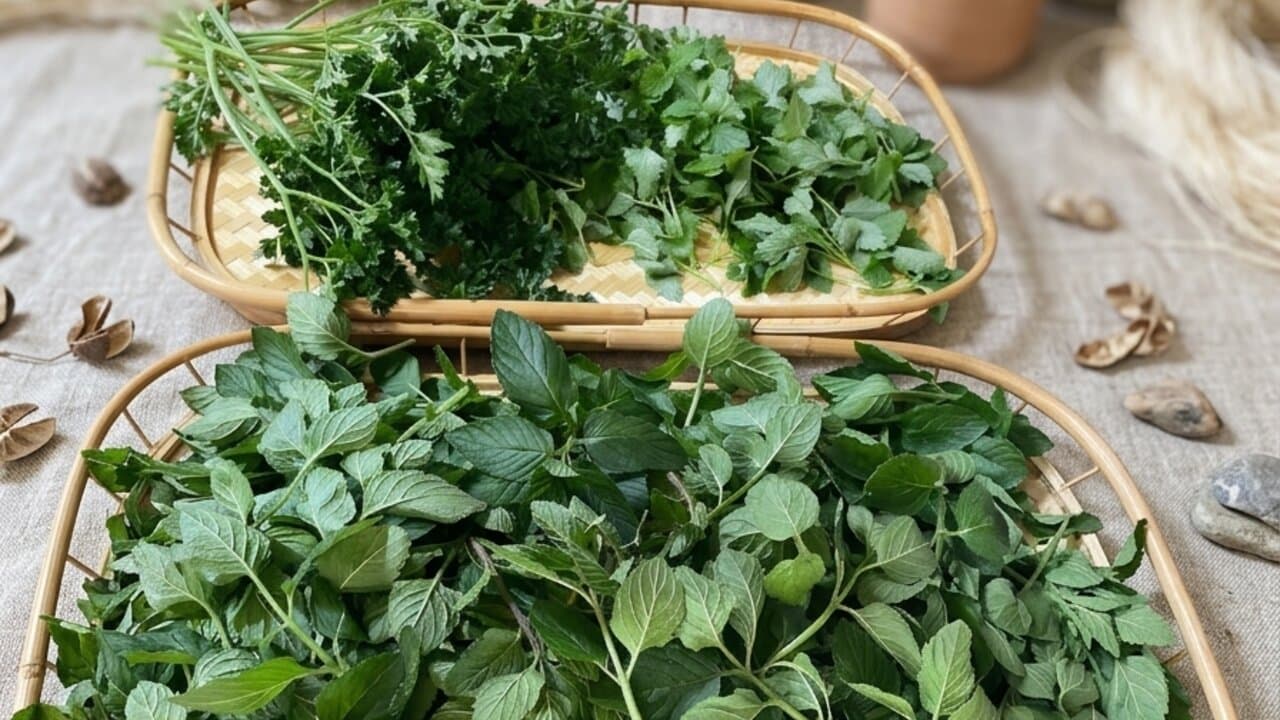
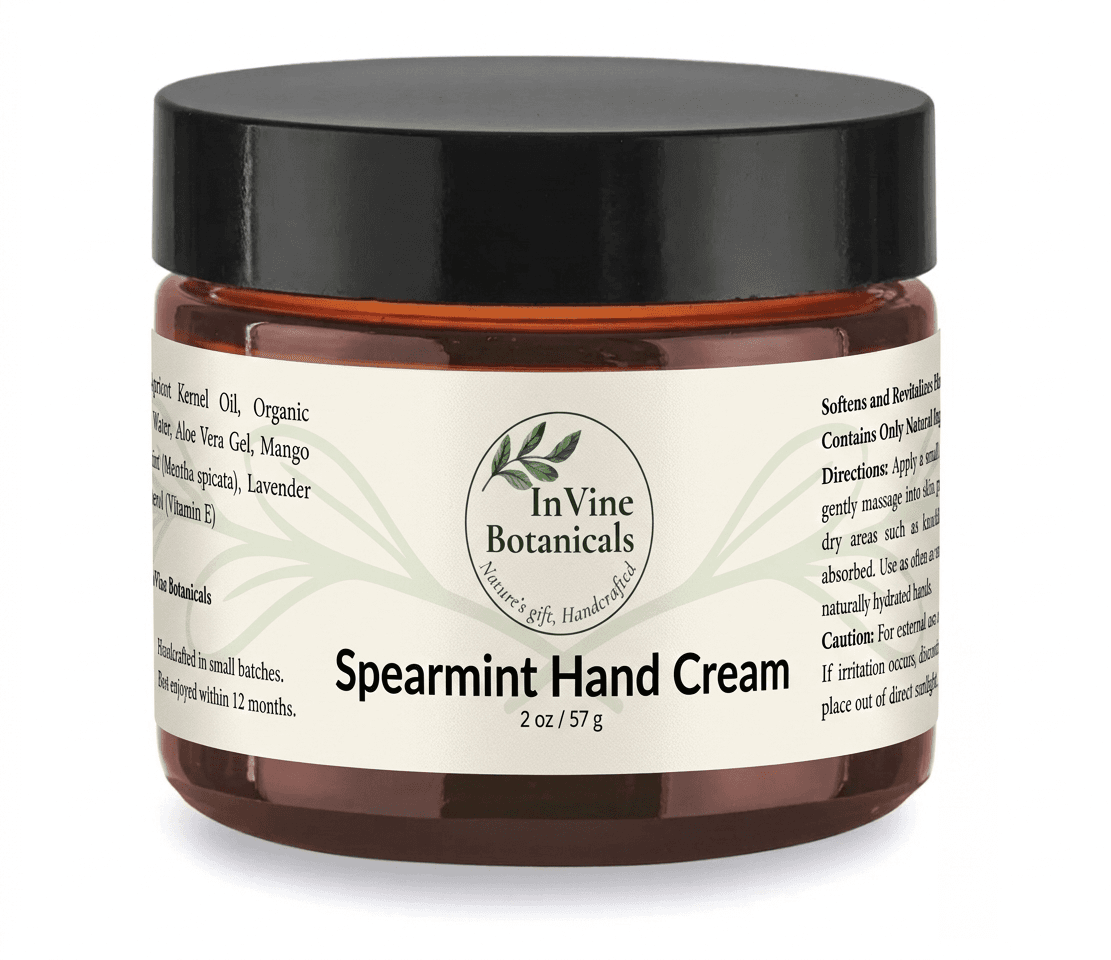
InVine's Spearmint Hand Cream is built on whole-herb spearmint infusion. The spearmint (Mentha spicata) grows in our Tallahassee garden, gets harvested at peak season, dried in our humidity-controlled drying room at 76°F and 35% humidity, then steeped in organic cold-extracted olive oil for 6-8 weeks in cool, dark conditions.
The infused oil is blended with unrefined virgin coconut oil, locally-sourced beeswax from a Tallahassee beekeeper, and Vitamin E. That's the whole formula. No water phase. No emulsifiers. No preservatives, because the absence of water means we don't need them.
It feels different from a water-based hand cream. Denser. Goes on slightly thicker, absorbs into the lipid barrier rather than sitting on top. The spearmint scent is from the infused oil, not from added essential oil, so it's subtler, present but not loud.
The dry-hands use case
Hands take more chemical and physical stress than almost any other skin on the body:
- Hot water and detergent strip lipids every time you wash
- Hand sanitizer (alcohol) is desiccating and damages the barrier
- Dry winter air pulls moisture out
- Outdoor work, gardening, building, cleaning, exposes hands to abrasion and chemicals
Water-based hand creams treat the surface symptom. Oil-and-wax-based plant hand creams actually replenish what's been stripped from the lipid barrier.
For severely dry hands, gardener's hands, dishwasher's hands, woodworker's hands, the recommendation I'd make to anyone, including outside our own products, is:
- Use an oil-based hand cream, not a water-based one
- Apply at night under cotton gloves for serious cases
- Use after every hand-washing, not just when hands feel dry
- Look for beeswax, plant butters, or candelilla wax in the ingredient list, these are doing the structural work
How to read a plant-based hand cream label
The same three checks I use when evaluating any plant-based skincare:
1. First three ingredients.
If "aqua" is first, you're holding a water-based lotion, not a plant-based hand cream. A real plant-based hand cream lists oils, butters, or waxes first. (For ours: olive oil and unrefined coconut oil come first; beeswax third.)
2. Ingredient count.
A plant-based hand cream with eight ingredients or fewer is usually doing it right. A plant-based hand cream with twenty-five ingredients is doing something else.
3. Wax or butter for structure.
Beeswax, shea butter, cocoa butter, candelilla wax, carnauba wax. One of these should be doing the structural work in a real plant-based hand cream. If you see "stearic acid" or "cetyl alcohol" without a plant context, the brand is using industrial thickeners.
Plant ingredients that work well in hand creams
A few notes on the more useful plant ingredients in this category:
Olive oil (Olea europaea), the workhorse carrier for hand creams. Compatible with most skin types, gentle, takes infusion well.
Coconut oil (Cocos nucifera), adds firmness, has a long history of skin tolerance, slightly antimicrobial in the cosmetic sense (some people find it too occlusive on the face but it works well on hands).
Beeswax, gives hand cream its structure without water and emulsifiers. Bee-derived, so technically not vegan, but plant-based-compatible.
Shea butter, rich, creamy, melts at body temperature, excellent for dry hands. Used at 15-25% in many plant-based hand creams.
Spearmint (Mentha spicata), used in our Spearmint Hand Cream as a whole-herb infusion. Adds a subtle aromatic, has a gentle cooling sensory quality (not the menthol burn of peppermint at high concentration).
Calendula (Calendula officinalis), particularly good for sensitive or compromised hand skin, as an infused oil.
Rosemary (Rosmarinus officinalis), common in plant-based hand creams as both an aromatic note and a natural antioxidant. The infused oil is gentler than the essential oil.
When a plant-based hand cream is the right call
Choose a plant-based hand cream over a conventional lotion when:
- Your hands are genuinely dry, not just temporarily lacking moisture
- You react to synthetic preservatives or emulsifiers in conventional hand creams
- You want a product whose ingredient list you can read
- You're willing to spend an extra minute for the cream to absorb
A water-based lotion is fine when you want something light, fast-absorbing, and you don't have a barrier issue to address. For dry-hands rescue, a plant-based hand cream made on the oil-and-wax model is the more useful tool.
Where this fits in plant-based skincare
A hand cream is one component of a plant-based skincare regimen. If you want the full lineup, face creams, body butters, balms, gift sets, our plant-based skincare collection walks through every product InVine makes and how it's built.
If you want to read more on the formulation question: Essential Oil Dilution vs. Whole-Herb Infusion covers why the extraction method matters as much as the inputs.
A note on InVine's Spearmint Hand Cream specifically
We make this product in small batches and never stockpile. Every jar ships with a batch number and infusion date printed on the label, so you can see how recent the infusion is when it arrives. The spearmint is from the spring harvest in our Florida garden; the olive oil is organic and cold-extracted; the beeswax is from a single Tallahassee beekeeper we've worked with for years.
It's not the cheapest hand cream on the market. It's not trying to be. It's a plant-based hand cream built on a structural commitment to the plant ingredients doing real work.
A hand cream that actually helps dry hands is built from oils and waxes, not from water and emulsifiers. The label tells you which one you're holding, if you read it. The brands worth following are the ones that don't ask you to take their word for the plant content. They show it on the back of the jar.
The cream in everyone's toolbox is the perfect case study: see our honest look at a natural alternative to O'Keeffe's Working Hands.