Quick answer: Aquaphor does two jobs at once, its 41% petrolatum and mineral oil seal the skin, while glycerin and panthenol hold water underneath. The closest natural one-for-one is lanolin, which seals and holds moisture in a single ingredient. For the everyday conditioning most people actually reach for Aquaphor to do, dry hands, lips, rough patches, beeswax-and-plant-oil balms, tallow balm, shea butter, or a whole-herb infused balm condition skin with plant materials instead of refined hydrocarbons. The full nine, with honest trade-offs and a comparison table, are below.
Aquaphor may be the most dermatologist-mentioned tube in America. Made by Beiersdorf, the same company behind Nivea and Eucerin, it has been marketed since 1925 as the multi-purpose answer for dry skin, chapped lips, rough hands, and everything in between. The slugging trend put it on a second generation of bathroom counters. (Its dermatologist-branded shelf rival, CeraVe Healing Ointment, 49.5% petrolatum beneath the ceramide label, gets the same honest treatment in our look at a natural alternative to CeraVe Healing Ointment.)
It works, and it earned its reputation honestly. But if you have started reading ingredient labels, and the fact that you searched for an alternative suggests you have, the tube is worth understanding before you decide what belongs on your skin every day.
What's Actually in Aquaphor
Aquaphor Healing Ointment has seven ingredients. Because it is regulated as an over-the-counter skin protectant, the exact list is on file with the FDA:
- Petrolatum (41%), the active ingredient. This is the same refined petroleum jelly that makes up 100% of Vaseline, here at less than half the formula.
- Mineral oil, a liquid petroleum derivative that thins the texture so the ointment spreads more easily. We took a full look at this ingredient in our examination of mineral oil in skincare.
- Ceresin, a wax refined from ozokerite, a naturally occurring fossil hydrocarbon. It gives the ointment structure.
- Lanolin alcohol, derived from wool grease. This is the clever part of the formula: it lets the water-free ointment absorb and hold water against the skin.
- Panthenol, pro-vitamin B5, a humectant that draws in moisture.
- Glycerin, another humectant.
- Bisabolol, a skin-soothing compound derived from chamomile. The one botanical in the tube.
Read that list as a whole: the first three ingredients, the bulk of the formula, are petroleum-derived. The plant kingdom contributes one compound, at the bottom of the list.
Aquaphor vs. Vaseline: Not the Same Product
People often treat the two as interchangeable, but they work differently. Vaseline is pure occlusion, a 100% petrolatum seal that keeps moisture from escaping. Aquaphor is a hybrid: the lanolin alcohol and humectants mean it also absorbs water and holds it against the skin while the petrolatum seals. That dual action is why dermatologists often name Aquaphor specifically for post-procedure care.
We wrote a full breakdown of the pure-occlusion category in our guide to natural alternatives to Vaseline and petroleum jelly. If Vaseline is your product, start there, the alternatives overlap but the reasoning is different.
The hybrid mechanism matters for choosing an alternative, too. A true Aquaphor replacement needs to do some of both jobs: seal and condition.
When Aquaphor Is the Right Tool
Honesty first. Aquaphor is an FDA-regulated over-the-counter skin protectant, it is fragrance-free, and its water-free formula needs no preservatives. If a dermatologist told you to use it after a procedure, use it, that recommendation exists because the occlusive seal does something specific and measurable. The same is true for severely wind-chapped skin in the depths of winter: heavy occlusion is the right answer, and Aquaphor delivers it with a gentler ingredient list than many alternatives in the drugstore aisle.
What You Trade with Everyday Use
The question is not whether Aquaphor works. It is whether a petroleum-based ointment is what you want as your default, the thing you put on your hands and lips several times a day, every day.
Used that way, three trade-offs are worth naming:
- The base is refined hydrocarbon. Cosmetic-grade petrolatum and mineral oil are highly refined and regulated. But they are inert by design, they sit on the skin and contribute nothing to it beyond the seal.
- One botanical, at the bottom of the list. If you want plant compounds in contact with your skin, the aromatics, the pigments, the character of actual herbs, this formula was never designed to provide that.
- Lanolin alcohol is a known sensitizer for a small group of people. If you have ever reacted to a wool-derived product, check with your dermatologist before making Aquaphor an everyday staple.
If your actual daily job is conditioning, softening dry hands, keeping lips comfortable, smoothing rough patches, that is a job plants have been doing for a very long time.
9 Natural Alternatives to Aquaphor
1. Lanolin
The closest one-for-one substitute, because it shares Aquaphor's mechanism: lanolin is both occlusive and able to hold many times its weight in water. It is a single ingredient, produced by sheep rather than refineries, though that also means it is not plant-based, and people with wool sensitivity should skip it. Lanolin is also the conditioning heart of Bag Balm, the 127-year-old farm-store tin we broke down separately.
Best for: lips, knuckles, anywhere you want Aquaphor's seal-plus-moisture action from one natural ingredient
Trade-off: animal-derived, slightly sticky, and the same sensitizer caution as Aquaphor's lanolin alcohol
2. Beeswax + Plant-Oil Balm
The core natural category. Beeswax forms a flexible, semi-permeable film, a lighter seal than petrolatum that still slows moisture loss, while the plant oils underneath it condition the skin. Where petrolatum is inert, olive and coconut oils bring fatty acids the skin can actually use.
Best for: daily hands, dry patches, cuticles, the everyday-conditioning jobs
Trade-off: medium occlusion; it will not match petrolatum's seal for post-procedure or extreme-weather work
3. Tallow Balm
Rendered grass-fed tallow has a fatty-acid profile close to human sebum, which is why it has become a staple of the low-tox movement, and why it was a household skin staple for centuries before petroleum jelly displaced it. Usually blended with a little olive oil for spreadability.
Best for: very dry skin that drinks up richer balms
Trade-off: animal-derived, quality varies widely by producer, and unscented versions still carry a faint tallow note
4. Shea Butter
A rich plant butter with genuine occlusive ability and deep conditioning. Raw, unrefined shea keeps its natural compounds; refined shea is more neutral but less interesting.
Best for: body care, elbows, heels, legs after a shower
Trade-off: can feel heavy on the face; graininess if it has been through temperature swings
5. Plant Squalane Over a Humectant
The modern-skincare answer to Aquaphor's hybrid mechanism, rebuilt in two steps: a glycerin- or hyaluronic-based layer to draw in water, then plant-derived squalane (usually from sugarcane or olives) to slow its escape. This is the approach for people who liked the idea of slugging but not the petroleum.
Best for: facial care, overnight routines
Trade-off: two products instead of one, and a lighter seal than an ointment
6. Spearmint Hand Cream
Hands are Aquaphor's single biggest daily use case, and a dedicated hand cream is often the better tool for that job. InVine's Spearmint Hand Cream is built around spearmint grown in our Tallahassee garden, infused in apricot kernel and grapeseed oils, light enough to absorb cleanly and get back to work, with actual plant character instead of an inert seal.
Best for: post-wash daily hand care, gardener hands, frequent hand-washers
Trade-off: cream format, not an ointment, it conditions rather than seals
7. Whole-Herb Infused Beeswax Balm
This is the category we make, so judge the framing accordingly, but it is also the fullest plant-based expression of what a balm can be. InVine's balms start with herbs grown in our own garden, slow-infused whole for 6-8 weeks in cool, dark conditions, then strained and blended with beeswax and Vitamin E. The result sits in the same drawer slot as Aquaphor, a thick balm for hands, lips, and dry patches, but every layer of it comes from plants and bees rather than a refinery.
Best for: daily conditioning anywhere on the body, for people who want botanicals in the jar
Trade-off: medium occlusion, and it is a cosmetic, not a post-procedure skin protectant
8. Calendula-Infused Olive Oil
The gentlest entry on the list. Calendula flowers infused in olive oil have centuries of traditional use for delicate skin care, and the oil format spreads a long way.
Best for: sensitive skin, facial use, anyone starting a transition away from petroleum products
Trade-off: an oil, not an ointment, low occlusion, and it can stain fabric
9. Coconut Oil
The pantry option. Semi-solid at room temperature, decently occlusive for a single plant oil, and available in every grocery store. It is nobody's perfect answer, but as a bridge away from petroleum products it costs almost nothing to try tonight.
Best for: lips and cuticles in a pinch, body care on a budget
Trade-off: comedogenic on many faces; melts in a warm bathroom; no structure without a wax
Quick Comparison Table
| Alternative | Occlusion | Conditioning | Plant-Based | Best Use Case |
|---|
| Lanolin | High | Medium | No (animal) | Lips, knuckles |
| Beeswax + plant-oil balm | Medium | High | Yes | Daily hands, dry patches |
| Tallow balm | Medium-high | High | No (animal) | Very dry skin |
| Shea butter | Medium | High | Yes | Body, elbows, heels |
| Squalane + humectant | Low-medium | Medium | Yes | Facial, overnight |
| Spearmint Hand Cream | Low | High | Yes | Daily hand care |
| Whole-herb beeswax balm | Medium | High | Yes | Everyday botanical balm |
| Calendula-infused olive oil | Low | High | Yes | Sensitive, facial |
| Coconut oil | Medium | Medium | Yes | Budget bridge option |
No single row replaces Aquaphor at every job. The honest move is picking by use case: lanolin when you need the seal, a balm or butter for the daily conditioning, squalane-over-humectant for the face.
The Whole-Herb Approach in Practice
Most natural alternatives on this list are single ingredients, one oil, one butter, one wax. Whole-herb infusion is a different idea: start with the plants themselves.
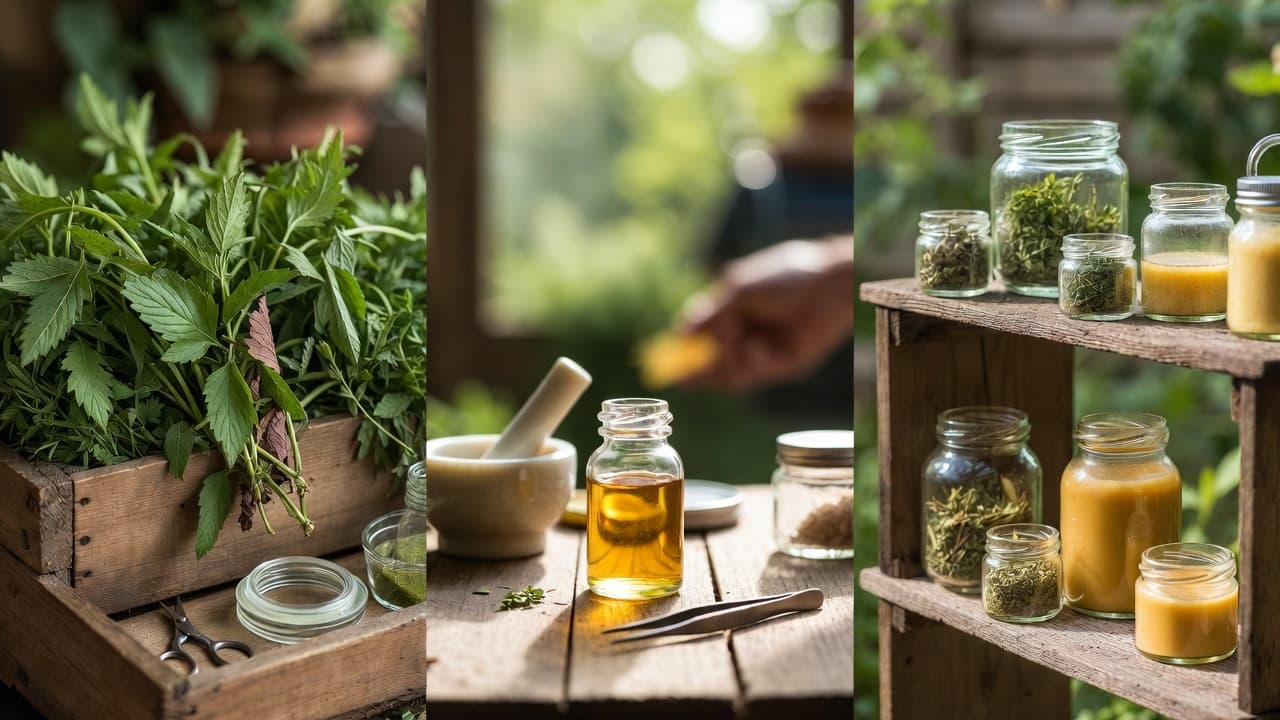
At InVine, that means herbs grown in our Tallahassee garden, harvested at their peak, dried slowly, and infused whole into organic olive and coconut oils until the oil carries the full character of the plant. The infused oil is strained and blended with beeswax and Vitamin E, then poured into jars. Janice, our founder and herbalist, formulated every recipe. You can see the whole process, garden to jar, on our How It's Made page.
The point is not that this replaces petrolatum's seal, it does not try to. The point is that when the job is everyday conditioning, an infused balm brings the plants to the job, and an ointment made of refined hydrocarbons cannot.
Which One Should You Pick?
If your dermatologist prescribed Aquaphor for a specific situation, follow your dermatologist, that is the tool doing its designed job. If your hands take a beating at work, our look at O'Keeffe's Working Hands and its alternatives covers that heavier-duty category. And if it is the pure-petrolatum products you are moving away from, the Vaseline guide goes deeper on occlusion itself.
But if Aquaphor became your default simply because it was always there, and what you actually want each day is soft hands, comfortable lips, and plants instead of petroleum on your skin, the alternatives above have been doing that quiet work all along.
The information in this post is for educational purposes and reflects traditional herbal knowledge and published research. InVine products are cosmetics, not drugs.