If you garden, cook, wash dishes, pull weeds, or work with your hands for a living, you already know the feeling: skin that turns rough and tight by the end of the day, knuckles that look chalky, fingertips that snag on fabric. Hands take more daily wear than any other patch of skin on your body, and they have fewer oil glands to defend themselves with.
Quick answer: seven herbs with long traditions in hand care are spearmint, rosemary, lemon balm, calendula, chamomile, rose, and sweet basil. Infused whole into rich plant oils, they turn a basic moisturizer into something worth keeping by the sink.
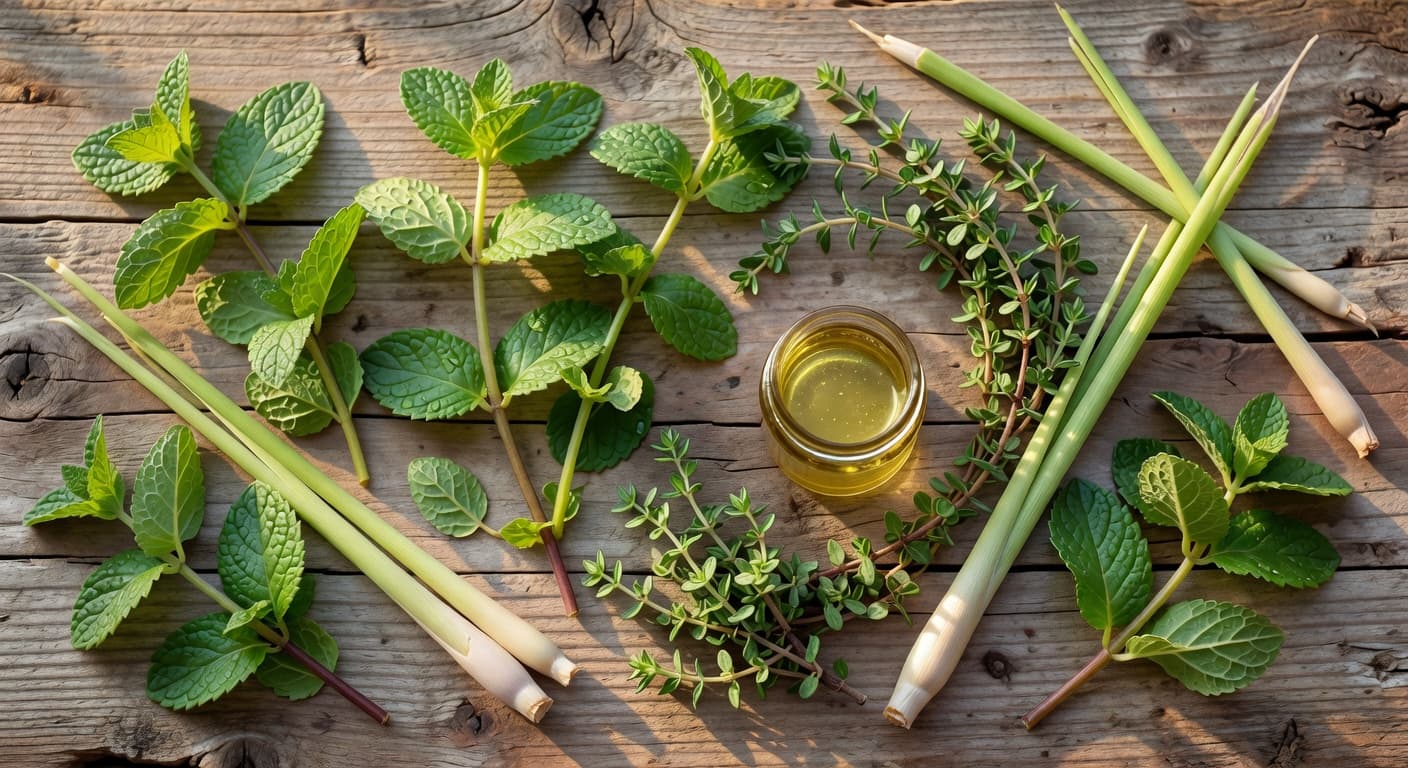
Plants have been part of hand care for as long as people have worked with their hands. Below are seven herbs we know well, most of them growing right now in our Tallahassee garden, and what each one brings to a jar. (If your question is about the face rather than hands, we wrote a companion: 7 herbs for glowing skin.)
1. Spearmint (Mentha spicata)
Spearmint is peppermint's gentler cousin. It carries carvone rather than a heavy dose of menthol, which is why it feels fresh and lightly cooling instead of icy. That makes it a natural fit for hands: you get the clean, garden-mint lift every time you rub it in, without any sting on skin that already feels raw from washing.
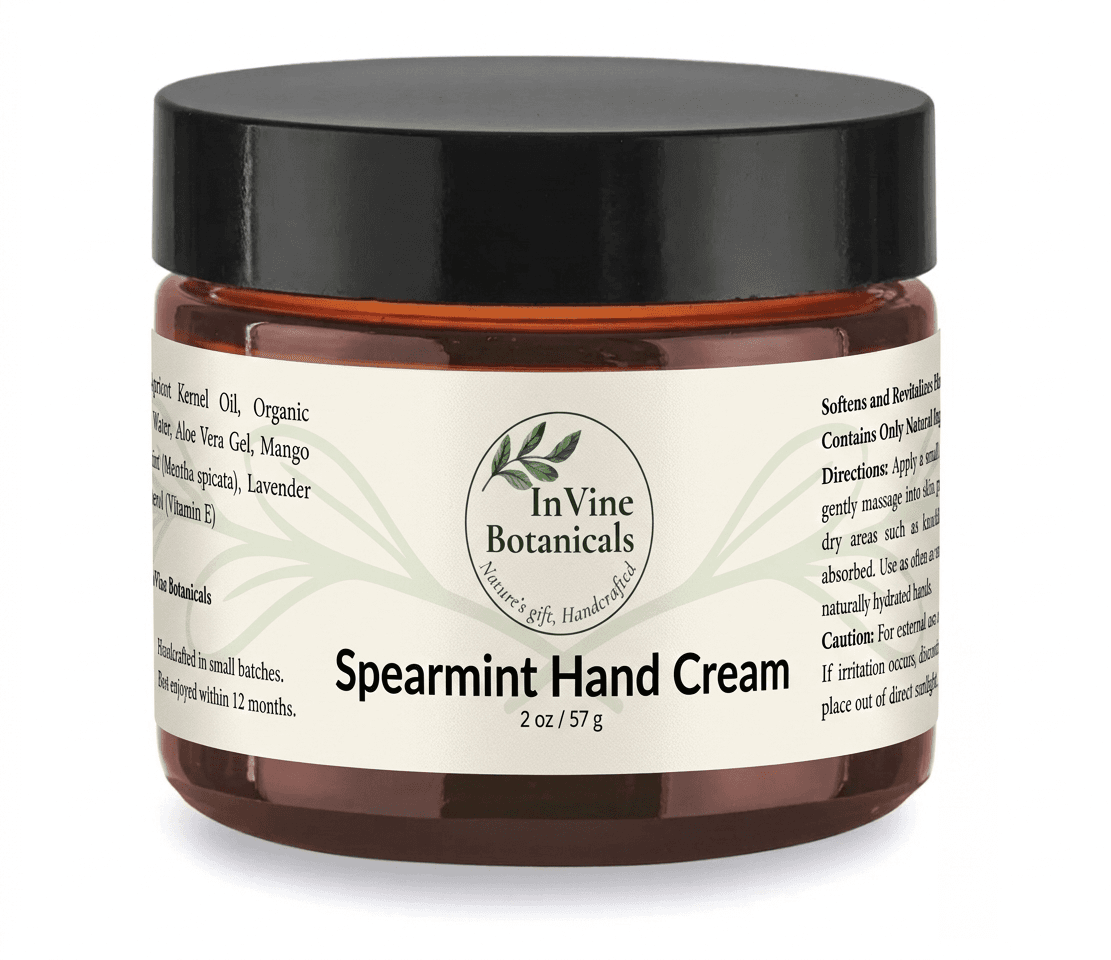
Spearmint is the signature herb in our own Spearmint Hand Cream, where the leaves are infused whole into apricot kernel and grapeseed oils. Those two carrier oils are a deliberate choice for hands: they absorb quickly and leave a soft, non-greasy finish, so you can get back to work without wiping your palms first. It is also the opposite strategy from the classic drugstore tubes; we compared it with Neutrogena Norwegian Formula to show the difference.
2. Rosemary (Rosmarinus officinalis)
Rosemary is one of the most studied culinary herbs in the world, and most of that attention centers on two compounds: carnosic acid and rosmarinic acid. Both are potent antioxidants. In a skincare formula they pull double duty, conditioning the skin while helping protect the plant oils in the jar from oxidative stress.
That second job matters more than people realize. Natural formulas skip synthetic preservatives, so an herb that helps keep the oils themselves fresh is earning its place twice over.
3. Lemon Balm (Melissa officinalis)
Lemon balm has over 2,000 years of history in European herbalism, from monastery gardens to household stillrooms. Its leaves are rich in rosmarinic acid and flavonoids, compounds researchers have explored extensively for their skin-conditioning properties.
For hands specifically, lemon balm is a comfort herb: it is traditionally reached for when skin feels stressed from weather, water, or work. It also brings a soft lemon-honey scent that plays well with mint.
4. Calendula (Calendula officinalis)
Ask any herbalist to name one plant for rough, dry skin and calendula is usually the first word out of their mouth. The golden petals are packed with resins and flavonoids that transfer beautifully into oil, which is why calendula-infused oil has been a staple of home apothecaries for centuries.
We grow calendula in our garden, though it is not in our current product lineup. If you are the DIY type, calendula is honestly one of the best herbs to start with: the petals are easy to dry, easy to infuse, and forgiving of beginner mistakes. Our free herbal skincare guide walks through the whole-herb infusion method step by step.
5. Chamomile (Matricaria chamomilla)
Chamomile is famous as a bedtime tea, but its skincare résumé is just as long. The flowers contain bisabolol, a compound so valued for skin conditioning that the cosmetics industry uses it as a standalone ingredient in gentle formulas worldwide.
Chamomile suits hands that feel stressed by sun, wind, or constant washing. It is one of the gentlest herbs in the entire tradition, which is why it shows up in skincare for even the most reactive skin. In our garden it grows as a winter crop, one of the quiet pleasures of a Florida cool season.
6. Rose (Rosa hybrida)
Rose petals have been infused into oils and balms since antiquity, and not just for the scent. Rose brings a soft, velvety feel to a formula and a long tradition of use in skin conditioning, from Persian rose water to European cold creams.
We infuse garden rose petals into our Rose Renewal Crème alongside spearmint and rosemary. It is formulated for the face, but the backs of your hands will happily take whatever is left on your fingertips.
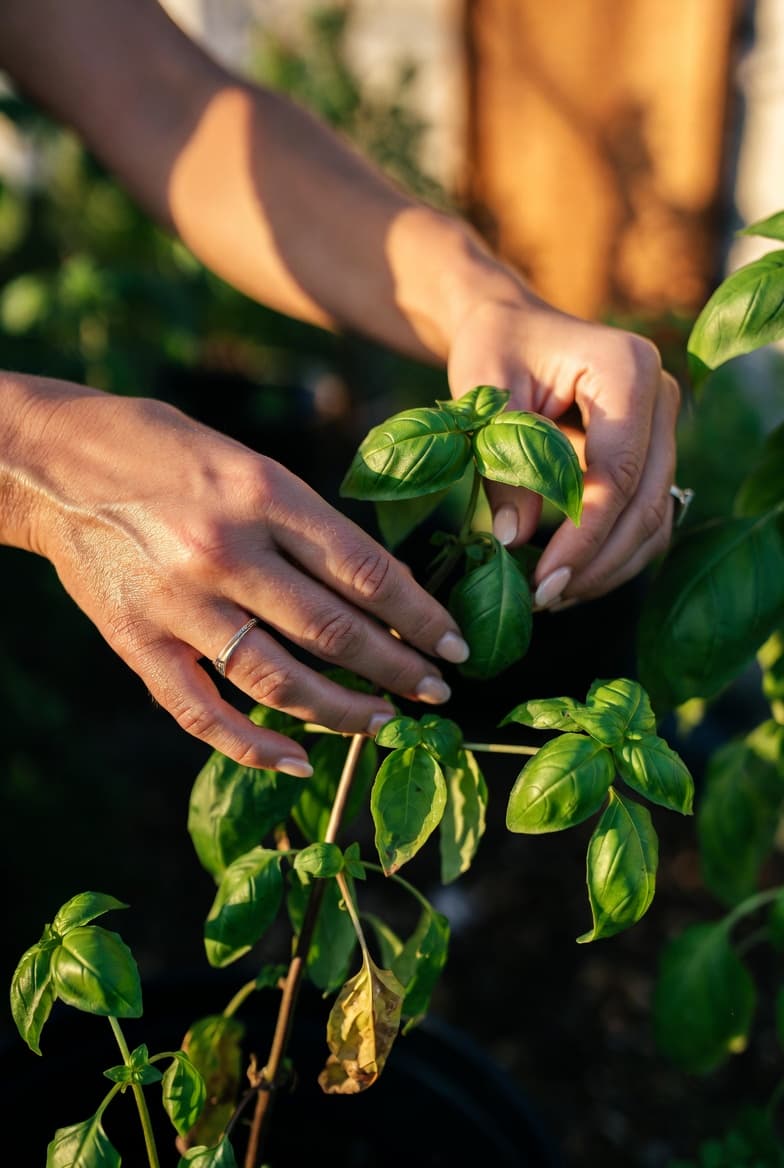
Basil is the surprise entry on this list. Beyond the kitchen, basil carries linalool and eugenol, aromatic compounds with a long record in traditional skin care across Ayurvedic and Mediterranean cultures. Infused into oil, it adds a green, faintly spicy warmth that keeps a formula from smelling like a perfume counter.
Sweet basil, holy basil, and Thai basil all go into our Basil Body Butter, a rich mango butter formula that works anywhere skin runs dry, hands very much included.
How These Herbs Actually Get Into a Jar
Dried herbs sitting in a pretty box will not soften anyone's hands. The compounds above are locked inside the plant material, and the way you draw them out shapes what ends up on your skin.
The method we use is whole-herb infusion: whole dried herbs steeped in plant oils for 6-8 weeks, depending on the herb, in cool, dark conditions. The slow timeline lets both the delicate aromatics and the heavier, fat-soluble compounds migrate into the oil. It is the difference between a quick dunk of a tea bag and a proper cold brew.
You can read exactly how we do it on our How It's Made page, or try it yourself with the free guide. Either way, the principle is the same: the herb does the work, the oil carries it, and time does the rest.
The Seven at a Glance
| Herb | Known For | Where You'll Find It |
|---|
| Spearmint | Fresh, light cooling feel | Spearmint Hand Cream |
| Rosemary | Antioxidant support, keeps oils fresh | Several of our formulas |
| Lemon balm | Comfort for weather-worn skin | Our balm formulas |
| Calendula | The classic herb for rough, dry skin | DIY infusions (see the guide) |
| Chamomile | Gentleness, bisabolol | DIY infusions, gentle formulas |
| Rose | Velvety skin feel, timeless tradition | Rose Renewal Crème |
| Sweet basil | Green warmth, aromatic depth | Basil Body Butter |
What to Look For in an Herbal Hand Product
Whether you buy from us or anyone else, a few honest pointers:
- Look for the herb, not just the scent. An ingredient list that names the actual plant (Mentha spicata, Calendula officinalis) tells you the herb is in the formula. "Fragrance" tells you the smell is.
- Rich plant oils and butters beat water-heavy formulas for hardworking hands. Water-based lotions feel light but evaporate quickly. Concentrated formulas built on oils and butters like mango butter stay put through a day of use. We wrote more about this in our waterless skincare guide.
- Apply while skin is slightly damp. Right after washing is the best moment: the cream locks that softness in before it evaporates.
- Night is the heavy shift. A generous layer before bed gives any formula eight uninterrupted hours to condition your skin.
Our own answer to all of the above is the Spearmint Hand Cream: garden spearmint infused whole into apricot kernel and grapeseed oils, blended with mango butter and beeswax, made for hands that earn their keep. If creams are more your household's speed than balms, the full lineup is on our creams and body butters page.
This article is for educational purposes. InVine Botanicals products are cosmetics, formulated to moisturize, soften, and condition the skin. They are not intended to diagnose, treat, cure, or prevent any disease.