Florida Springs Into Bug Season Whether You're Ready or Not
Spring in Tallahassee is genuinely one of my favorite times of year, it's also the unofficial start of what I affectionately call the itchy season. Between mosquitoes, no-see-ums, gnats, and the occasional fire ant encounter, our skin takes a lot of abuse from late February through November. That's not a short window. That's most of the year.
Over the years, I've gotten a lot of questions that go something like this: "Janice, what herbs are actually good for bug bites?" It's a fair question, and it deserves a thoughtful answer, one that goes beyond a quick list and actually explains why certain plants have been traditionally valued for this purpose, and how the way you prepare them matters enormously.
So let's talk about the bugs, the herbs, the history, and the craft behind what ends up on your skin.
What's Actually Biting You in Florida Spring
Before we talk about plants, it helps to know your opponent.
Mosquitoes are the obvious culprit. Florida has around 80 species of mosquitoes, more than almost any other state. Spring rains create the standing water they need to breed, and warm temperatures mean they're active earlier in the day than you might expect. The Aedes aegypti and Aedes albopictus (Asian tiger mosquito) are both aggressive daytime biters, which surprises people who assume mosquitoes are only a dusk-and-dawn problem.
No-see-ums (biting midges, Culicoides spp.) are arguably more maddening. They're small enough to pass through standard window screens, they swarm in coastal and low-lying areas, and their bites can leave intensely itchy welts disproportionate to their size. They're most active during calm wind conditions at sunrise and sunset.
Deer flies and horse flies become more active in spring, especially near wooded areas and water. They're larger, they bite hard, and they don't follow the same patterns as mosquitoes.
Sand gnats are common in North Florida and the Panhandle, particularly in sandy, humid environments, which is, of course, most of Florida.
Knowing which insect is bothering you matters, because each follows its own schedule and conditions, and that knowledge shapes the practical habits at the end of this post.
Why Whole-Herb Infusion Changes Everything
Before I get into specific herbs, I want to share something that shaped the entire philosophy behind InVine Botanicals, because it's directly relevant to how you think about any botanical skin product.
Most of the "herbal" products you'll find at a pharmacy or big-box retailer are made by diluting isolated essential oils into a base. There's nothing inherently wrong with that, but it's a fundamentally different thing from a whole-herb cold infusion.
When I infuse whole dried herbs, leaves, flowers, roots, directly into a carrier oil using the slow traditional method, I'm capturing the full spectrum of that plant's natural compounds: the waxes, the chlorophylls, the slower-moving water-soluble fractions that don't make it into a steam-distilled essential oil, alongside the aromatic volatile compounds. The result is botanically richer, more complex, and, in my experience, more interesting on the skin.
We grow our own herbs right here in our Florida garden. They go from garden to infusion jar with minimal processing. That matters to me, and I think it matters to your skin.
With that foundation in place, let's get into the plants.
The Herbs Traditionally Valued After Bug Encounters
Lemon Balm (Melissa officinalis)
If there's one herb I'd call the quiet overachiever of my garden, it's lemon balm. This lovely, lemon-scented member of the mint family has been used in European herbal tradition for centuries, and it thrives beautifully in Florida's climate.
Lemon balm contains rosmarinic acid, a polyphenol that researchers have been actively exploring in cosmetic and botanical contexts. It also contains flavonoids and terpenes that contribute to its characteristic scent and skin feel. Traditionally, herbalists have long valued lemon balm preparations for application to irritated skin, and the cooling, aromatic quality of the plant translates beautifully into an infused oil.
In my Bug Bite Balm, lemon balm is one of the foundational infused herbs, and its presence is part of what gives the balm that fresh, green botanical character that sets it apart from anything synthetically fragranced.
Lemongrass (Cymbopogon citratus)
Lemongrass is another Florida-friendly plant that I grow in abundance, it practically grows itself here. It's been valued across Southeast Asian, Caribbean, and South American herbal traditions for generations, both for its bright citrus-ginger aroma and for topical applications to skin that's been exposed to insects.
The plant is rich in citral, a naturally occurring aldehyde that gives it that distinctive sharp lemon note. It also contains geraniol and limonene, compounds that researchers have examined with significant interest. What I love most about lemongrass in a whole-herb infusion is how it layers with other botanicals, it doesn't overpower, it lifts.
Rosemary (Rosmarinus officinalis)
Rosemary is rich in 1,8-cineole, camphor, and alpha-pinene, the resinous, evergreen aromatics that make it instantly recognizable. Mediterranean households have kept rosemary close to outdoor gathering spaces for centuries, and it has just as long a history as a topical botanical. In a slow whole-herb infusion, rosemary brings that distinctive aroma along with the skin-conditioning character that makes it one of the foundational herbs in the Bug Bite Balm.
Sweet Basil (Ocimum basilicum)
Sweet basil is rich in eugenol and linalool, and tropical cultures have grown basil near doorways and outdoor seating areas for generations. In the garden it thrives in Florida heat; in an infusion it contributes a warm, herbaceous depth that rounds out brighter citrus herbs beautifully. It's another of the foundational herbs in the Bug Bite Balm infusion.
Spearmint (Mentha spicata)
I have a whole raised bed dedicated to spearmint, and honestly, it still tries to escape. Mint is mint, it's enthusiastic.
Spearmint brings a gentler, sweeter mint character compared to peppermint, and its carvone-rich profile gives it that distinctive scent that's immediately recognizable and deeply comforting. On the skin, spearmint creates a genuine cooling sensation, not a product of added menthol, but a natural result of the plant's own volatile compounds interacting with your skin's temperature receptors.
For bug-bitten skin that feels warm and uncomfortable, that cooling sensation is genuinely lovely. It's sensory satisfaction, beautifully botanical. You can also find spearmint as the featured herb in our Spearmint Hand Cream, where it shines in a moisturizing context.
Peppermint (Mentha × piperita)
Peppermint is spearmint's more intense cousin, higher in menthol, more assertively cooling, with a sharper aromatic presence. Herbalists have valued peppermint topically for centuries, and it's one of the most studied aromatic herbs in the Western tradition.
In a whole-herb infusion, peppermint delivers that characteristic cooling sensation in a way that feels grounded and botanical rather than sharp or chemical. The menthol content is naturally occurring and balanced by the full spectrum of the plant's other compounds, something you simply can't replicate with an isolated menthol ingredient.
Lemon Thyme (Thymus citriodorus)
This one surprises people. Lemon thyme doesn't get nearly the attention it deserves in skin care conversations, but it's been a staple of Mediterranean herbal tradition and grows exceptionally well in Florida's warm, sunny climate.
Lemon thyme contains thymol and carvacrol, aromatic compounds that researchers have explored with considerable interest, alongside rosmarinic acid (shared with lemon balm). Its scent is herbaceous and citrus-forward, and it brings a beautiful botanical complexity to an infused oil blend.
Lemon Mint (Mentha aquatica hybrid)
Lemon mint occupies a delightful middle ground between the mint family and the lemon herbs. It's softer than peppermint, brighter than spearmint, and has a floral, citrusy quality that I find absolutely lovely in skin preparations. In the garden, it attracts every pollinator in the neighborhood, which tells you something about the richness of its aromatic compounds.
The Art of the Blend: Why These Herbs Work Together
One thing I want to be clear about: a truly effective botanical skin product isn't just a single herb extract. It's a thoughtfully composed blend where each plant contributes something different.
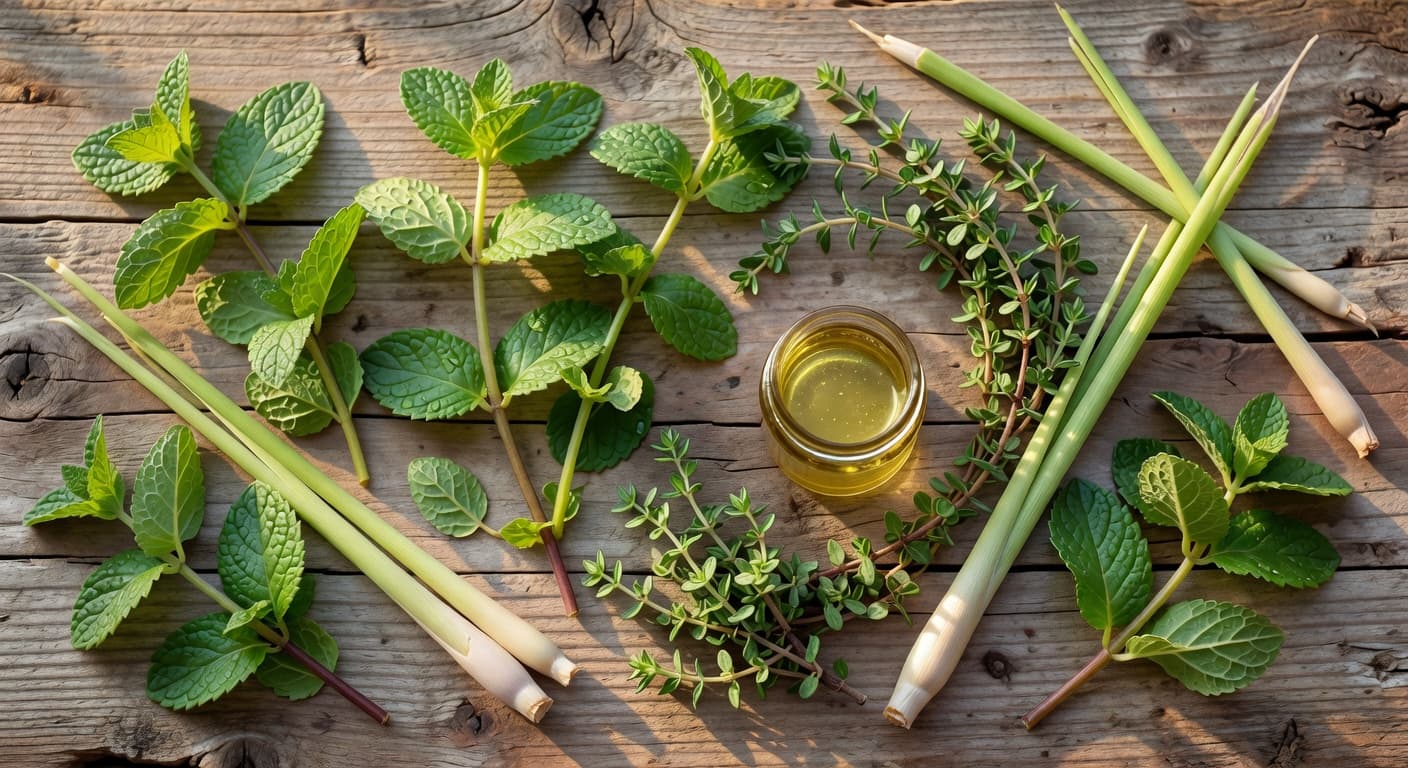
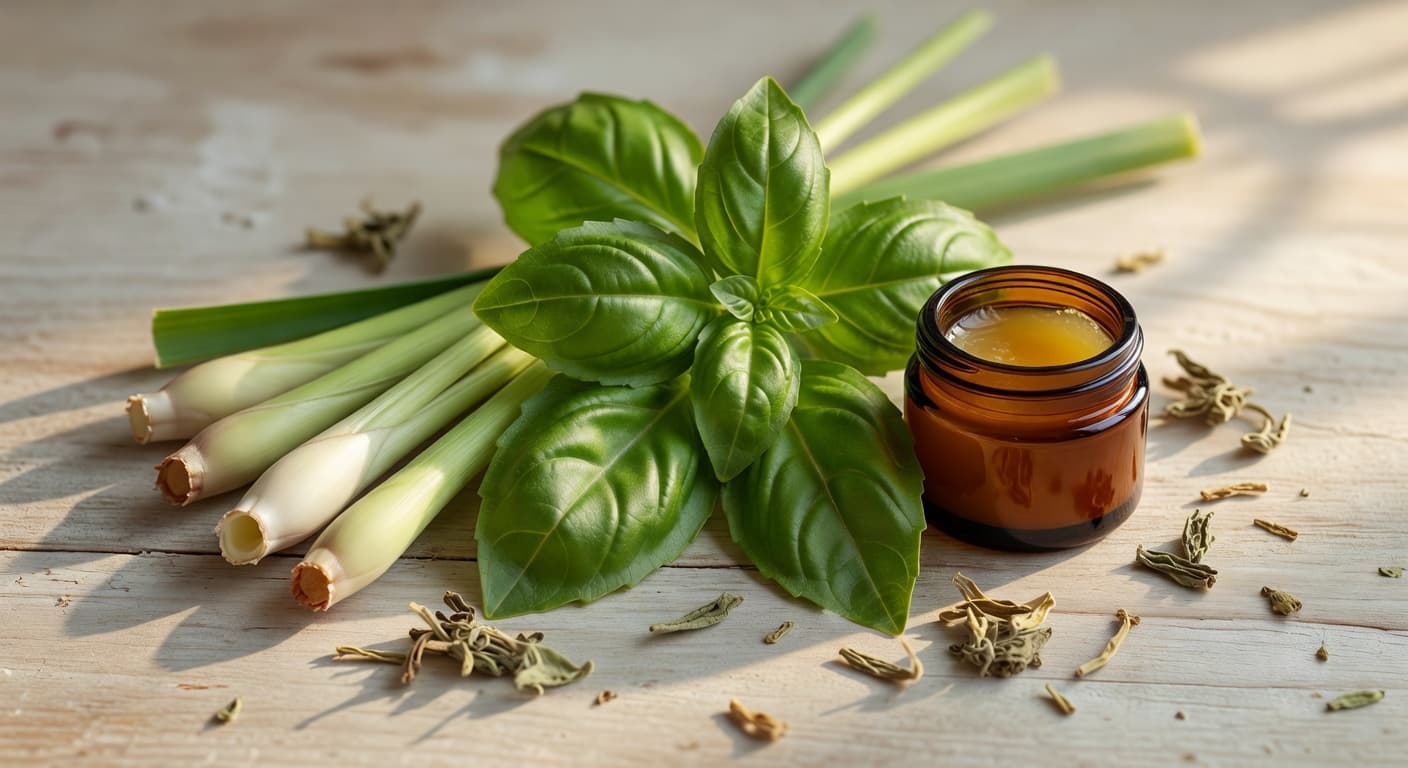
In the Bug Bite Balm, I've combined slow-infused lemongrass, lemon balm, rosemary, sweet basil, and lemon mint in a base of cold-extracted extra virgin olive oil and unrefined virgin coconut oil, finished with tea tree essential oil and set with pure beeswax. The result is a product that:
- Delivers a cooling, refreshing skin feel with a crisp herbal finish
- Has a complex, naturally citrus-herbaceous aroma (no synthetic fragrance needed)
- Feels conditioning and softening on the skin (thank the olive oil and coconut oil base)
- Applies with the satisfying slip that a well-made beeswax balm provides
Nothing is rushed. The herbs infuse slowly for weeks before the balm is ever made. That's not a marketing narrative, it genuinely changes the quality of the final oil.
A Note on What "Natural" Actually Means on a Label
I want to spend a moment on something that I think genuinely matters for savvy consumers, and the women who read The InVine Journal are savvy.
The word "natural" on a skin care label is essentially unregulated. A product can call itself natural while containing mostly synthetic ingredients with a token plant extract. A product can claim "with chamomile" while containing so little chamomile extract that it's effectively cosmetic storytelling.
When I tell you that the herbs in InVine products are grown in our Florida garden and slow-infused into carrier oil, I mean exactly that. The herb is the product's foundation, not a footnote on the ingredient list. That's a meaningful distinction, and it's worth asking about when you're evaluating any botanical brand.
If you're curious about how to read an ingredient label and what to look for, I go deeper on this topic in my post on whole-herb infusion vs. essential oil dilution, it'll change how you shop.
Florida-Specific Considerations: Our Skin Has Different Needs
Here's something that doesn't get discussed enough: Florida skin is different from Midwestern or Pacific Northwest skin. Our climate, high humidity, intense UV exposure, heat, means our skin is under different kinds of stress year-round.
For bug season specifically, this means a few things:
Hydration without heaviness. In Florida humidity, you don't always want a thick, occlusive product. Balms are wonderful for targeted application, just on the bite itself, rather than slathering everywhere.
UV awareness. Some citrus-derived ingredients can increase photosensitivity. In formulating InVine products, I'm mindful of citral content and sun exposure, which is part of why proper usage matters.
Freshness of botanicals. Florida heat degrades products faster than in cooler climates. Store your balms somewhere cool (I keep mine in a bathroom cabinet, not on a sunny windowsill) and check for the batch date on any InVine product.
Practical Habits for Florida Bug Season
What you put on your skin is only one layer. These environmental and behavioral practices make a genuine difference during Florida spring:
Eliminate standing water around your property. Mosquitoes can breed in as little as a bottle cap of water. Birdbaths, plant saucers, clogged gutters, tarps with pooled rainwater, all of these are breeding sites. The Florida Department of Health consistently identifies source reduction as the most effective long-term approach to managing mosquito populations on your property.
Time your outdoor activities thoughtfully. Aedes mosquitoes are most active in early morning and late afternoon. No-see-ums are worst at dawn and dusk when wind is calm. Deer flies peak in mid-morning on warm days. Avoiding peak activity windows, especially in dense vegetation or near standing water, makes a real difference.
Wear light-colored, loose-fitting clothing. Research has shown that dark colors attract more mosquitoes. Loose-fitting clothing with long sleeves and pants creates a physical barrier that no topical product can fully replicate.
Use fans. Mosquitoes are weak flyers. A fan on your porch or outdoor seating area makes it physically harder for them to land on you. This is a simple, underrated strategy.
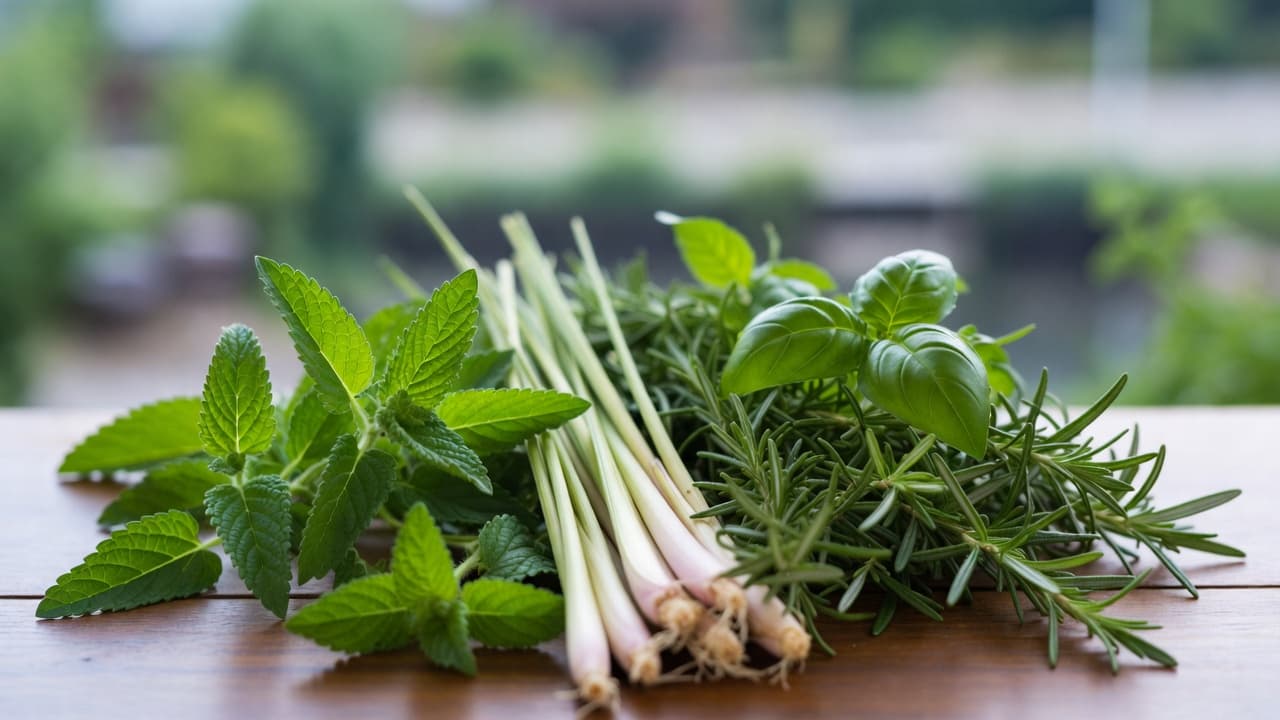
Grow aromatic herbs strategically. I keep potted lemongrass, rosemary, basil, and lemon balm near my outdoor seating. Brushing against them releases their volatile compounds into the air around you, a beautiful, fragrant layer of the garden as a living part of your outdoor environment.
Shower after outdoor activity. Lactic acid and other metabolic compounds on skin are part of what attracts mosquitoes. Rinsing them off reduces your attractiveness to future insects.
A Note on Realistic Expectations
I believe in honest herbalism. Botanical cosmetics are skin care, not insect repellent, they condition, soften, and comfort the skin while carrying the genuine aroma of the garden. If you're in a high-risk area for mosquito-borne illness, or if you're immunocompromised, please use the protection your healthcare provider recommends.
What I offer is an approach for people who want to incorporate more plant-based, thoughtfully crafted products into their daily outdoor life, products that smell beautiful, support skin conditioning, and connect you to the long tradition of humans living well alongside aromatic plants in warm, lush environments.
Florida is extraordinary. The bugs are the price of admission. But with smart outdoor habits and skin care you feel good about, spring here can be something you lean into rather than hide from.
Building Your Florida Spring Herbal Skin Kit
Beyond the bug bite balm, I'd encourage you to think holistically about your spring skin routine here in Florida.
For hands that are in the garden frequently, which is when a lot of bug encounters happen, a well-formulated botanical hand cream keeps skin conditioned and comfortable. The Spearmint Hand Cream has become a garden-season essential for many InVine customers for exactly this reason.
If you want to go deeper on the botanicals themselves, two companion reads pair well with this one: 5 Herbs in a Natural Bug Bite Balm and the lemongrass and basil story behind the Bug Bite Balm.
For the botanical explorers among you: understanding individual herbs makes you a more intentional consumer. I'd encourage you to explore the ingredient pages for rosemary, basil, and lavender, all herbs with long histories of topical use and interesting botanical profiles.
From My Garden to Your Skin
Spring in Tallahassee is worth it, all of it, bugs included. There's something grounding about being in a place with such ferocious, enthusiastic nature. My garden right now is full of the herbs I've been writing about: the mint beds are putting out new growth, the lemongrass is standing tall after a mild winter, the lemon balm is starting to sprawl in that beautiful, generous way it has.
Those plants will become infusions. Those infusions will become products that end up on your skin during exactly the moments when you need them, on a back porch at dusk, on a trail through Apalachicola, after an afternoon in a Florida garden.
That's the whole story, really. It starts in the dirt, it ends with you, and every slow, deliberate step in between is intentional.
, Janice, Herbalist & Founder, InVine Botanicals
Want the full picture, the formula, the herbs, and the most-asked questions in one place? Start with our Natural Bug Bite Balm guide.