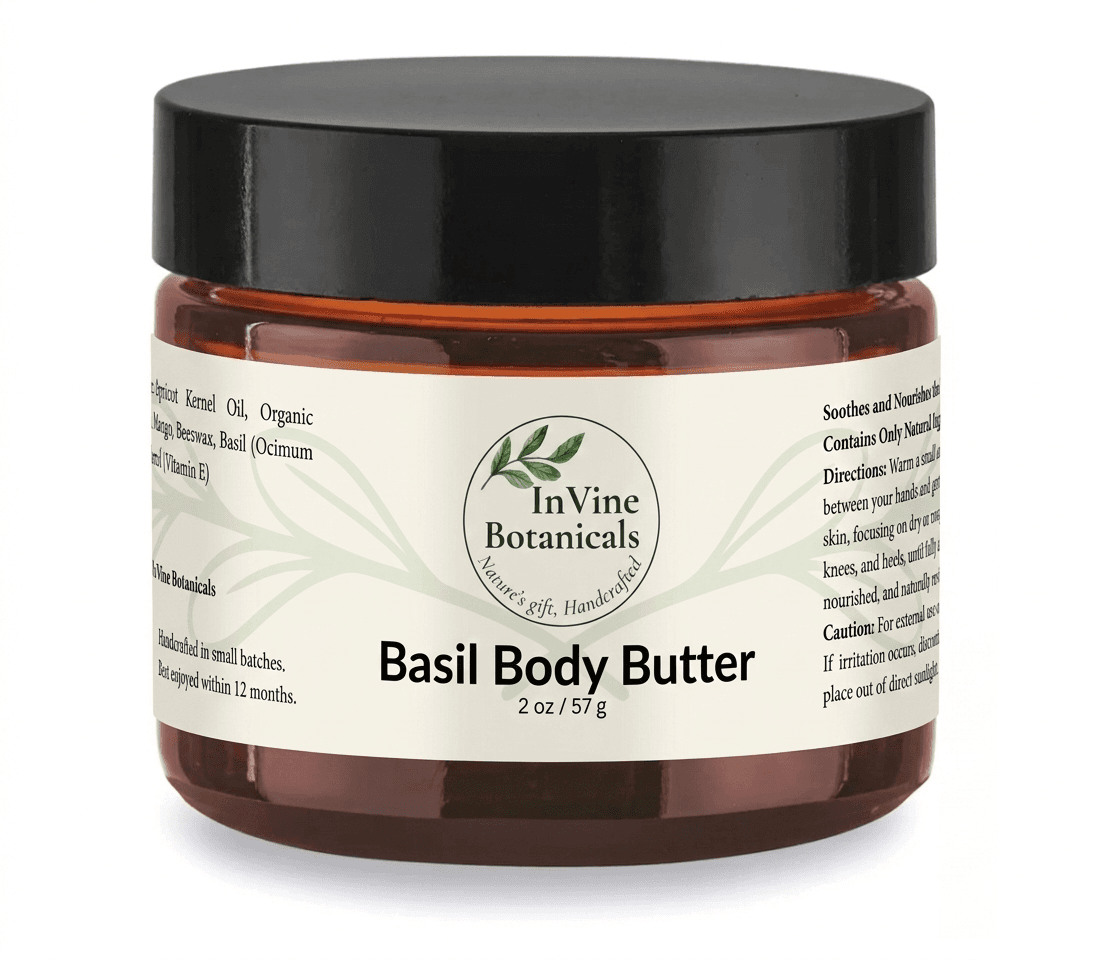
Quick answer: The closest natural alternative to NIVEA Creme is a waterless plant-butter cream: mango or shea butter, plant oils, and beeswax doing the job that mineral oil, petrolatum, and paraffin do in the blue tin. NIVEA Creme is a rich water-in-oil emulsion, and its US label leads with water, mineral oil, and petrolatum. A plant-based version keeps the richness and swaps the base. Below: what is actually in the tin, what it genuinely does well, and how a garden-grown alternative compares. For the body, ours is the Basil Body Butter: three garden basils infused in organic apricot kernel and grapeseed oils, with mango butter, beeswax, and Vitamin E, and no added water.
There are very few skincare products with a design as famous as their formula. The flat blue tin with white lettering is one of them. NIVEA Creme dates to 1911 in Hamburg, when Beiersdorf built it around a new lanolin-derived emulsifier that made a stable cream possible. More than a century later it sits in bathroom cabinets on every continent, and in a lot of American households it is simply what "the good cream" means: one tin, used on hands, elbows, heels, and, by plenty of people, on their faces.
If you grew up with the blue tin, nothing here is an argument against it. This post is for the person who still loves a thick, rich cream, started reading labels somewhere along the way, and wants to know what a version built from plants would look like.
What's Actually in NIVEA Creme
We read the ingredient list from NIVEA's own US product page. It reads: water, mineral oil, petrolatum, glycerin, microcrystalline wax, lanolin alcohol, paraffin, magnesium sulfate, decyl oleate, octyldodecanol, aluminum stearates, fragrance, panthenol, citric acid, magnesium stearate, sodium anisate. Sixteen ingredients, and they sort into four jobs:
- The water phase. Water is the first ingredient. In a water-in-oil cream like this, droplets of water are held inside a continuous oil phase, which is why NIVEA Creme feels richer and more protective than a lotion. Magnesium sulfate helps keep that emulsion stable.
- The petroleum base. Mineral oil, petrolatum, microcrystalline wax, and paraffin are all refined from petroleum. Together they give the cream its dense body and its film on the skin, which slows water from evaporating out. We wrote a fair, full-length look at the first of these in is mineral oil bad for your skin, and at the second in our natural alternative to Vaseline guide.
- The emulsifier and conditioners. Lanolin alcohol, derived from the wax in sheep's wool, is the descendant of the original 1911 idea; it is what holds water and oil together. Glycerin is a humectant that draws water into the skin. Panthenol, pro-vitamin B5, is a conditioning ingredient.
- The supporting cast. Decyl oleate and octyldodecanol are synthetic emollients that improve spread. Aluminum and magnesium stearates help with texture. Citric acid adjusts pH. And fragrance gives the tin its familiar, clean scent.
None of these ingredients is unusual or alarming. Every one is common, legal, and doing a defined job. But notice what the list adds up to: water, four petroleum derivatives, and a sheep-wool emulsifier make up the backbone. The plant kingdom is barely represented.
Credit Where It's Due
NIVEA Creme has earned its century, and it deserves an honest account of why:
- It works for very dry skin. Petrolatum is the most effective occlusive in conventional skincare, and a water-in-oil cream delivers it in a form that is far more pleasant than a jelly. For cracked heels and chapped knuckles in a dry winter, it does the job.
- It is remarkably inexpensive. Few creams of any kind cost less per ounce. That matters, and we would rather say so than pretend otherwise.
- It is consistent. The blue tin you buy this year feels the way it did decades ago. For a lot of people, that familiarity is half the appeal.
- It is very stable. Mineral oil and petrolatum do not oxidize the way plant oils can, so the cream keeps for a long time.
Why People Go Looking for an Alternative
The people searching for a natural NIVEA Creme alternative are rarely unhappy with how it feels. The reasons we hear are about the label:
- They want plants, not petroleum. Four of the backbone ingredients are refined from crude oil. For someone who has started reading labels the way they read food labels, that is the whole question.
- They are avoiding added fragrance. The tin's scent is lovely and nostalgic, and it is still "fragrance" on the label, a term that can cover many undisclosed components. Our post on why fragrance on a label is a red flag explains what the word can hide.
- They want the cream to be the ingredient. Water is the first ingredient in the tin. In a waterless cream, every gram is oils, butters, and botanicals.
- They avoid lanolin. Lanolin alcohol is animal-derived, and some people simply prefer to avoid it.
What a Waterless Plant Cream Does Differently
A waterless plant-butter cream changes three things at once.
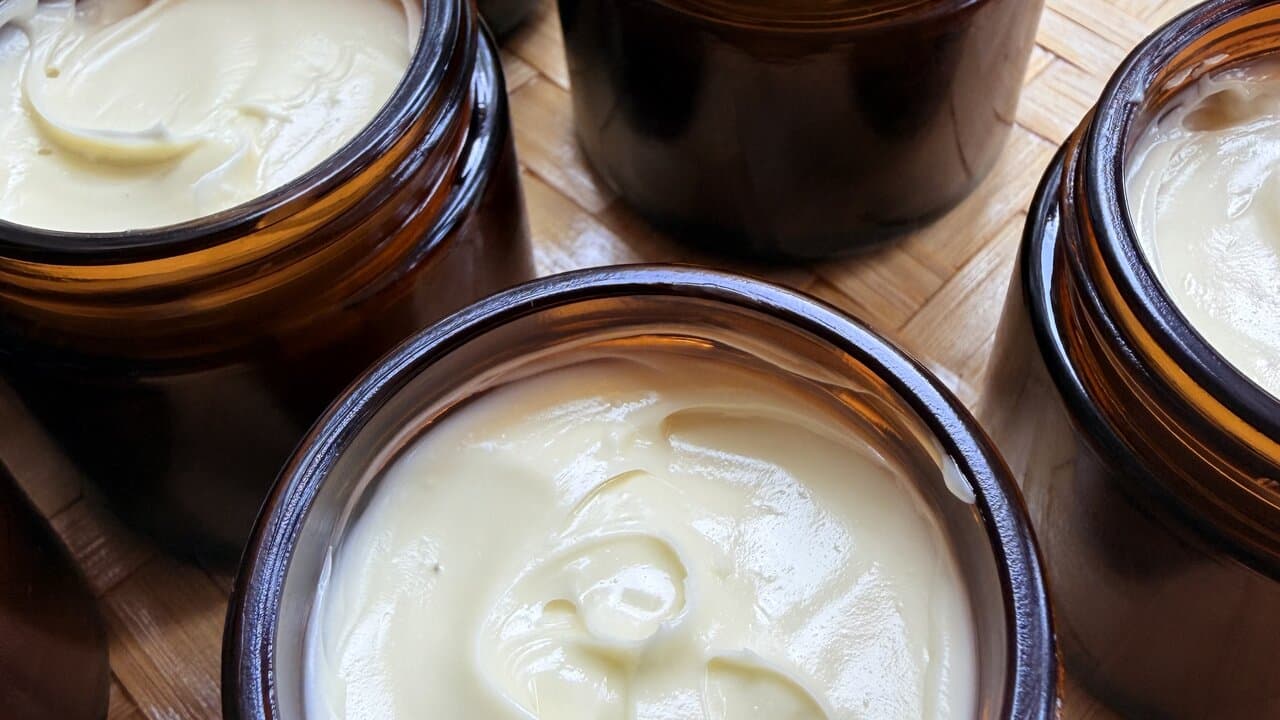
The body comes from plant butters instead of petroleum waxes. Mango butter is solid at room temperature and melts at body temperature, so it gives a cream real richness without paraffin or microcrystalline wax. In a body cream, beeswax adds structure and a light protective feel on the skin, the same role petrolatum plays in the tin, from a natural source.
There is no water to protect. Because the formula is all oils, butters, and wax, there is nothing for microbes to grow in, so no preservative is needed. It also means the formula is concentrated: every gram is oils, butters, and botanicals. Our guide to the benefits of waterless skincare covers the whole idea.
The herbs are actually in it. In a whole-herb cream, the plant oils are slow-infused with real herbs for weeks before they ever become a cream. The botanicals are not a line near the end of the label; they are the base.
A Natural Alternative to NIVEA Creme: Choosing by Where You Use It
NIVEA Creme is an all-over cream. Plant-based alternatives tend to be more specialized, and choosing by where you use it gets you the best match:
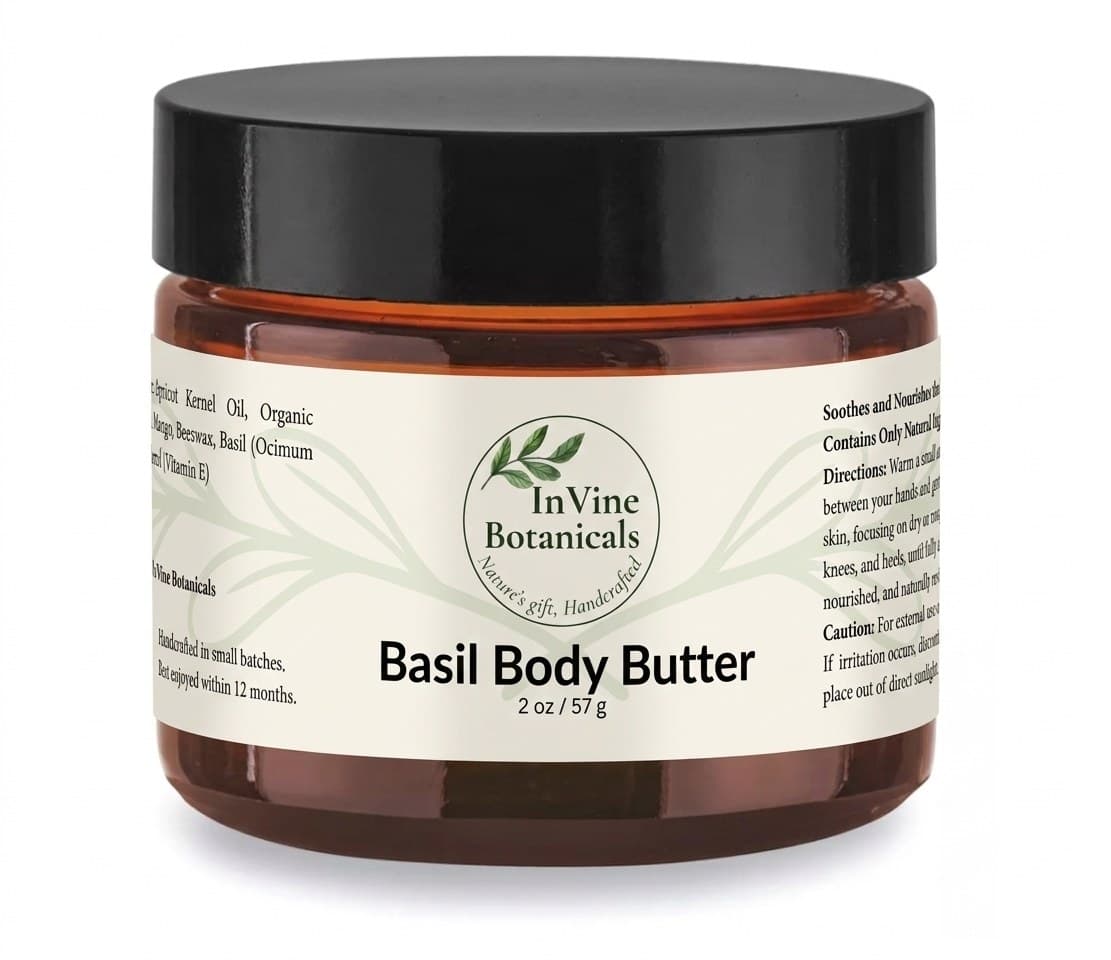
- Elbows, knees, and heels. This is where the blue tin works hardest, and where a rich body butter is the direct swap. Our Basil Body Butter was formulated for exactly these places: sweet basil, holy basil (tulsi), and Thai basil from our garden, infused in apricot kernel and grapeseed oils, with mango butter, beeswax, and Vitamin E. It comes in a 2 oz amber glass jar. There is no essential oil in it. Our longer look at herbal body butter explains how it is made.
- Hands. For daytime hands, a lighter cream that absorbs quickly is the better tool. Our Spearmint Hand Cream is waterless, with garden spearmint, mango butter, and beeswax, in a 1 oz pump bottle.
- Face. Many people use the blue tin on their faces, and it is rich enough for very dry winter skin. If you want a waterless plant-based option for the face, choose one formulated for it: a lighter texture, and in our case no beeswax at all. Our Rose Renewal Crème and Moringa w/ Echinacea Face Cream are both waterless crèmes in 1 oz pump bottles, built on apricot kernel and grapeseed oils, mango butter, and prickly pear seed oil.
Other honest options:
- Raw shea butter. A single ingredient, inexpensive, and very rich. It is stiffer than a cream and takes a moment to warm in the hands, and it works.
- A beeswax and plant-oil balm. If what you loved about the tin was the protective feel on cracked knuckles, a simple balm of beeswax and plant oil is the closest natural match to that sensation.
- NIVEA Creme itself, used on purpose. If cost is the deciding factor, the tin is a reasonable choice, and a plant-based cream for the places you care about most is a perfectly good compromise.
NIVEA Creme vs a Waterless Plant Cream
| NIVEA Creme | Waterless plant-butter cream |
|---|
| First ingredient | Water | A plant oil |
| What gives it body | Mineral oil, petrolatum, microcrystalline wax, paraffin | Mango or shea butter, plus beeswax in body creams |
| Emulsifier | Lanolin alcohol | None needed (no water to emulsify) |
| Scent | Added fragrance | From the herbs, or a little essential oil |
| Water | Yes, the first ingredient | None |
| Price per ounce | Very low | Higher |
| Best at | All-over richness on a budget | Plant-based richness, short label |
The Whole-Herb Approach in Practice
At InVine, every cream starts in our Tallahassee garden. The herbs are harvested at their peak, dried for four to nine days in a dark, climate-controlled drying room, then slow-infused whole in organic plant oils for six to eight weeks in cool, dark conditions. The strained oil is blended with mango butter and Vitamin E (and, in the body butter and hand cream, beeswax), then poured and capped by hand. Grown in our garden, made by hand in small batches. You can see every step on our How It's Made page.
If you love a rich cream and want it to be plants all the way through, this is the jar we would hand you.
Meet the Basil Body Butter →
Choosing by Use Case
- You want the lowest cost per ounce. Keep the blue tin. Nothing plant-based competes on price, and we would rather say so.
- You want the richness without the petroleum. A waterless plant-butter cream is the direct swap. Use it the same way, on the same places.
- You are avoiding fragrance. Choose a cream with no added fragrance at all, or one scented only by its herbs.
- You avoid animal-derived ingredients. Note that NIVEA Creme contains lanolin alcohol and many natural body creams, ours included, contain beeswax. Raw shea butter or a plant-oil-only cream is your route.
- You want one cream for everything. The tin is genuinely good at this. If you switch, you may end up with two: a body butter for the rough places and a lighter crème for hands or face.
What matters is knowing what is in the jar and choosing it on purpose. The blue tin earned its place in a century of cabinets. A cream made from plants, all the way through, is simply a different answer to the same question.
The information in this post is for educational purposes and reflects published ingredient listings and cosmetic chemistry. InVine products are cosmetics, formulated to moisturize, soften, and condition the skin. They are not intended to diagnose, treat, cure, or prevent any disease.