The Body Shop's Body Butter is the most famous tub in body care, and it is genuinely half-earned: real shea and cocoa butter sit near the top of the label. But the formula is water-first, and behind the butters come silicone, PEG emulsifiers, synthetic fragrance, and a yellow dye. A natural alternative keeps the butters and drops everything else. Here is the honest comparison.
For three decades, the seafoam-green tubs have been the entry point to body butter itself; for many of us, the first "nice" body product we ever owned. So when US stores shuttered in 2024 and beloved variants started disappearing or reformulating in the relaunch that followed, a lot of loyal customers found themselves reading labels for the first time and asking what, exactly, they had been loyal to. If you're one of them, this is a fair-minded look.
What's Actually in the Tub
Taking the classic Shea Body Butter's current ingredient list in order: water, shea butter, cocoa seed butter, glycerin, cetearyl alcohol, babassu seed oil, PEG-100 stearate, glyceryl stearate, dimethicone, phenoxyethanol, caprylyl glycol, xanthan gum, a chelator, citric acid, then five fragrance components (linalool, coumarin, alpha-isomethyl ionone, limonene, parfum), caramel, and Yellow 5.
Read as a formulator would:
Credit first: the butters are real and they are high on the list. Shea second and cocoa third is a genuinely better showing than most drugstore "butter" products, where the namesake ingredient hides in the bottom third. The Body Shop also sources its shea through a long-running fair-trade program in Ghana, which deserves plain acknowledgment.
But the base is still water. Water first means the largest share of the tub is solvent, which is why the texture is whipped and light, why the formula needs emulsifiers (the PEG and glyceryl stearates) to hold together, and why it needs a preservative (phenoxyethanol) to stay safe.
The sensory experience is partly synthetic. The silky after-feel comes in part from dimethicone, a silicone. The famous scent is an added parfum with several individually listed allergen components. And the butter's warm color is helped along by caramel tint and Yellow 5, a synthetic dye with no skincare role at all.
None of this makes the product unsafe. It makes it a hybrid: real butters riding on a conventional synthetic chassis.
When the Green Tub Is the Right Call
Honesty cuts both ways. If you love a light, whipped texture that sinks in instantly, water-based butters do that better than dense naturals. If a signature scent is the point, The Body Shop's range is the category's best-known pleasure. And at its price, it is an accessible product with better butter content than most competitors at the same shelf. The brand earned its icon status; that isn't the argument.
The argument is about what else you're paying for, and whether the synthetic half of the label is doing anything for your skin that plants couldn't.
The Anhydrous Alternative
Strip the water out of a body butter and everything downstream of it becomes unnecessary: no emulsifiers, no preservative system, no silicone needed to fake a rich after-feel. What's left is just the plants.
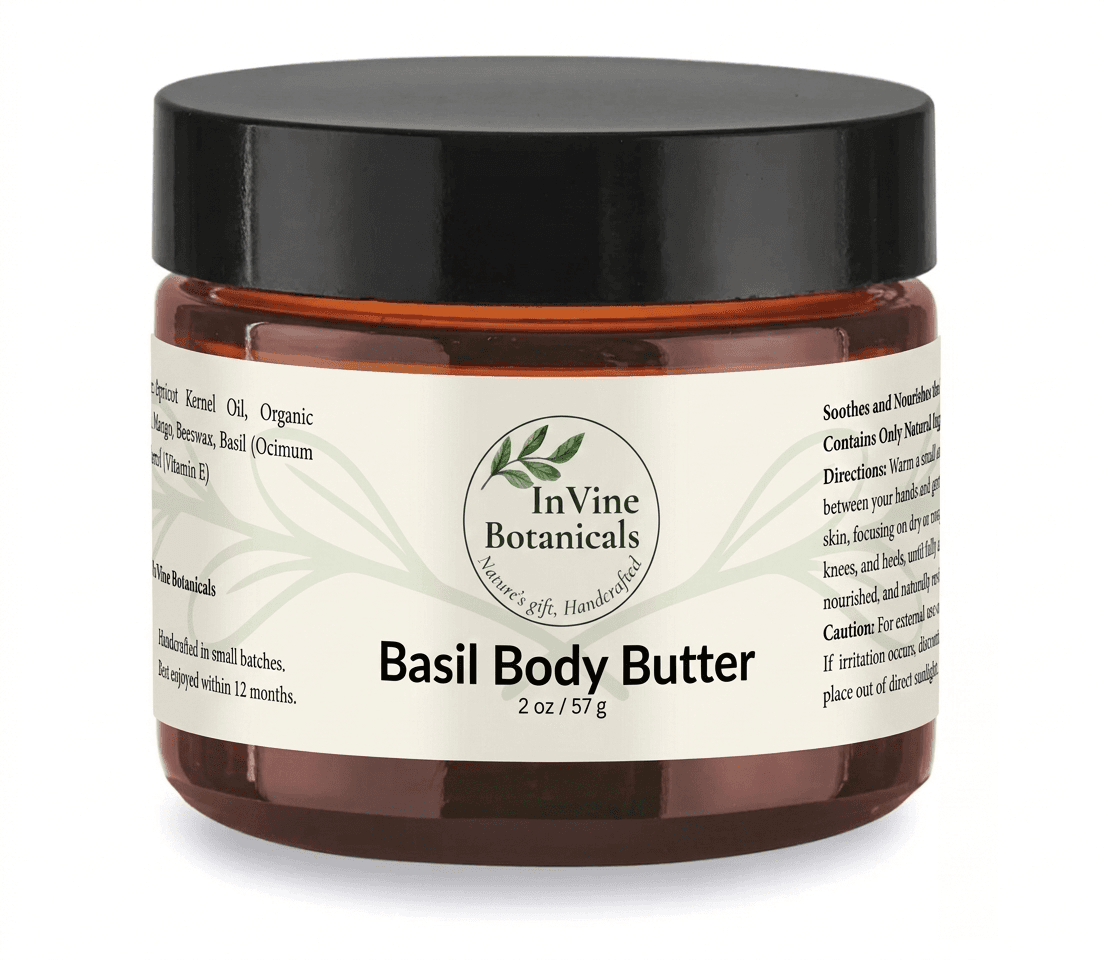
That is how our Basil Body Butter ($38) is built. Three basils from our own Tallahassee garden (sweet, holy, and Thai) are slow-infused whole in organic oils for six to eight weeks in cool, dark conditions, then given body with mango butter. The scent is only what the plants brought with them: green, faintly spicy, gone to a whisper within the hour. The color is whatever color the infusion turned out, no dye required. We make it in small batches, never stockpiled.
The honest trade-offs run exactly opposite to the green tub's strengths. An anhydrous butter is denser: it melts on contact with skin warmth rather than whipping on like a mousse, and it asks for a lighter hand, since the entire jar is formula rather than half water. Applied to damp skin after a shower, that concentration is the point. Our guide to what plant-based body butter actually means walks through reading any butter label this way, and the waterless skincare guide covers the no-water logic across our whole line.
If You're Replacing a Discontinued Favorite
A practical note for the orphaned: when a scent you loved disappears, chasing an identical dupe usually disappoints, because the scent was a parfum blend no one else can legally copy. The happier path is deciding what you actually miss. If it was the ritual richness, an anhydrous botanical butter gives you more of it, not less. If it was the fragrance itself, consider pairing an unscented-leaning natural butter with a separate scent you love, so the next discontinuation can't take both away at once.
Every ingredient in our jars is listed with its source on our ingredients page, and the butter itself is made, start to finish, in Tallahassee, Florida: we grow it, infuse it, and pour it ourselves.
Basil Body Butter →