Quick answer: The closest natural alternative to Bath & Body Works body cream is a waterless plant-butter body cream, where mango or shea butter and plant oils make up the formula instead of water, glycerin, and fragrance. Bath & Body Works' Ultimate Hydration Body Cream is built as a scent product first: on current labels, fragrance is the fifth ingredient, and the shea and cocoa butters sit in the middle of the list, after it. A plant-based body butter flips that ratio. Below: what is actually in the tube, what it does well, and how a garden-grown alternative compares. Ours is the Basil Body Butter: sweet basil, holy basil, and Thai basil from our Tallahassee garden, infused in organic apricot kernel and grapeseed oils, with mango butter, beeswax, and Vitamin E. No water, no added fragrance.
Bath & Body Works has a genius for one thing, and it is not a small thing: scent. The brand turned body care into a wardrobe of fragrances, seasonal collections people genuinely look forward to, with a cream, a mist, a wash, and a candle in every one. Plenty of us have a favorite we still remember from years ago. If that is what you love about it, keep loving it.
But there is a reason so many people search for a non-toxic or natural alternative to Bath & Body Works. Somewhere along the way they started reading labels, and on a body cream, the first ten ingredients tell you what you are really putting on your skin twice a day.
What's Actually in Bath & Body Works Body Cream
Ingredient lists vary slightly by scent, so we compared current label transcriptions for two scents of the Ultimate Hydration Body Cream (Vanilla Café and Ocean). They share a nearly identical formula. On the Vanilla Café label, the first fifteen ingredients read: water, glycerin, caprylic/capric triglyceride, isohexadecane, fragrance, cetyl alcohol, C12-15 alkyl benzoate, glyceryl stearate SE, palmitic acid, stearic acid, dimethicone, shea butter, cocoa seed butter, phenoxyethanol, polymethylsilsesquioxane. The rest of the list, about fifteen more, includes thickeners, more preservatives (chlorphenesin, sodium dehydroacetate, ethylhexylglycerin), sodium hyaluronate, aloe leaf juice, tocopherol, and the named fragrance components.
Those thirty-odd ingredients sort into five jobs:
- The water and humectant base. Water is first, glycerin second. Glycerin is an excellent, well-proven humectant that draws water into the skin; it is a big part of why the cream feels hydrating.
- The emollients. Caprylic/capric triglyceride (derived from coconut or palm oil), isohexadecane (a light synthetic hydrocarbon), and C12-15 alkyl benzoate give the cream its smooth, quick-absorbing slip. Dimethicone, a silicone, adds the silky finish.
- The fragrance. Fragrance is the fifth ingredient, ahead of the butters, and several of its components (such as limonene, linalool, and coumarin) appear at the end of the list because they must be named. In a product whose whole point is scent, that placement is deliberate.
- The headline ingredients. Shea butter, cocoa butter, hyaluronic acid (as sodium hyaluronate), aloe, and vitamin E all appear. The butters sit in the middle of the list; the hyaluronate and aloe are near the end.
- The preservative system. Phenoxyethanol, chlorphenesin, sodium dehydroacetate, and ethylhexylglycerin. Any cream that contains water needs preservatives, and these are standard, well-studied choices. We explain why in our guide to preservative-free face cream.
Nothing on that list is unusual for a mass-market body cream, and every ingredient is legal and doing a defined job. But notice the shape of it: water, a humectant, synthetic emollients, and fragrance lead; the butters on the front of the bottle come in the middle.
Credit Where It's Due
- The scents are genuinely good. Fragrance design is the brand's craft, and they are very good at it.
- Glycerin and hyaluronate work. Both are well-proven humectants. The cream does hydrate.
- The texture is pleasant. It absorbs quickly and does not feel greasy, which is exactly what silicones and light synthetic emollients are for.
- The price, especially on sale, is hard to beat. The brand's frequent promotions make it one of the least expensive ways to buy a body cream.
Why People Go Looking for an Alternative
- They are avoiding added fragrance. This is the most common reason. "Fragrance" on a label can stand for many undisclosed components, and in this cream it is a major ingredient, not a trace. Our post on why fragrance on a skincare label is a red flag explains what the word can hide.
- They want the butters to be the formula. If you bought a body cream for shea butter, it is fair to want shea butter, or another plant butter, near the top of the list.
- They want fewer ingredients. Thirty-odd ingredients is a lot to read. A short list of named oils, butters, and plants is easier to trust.
- "Non-toxic" is on their mind. We should be clear here: "non-toxic" is not a regulated term on cosmetics, and Bath & Body Works creams are legal and widely used. What most people mean by it is simpler: fewer synthetic ingredients, no added fragrance, and a label they can read. That is a fair thing to want.
What a Waterless Body Butter Does Differently
A waterless body butter changes the formula at its root.
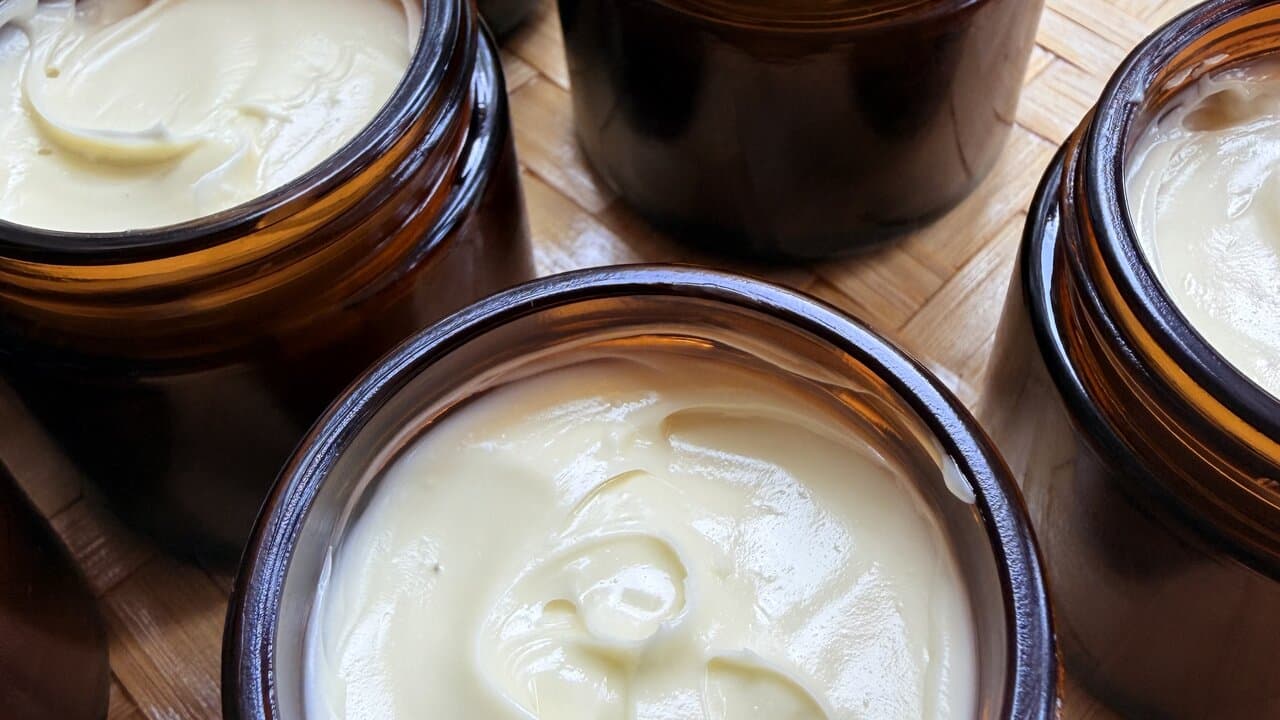
The butters lead. In a waterless body butter, plant oils and butters are the first ingredients and the bulk of the jar. Mango butter is solid at room temperature and melts at body temperature, so it gives a body butter real richness without silicones or synthetic thickeners.
There is no water to preserve. Microbes need water to grow, so a formula without water does not need a preservative system at all. Our guide to the benefits of waterless skincare covers the whole idea.
The scent comes from plants or not at all. In a whole-herb body butter, the plant oils are slow-infused with real herbs for weeks. Whatever scent there is comes from the plants themselves, not from a fragrance blend.
The trade-off is honest: a waterless butter is richer than a quick-sinking cream. If you want the instant, weightless finish of a silicone cream, a butter will feel different.
Natural Alternatives to Bath & Body Works Body Cream
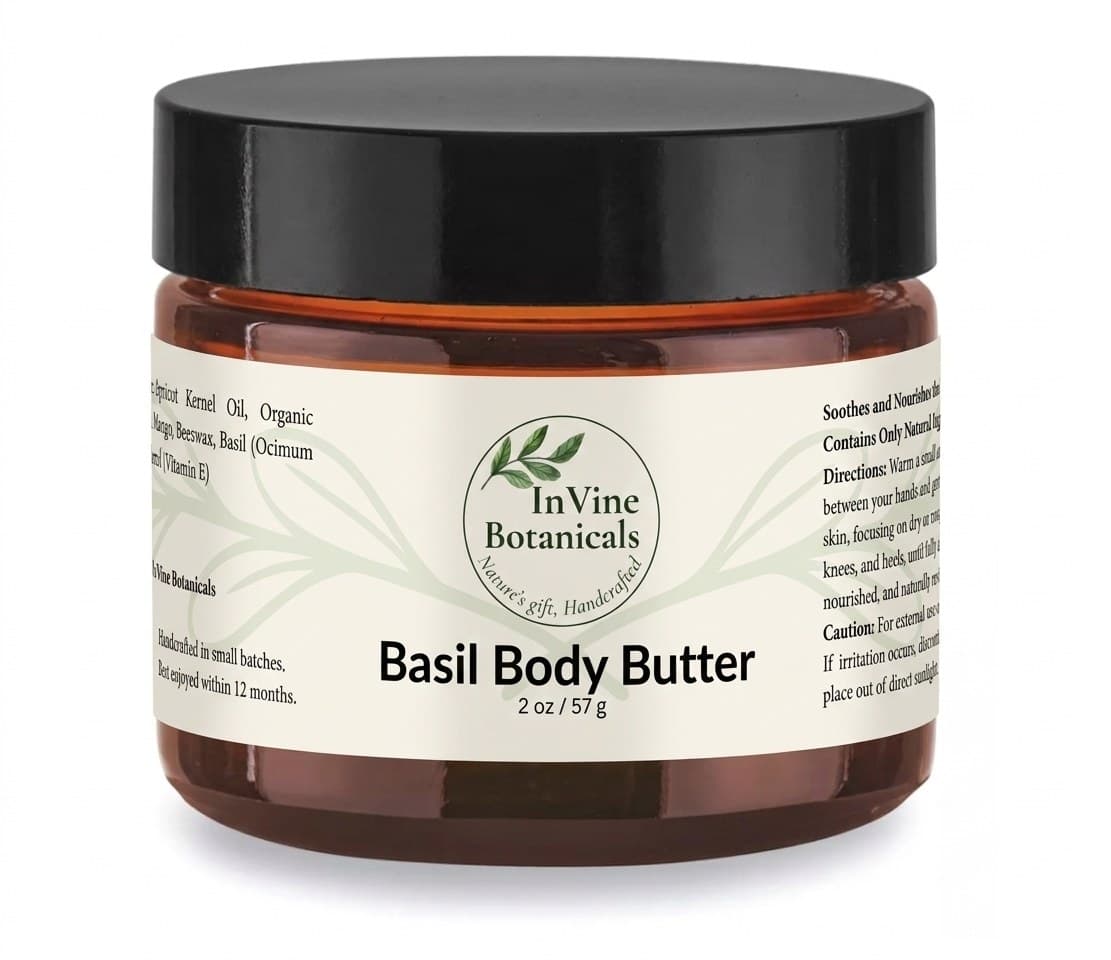
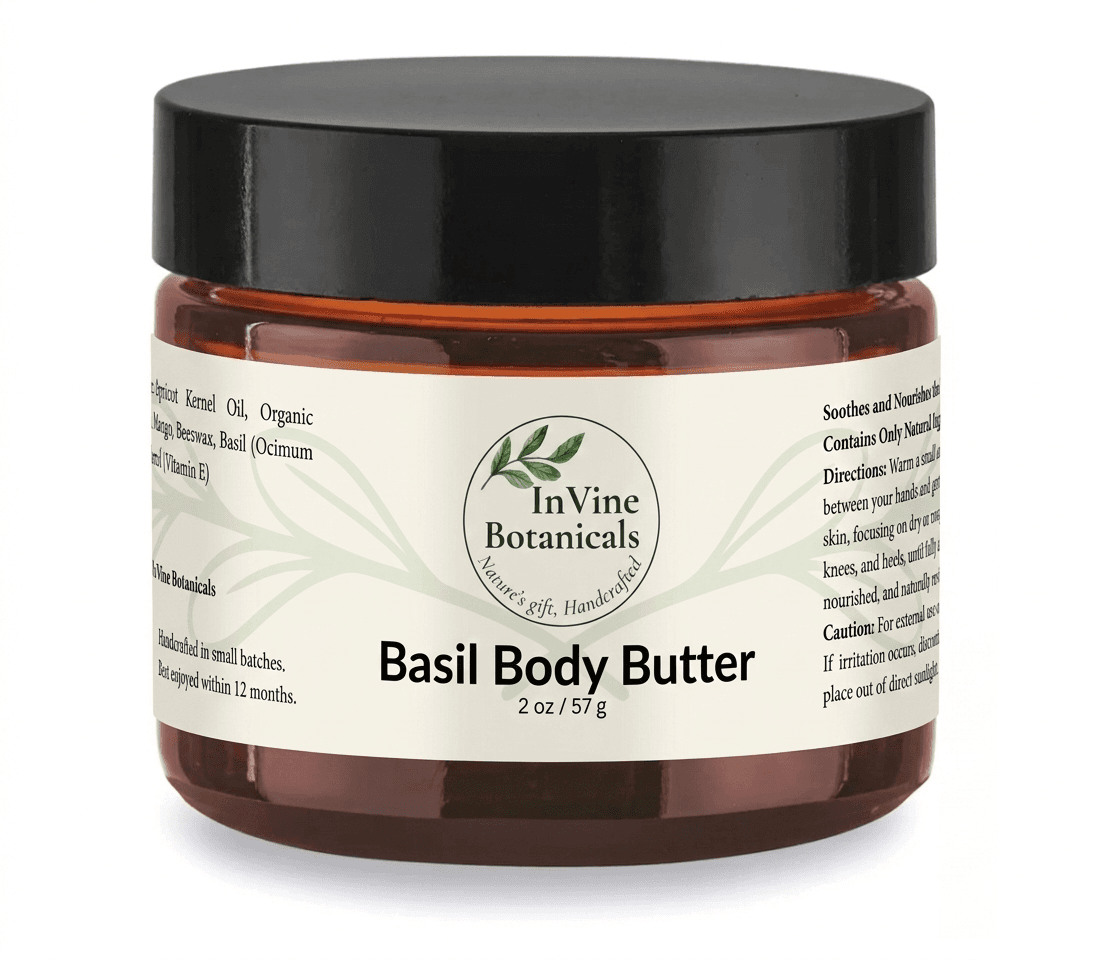
- A whole-herb body butter. Our Basil Body Butter was formulated for the driest places you own: elbows, knees, and heels. Three garden basils (sweet basil, holy basil or tulsi, and Thai basil) are infused in organic apricot kernel and grapeseed oils, then blended with mango butter, beeswax, and Vitamin E. There is no water, no essential oil, and no added fragrance. It comes in a 2 oz amber glass jar. Our longer look at herbal body butter explains how it is made.
- Raw shea butter. A single ingredient, inexpensive, and very rich. Unrefined shea has a nutty scent of its own; refined shea has almost none. Either way, it is about as short as a label gets.
- A plain plant oil after the shower. Sweet almond, jojoba, or apricot kernel oil, pressed into damp skin, is the simplest body moisturizer there is. Our guide to why carrier oils matter explains how to choose one.
- A fragrance-free cream from a brand you trust. If you prefer a lotion texture, a fragrance-free cream with plant butters in its first few ingredients is a reasonable middle ground.
- Keep the scent, change the cream. If you love a Bath & Body Works fragrance, one honest option is to keep the mist for scent and use an unscented plant butter for moisture.
Bath & Body Works Body Cream vs a Waterless Body Butter
| Bath & Body Works Ultimate Hydration Body Cream | Waterless plant-butter body butter |
|---|
| First ingredient | Water | A plant oil |
| Where the butters sit | Middle of the list | The top of the list |
| Fragrance | Added fragrance, fifth ingredient | None added (scent from the herbs, if any) |
| Silicones | Yes (dimethicone) | No |
| Preservatives | Yes, needed for the water phase | None needed |
| Texture | Light, quick-absorbing cream | Rich, dense butter |
| Price | Low, especially on sale | Higher |
| Best at | Scent and a light feel | Rich moisture, short label |
The Whole-Herb Approach in Practice
At InVine, the basil in our body butter grows in our Tallahassee garden. It is harvested at its peak, dried for four to nine days in a dark, climate-controlled room, then slow-infused whole in organic apricot kernel and grapeseed oils for six to eight weeks in cool, dark conditions. The strained oil is blended with mango butter, beeswax, and Vitamin E, then poured and capped by hand. Grown in our garden, made by hand in small batches. You can see every step on our How It's Made page.
If you want a body butter where the butter is the point, this is the jar we would hand you.
Meet the Basil Body Butter →
Choosing by Use Case
- Scent is the point for you. Keep the cream you love. Nothing natural competes on fragrance range, and we would rather say so.
- You want no added fragrance. A plant butter with no fragrance blend is the direct swap.
- You want the shortest label possible. Raw shea butter or a single plant oil.
- Your elbows, knees, and heels need the most help. A rich waterless body butter, applied after a shower.
- You avoid animal-derived ingredients. Note that our body butter contains beeswax; shea butter or a plant oil is your route.
Whatever you choose, read the first five ingredients. That is where a body cream tells you what it really is.
The information in this post is for educational purposes and reflects published ingredient listings and cosmetic chemistry. InVine products are cosmetics, formulated to moisturize, soften, and condition the skin. They are not intended to diagnose, treat, cure, or prevent any disease.