Quick answer: Moringa and echinacea bring different things to a skin formula, and that is exactly why they work as a pair. Moringa's leaf is one of the most nutrient dense in the plant world, and a three month instrumented study found a moringa leaf extract cream measurably improved skin texture and smoothness. Echinacea is rich in polyphenols, and a small human study found an echinacea extract cream improved skin hydration in one month with no irritation. The same research also found echinacea's actives break down quickly in water based creams, which is the quiet reason a waterless formula suits this pairing so well.
Search for either herb on its own and you will find plenty. Moringa has its superfood reputation, echinacea has the supplement aisle. What you will not find much of is anyone explaining why the two belong in the same bottle. We grow both, beds apart in the same Tallahassee garden, and we infuse both into one face cream, so this is a question we have actually had to answer, first for ourselves and now in writing.
This is that answer: what each herb brings, what the published research really says (including the inconvenient part), and how the pairing is built in practice.
What Moringa Brings
Moringa oleifera is a fast growing tree whose leaves are famous for their density: polyphenols, carotenoids, and a vitamin profile that made the plant a nutrition staple long before skincare noticed it. In a jar, that density is the appeal. When you infuse moringa leaf in oil for weeks, you are steeping one of the most compound rich leaves there is.
There is also a genuinely interesting piece of research here. According to PubMed, a 2014 study in Advances in Dermatology and Allergology took a cream containing 3 percent concentrated moringa leaf extract and applied it to volunteers' faces for three months, measuring the skin with a Visioscan imaging instrument against the same cream base with no extract. The extract cream showed significant improvements in measured skin volume, texture, roughness, scaliness, smoothness, and wrinkle parameters. The plain base did not (Ali et al., 2014).
Two honest notes on that finding. First, it is a study of that lab's specific extract in that lab's specific cream, not a promise about any jar you can buy, ours included. Second, it is exactly the kind of research a formulator likes to see: not a marketing survey, but an instrument pointed at real faces for three months. If you want the deeper dive on the leaf itself, we wrote one: what moringa does for skin.
What Echinacea Brings
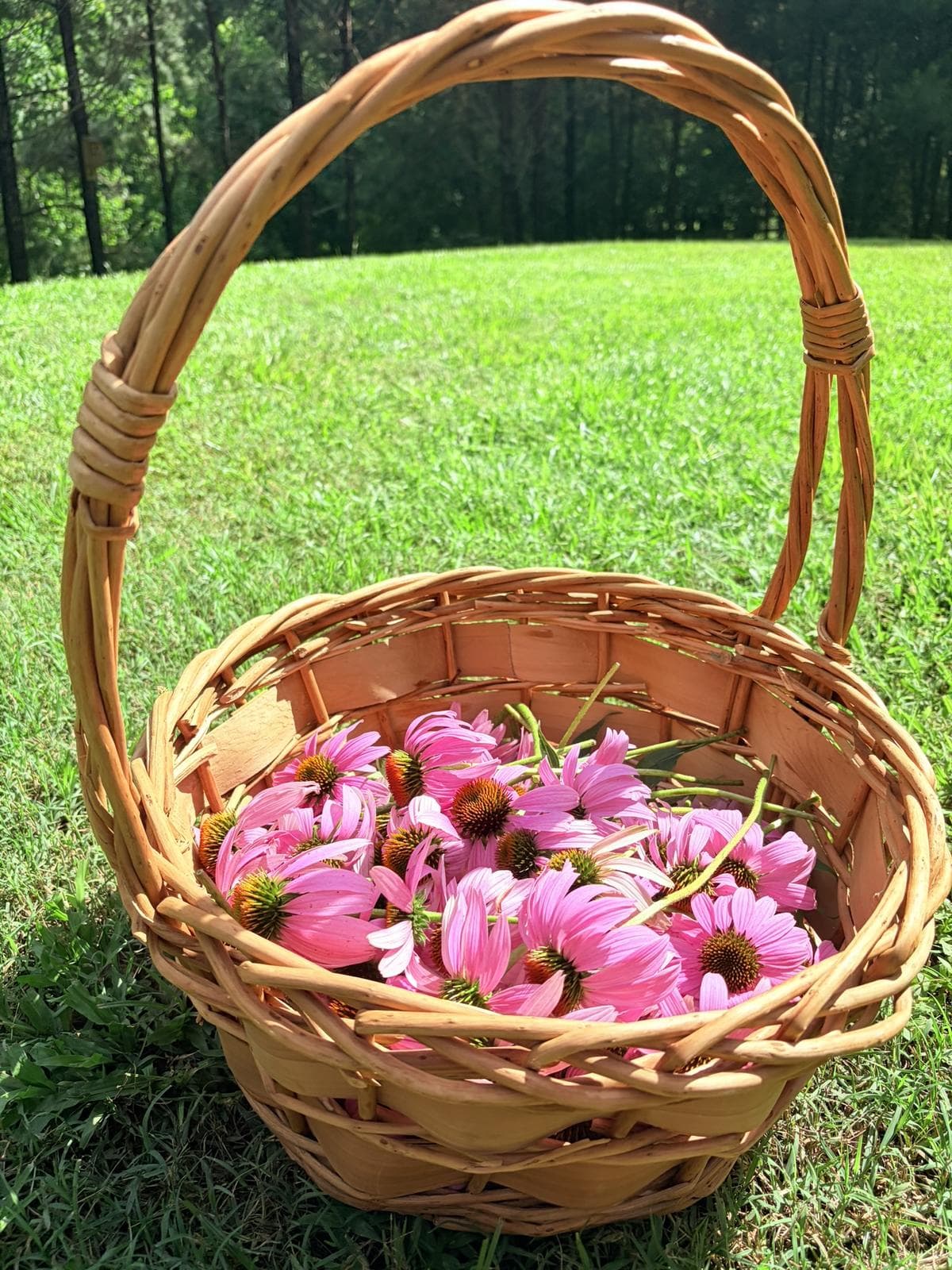
Echinacea purpurea, the purple coneflower, is one of the most recognizable plants in American gardens and one of the most studied herbs in the world, though almost all of that attention goes to the supplement aisle rather than the skin. That is a gap, because the flower and leaf are rich in polyphenols, with cichoric acid and its caffeic acid relatives the best studied of them, and polyphenols are precisely the family of compounds cosmetic chemists reach for when they think about oxidative stress on skin.
The skin research that does exist is small but worth knowing. According to PubMed, a 2010 study in the International Journal of Cosmetic Science formulated an Echinacea purpurea extract into a cream and a gel and had ten volunteers use them for a month. Skin hydration, measured by corneometer, went up. Wrinkle measurements went down, by roughly 9 percent with the cream and 15 percent with the gel. Neither formula irritated anyone's skin (Yotsawimonwat et al., 2010).
Ten people for one month is a small study, and we cite it as exactly that: a promising early signal about the extract, not proof about any finished product. But paired with echinacea's polyphenol profile, it is a good reason to take the flower seriously as a skin botanical, which is why we gave it a profile of its own.
The Part Everyone Skips: Echinacea Is Fragile
Here is the finding from that same 2010 study that never makes it into marketing copy. The researchers tracked how long the echinacea extract's phenolic content and antioxidant activity survived inside their formulas. The answer: about two months in the cream, four in the gel, refrigerated. At room temperature it was worse. The fix that worked was adding alpha tocopherol, the natural form of Vitamin E, which stretched the useful life to about seven months.
Read that again from a formulator's chair. The herb's most interesting compounds were breaking down inside a conventional water based cream faster than most people finish a jar, and the rescue was Vitamin E.
We will not tell you our cream replicates a laboratory's stability numbers, because we have not run that lab's tests and honesty is the house style. What we can tell you is how the formula is built, and that it reaches for the same two levers the researchers did, plus one they did not:
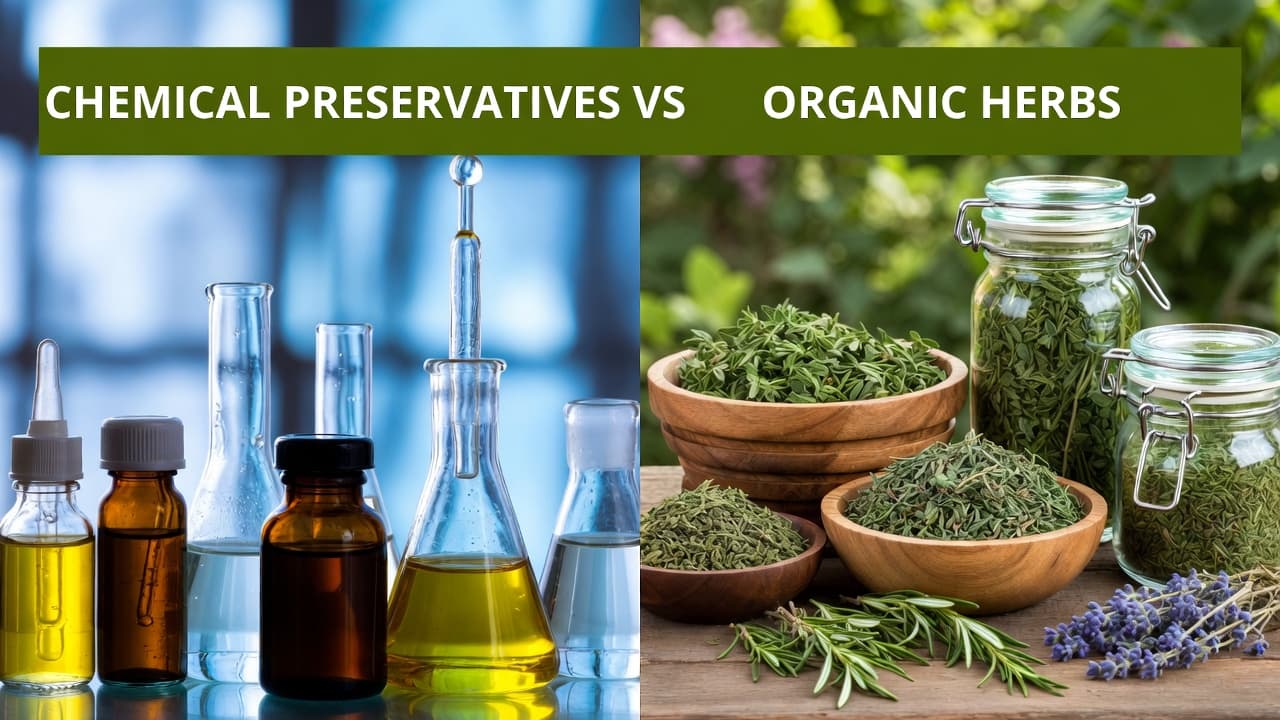
- No water phase at all. Our face cream is waterless. Water is what makes a cream a soft target: it dilutes the botanicals and it demands preservatives. Remove it and every drop of the formula is the oil phase where the infused compounds actually live.
- Vitamin E in every bottle. We blend in natural mixed tocopherols, the same family the study used to protect its extract, to help keep the formula fresh.
- Cool, dark, and slow from the start. The infusion itself happens over six to eight weeks in cool, dark conditions, never in sunlight, because heat and light are exactly what polyphenols do not want.
If the logic of skipping both water and preservatives is new to you, we walked through the whole argument in our preservative free face cream guide.
So Why Pair Them?
Because their strengths land in different places, and their needs are the same.
Different strengths. Moringa's research trail points at skin texture and smoothness, the surface qualities an instrument can photograph. Echinacea's points at hydration and comfort, the qualities you feel at ten in the morning. One leaf is a nutrient warehouse, one flower is a polyphenol specialist. A formula built on a single hero herb gets one of these stories. An infusion that carries both gets both.
The same needs. Both herbs hand over their compounds to a slow oil infusion, both are happiest protected from heat, light, and water, and both grow well enough in a North Florida garden that we never have to wonder where they came from or how they were handled. There is a third garden herb in the same infusion, rosemary, which has been earning its place in skin formulas since long before either of its bottle mates was fashionable.
That is the whole pairing logic. No ancient secret, no algorithm. Two herbs whose published signals complement each other, carried by a method that treats them both well.
From Garden Bed to Bottle
The method is the part we can vouch for personally. The moringa, echinacea, and rosemary in our cream are grown in our own Tallahassee garden, harvested at their peak, dried for four to nine days in a dark drying room, then slow infused whole for six to eight weeks in cool, dark conditions. The infusion base for our face formulas is organic apricot kernel and grapeseed oil, chosen for their light, fast absorbing feel. The full process, garden to jar, is on how it's made.
Whole herb infusion matters for a pairing like this one. Weeks in oil draw out the herb's broad phytochemical spectrum rather than a single isolated note, so the moringa and the echinacea arrive in the bottle as the plants, not as two ingredients on a spec sheet.
Inside the Finished Cream
The Moringa w/ Echinacea Face Cream is where the pairing lives. It is a waterless botanical moisturizer in a one ounce dark glass pump bottle, and everything around the infusion is chosen to serve it: velvety mango butter and prickly pear seed oil give the cream its rich body, cold pressed moringa seed oil adds the stable, cushioning side of the moringa story, arrowroot lends a silkier, less greasy finish, and a whisper of lavender is the only scent. It absorbs cleanly and leaves skin feeling soft, balanced, and refreshed, which is precisely what a cosmetic should promise and no more.
Grown in our garden, made by hand in small batches.
Meet the Moringa w/ Echinacea Face Cream →
How to Use Moringa and Echinacea Together
In a finished cream: less than you think. Warm a small amount between your fingertips and press it onto damp, freshly cleansed skin, morning and evening. Damp matters: a waterless cream supplies the oil phase and your skin supplies the water, which is the pairing working exactly as designed.
From your own garden: both herbs infuse beautifully at home. Dry the moringa leaf or echinacea flower thoroughly first, because water is the enemy of a clean infusion, then steep the whole dried herb in a stable carrier oil for several weeks somewhere cool and dark. If you want the full method, temperatures, timing, and the mistakes to skip, our free whole herb infusion guide walks through it step by step.
A note on patience, either way. The moringa study above ran three months. The echinacea study ran one. Botanical skincare is a routine, not an event, and the honest expectation for any of it, ours included, is softness and comfort you feel quickly, and the subtler surface changes only showing up for people who keep at it.
Two herbs, one garden, one bottle. The research gave us the reasons, the stability data gave us the method, and the pairing gives your morning routine both stories at once.
The information in this post is for educational purposes and reflects published research about plant extracts, with each study's size and design noted. InVine products are cosmetics, formulated to moisturize, soften, and condition the skin. They are not intended to diagnose, treat, cure, or prevent any disease.