Vicks VapoRub has been the default chest rub in American households since 1905. It works, or at least, it feels like it works. But when you read the ingredient list with modern eyes, the formula raises questions that deserve honest answers.
What's Actually in Vicks VapoRub
The active ingredients are synthetic camphor (4.8%), eucalyptus oil (1.2%), and menthol (2.6%). The inactive ingredient list is where things get less comfortable:
- Petrolatum, the base of the product. Petroleum jelly is a byproduct of oil refining. It creates an occlusive barrier on the skin that traps moisture, but it also traps everything else. The same refined-petroleum base anchors household staples like Vaseline and Aquaphor, we've written natural-alternative guides for both.
- Cedarleaf oil (thuja), contains thujone, a compound toxic in concentrated amounts. The FDA classifies thuja oil as unsafe for internal use.
- Nutmeg oil, a known skin sensitizer at higher concentrations.
- Turpentine oil, yes, turpentine. A solvent distilled from pine resin. It's there as a counterirritant, but it's also a documented skin irritant in sensitive individuals.
None of these ingredients are dangerous at the concentrations used in Vicks. The product has been safely used by millions of people for over a century. But the question worth asking is: are these the best available options in 2026?
How Conventional Vapor Rubs Actually Work
Here is something interesting about menthol-based vapor rubs: a 2008 study published in the journal Chest measured nasal airflow in subjects before and after menthol inhalation. The result: menthol produced no measurable increase in airflow. What it did produce was the sensation of clearer breathing, caused by menthol's activation of cold-sensing TRPM8 receptors in the nasal passage.
The sensation is real and meaningful, especially when you're miserable at 2 AM. But it's worth understanding that the mechanism is perceptual rather than mechanical. Menthol makes you feel like you're breathing more freely.
This is part of why many people have become interested in chest balms that include a broader range of botanical compounds, not just menthol, drawing on herbs with long traditional histories in respiratory wellness.
How Vicks VapoRub Compares to Other Chest Rubs
Vicks is the original chest rub but not the only one on shelves. A few worth understanding honestly:
- Vicks BabyRub, Vicks's own pediatric formula, marketed for ages 3 months and up. Petroleum-based like the original, but at lower concentrations of camphor and menthol, with added fragrance oils (rosemary, lavender, aloe). It's classified by the FDA as a non-medicated topical product rather than a topical analgesic. The base is still petrolatum.
- Mucinex VapoRub, a competing brand with a near-identical active-ingredient profile to original Vicks: camphor, menthol, and eucalyptus oil in a petroleum base. Regulated under the same FDA OTC topical analgesic monograph as Vicks.
- Halls Chest Rub, same active-ingredient family (camphor + menthol + eucalyptus) in a petroleum base, marketed alongside Halls's menthol cough drop line.
- Generic store-brand chest rubs, CVS, Walgreens, Target, and Amazon Basics all sell their own versions. Different brand names; the active-ingredient list is essentially identical to Vicks in a petroleum base. Store brands are typically 30-50% less expensive at the same active concentrations.
The thing all of these products share isn't really the chest-rub category, it's the foundation: pharmaceutical-grade petrolatum holding pharmaceutical-grade concentrated menthol and camphor in suspension. The story of "menthol-and-camphor in a petroleum base for chest application" is essentially one product story sold under many brand names.
A whole-herb infused chest balm sits in a fundamentally different product category. It's a cosmetic, moisturizing, conditioning, aromatic, and the same TRPM8 cooling-receptor activation that menthol and camphor produce in any form is happening when you apply a whole-herb balm with peppermint and eucalyptus in it. The receptors don't care whether the menthol came from a peppermint leaf or a chemical synthesis. The difference is in what else is on your skin alongside those actives, and in the fact that the warming and cooling sensations arrive as part of the full whole-plant compound profile rather than as isolated single-compound concentrates.
The Herbs Behind a Botanical Chest Balm
The herbs traditionally used in chest balms each have distinct aromatic profiles and histories of use in herbal wellness traditions around the world.
Eucalyptus, A Centuries-Old Respiratory Herb
Eucalyptus has been used in traditional medicine systems across Australia, India, and Europe for generations. Its primary aromatic compound, 1,8-cineole (eucalyptol), has been the subject of extensive research. Published studies have explored eucalyptol's properties, including its traditional role supporting respiratory comfort during seasonal challenges.
Eucalyptol is one of the most studied aromatic plant compounds in the scientific literature, with researchers investigating its potential applications across a wide range of wellness contexts. When applied to the chest, eucalyptus oil vaporizes at skin temperature, its aromatic compounds are inhaled naturally with each breath.
Peppermint, More Than Menthol
Peppermint does contain menthol, and yes, it triggers the same TRPM8 cooling sensation as the synthetic menthol in Vicks. But whole peppermint also contains menthone, menthofuran, limonene, and a range of flavonoids that isolated synthetic menthol does not.
Traditional herbalists have long valued peppermint for respiratory comfort, it appears in herbal texts spanning centuries across European, Ayurvedic, and Chinese traditions. Modern researchers have studied the compound profile of whole peppermint, noting that the full spectrum of compounds behaves differently than menthol in isolation.
A slow cold/dark oil infusion captures both the volatile aromatics and the fat-soluble flavonoids, preserving peppermint's full compound profile rather than just its most famous component.
Spearmint, The Gentle Complement
Spearmint is peppermint's gentler relative. Its dominant compound is carvone rather than menthol, softer, less sharp, with a distinct aromatic character. In traditional herbalism, spearmint has been valued for its calming qualities, often used alongside more stimulating mints to create a balanced, layered aromatic experience.
Where peppermint is bright and intense, spearmint is smooth and grounding. Together, they create something more complex and pleasant than either one alone.
Rosemary and Lemon Thyme, Aromatic Depth
Rosemary has been used in traditional European herbalism for centuries, the ancient Greeks burned it in sickrooms, and it has appeared in herbal wellness texts continuously since. Its aromatic compounds, carnosic acid and rosmarinic acid, have been studied extensively in published research.
Lemon thyme contributes thymol and carvacrol, two aromatic compounds with a long history in traditional herbal practice. Thyme has appeared in respiratory-focused herbal formulations across European, Middle Eastern, and North African traditions for over a thousand years.
These herbs add aromatic depth and complexity to a chest balm, drawing on some of the oldest respiratory wellness traditions in recorded herbal history.
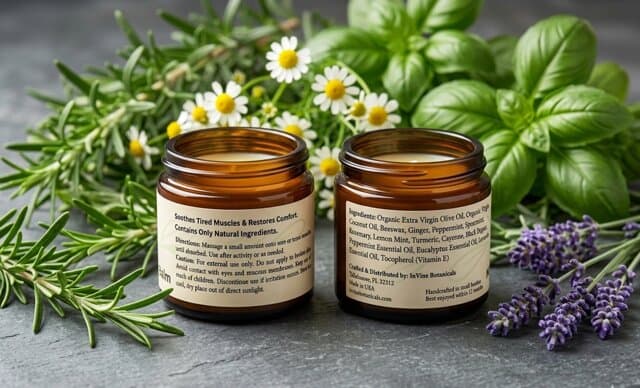
From our garden, InVine crafts a small line of whole-herb balms infused with plants we grow in Tallahassee. Each one is slow-infused for six to eight weeks in organic olive oil before the formula is assembled.
Explore our whole-herb balms →
Also worth a read as warm-weather skin season opens: our guide to herbs that soothe bug bites.
The Base Matters Too
Vicks uses petrolatum, a petroleum byproduct that sits on the skin surface. It's effective as an occlusive barrier, but many people prefer plant-based alternatives.
A beeswax-and-olive-oil base is different in character. Organic olive oil has been used as a carrier for botanical preparations for thousands of years, it absorbs into the skin and carries fat-soluble plant compounds with it. Beeswax provides structure and helps the balm stay in place, releasing aromatic compounds gradually over hours rather than evaporating quickly.
The base isn't filler. In a whole-herb formulation, the base determines how long the aromatic experience lasts and how the botanical compounds interact with the skin.
Why People Are Looking for Alternatives
Not everyone wants to switch, Vicks VapoRub is a well-established product with a long history.
But more people are exploring botanical alternatives because:
- They prefer to avoid petroleum-derived products on their skin, a growing preference given the availability of plant-based options
- They're interested in herbs with long traditional histories in respiratory wellness, not just isolated menthol
- They have sensitive skin that reacts to turpentine oil, synthetic camphor, or the other counterirritants in conventional vapor rubs
- They want a longer-lasting aromatic experience, beeswax-based balms release aromatic compounds gradually for hours
- They care about ingredient transparency and want to know exactly what's in the products they use daily
Why We Made Breathe Free Balm
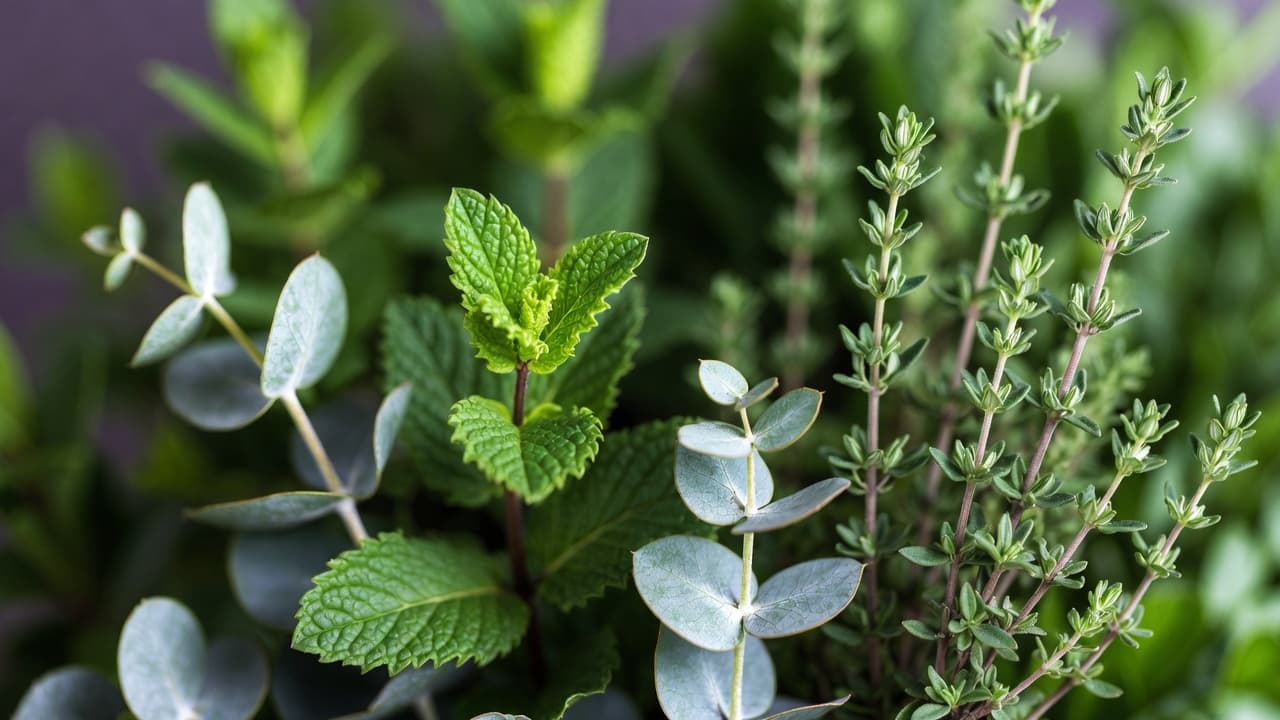
InVine's Breathe Free Balm was created for people who want a whole-herb alternative to petroleum-based chest rubs. Every herb in the formula, peppermint, eucalyptus, spearmint, rosemary, lemon balm, and lemon thyme, was chosen for its traditional role in respiratory wellness and its aromatic profile, not just fragrance.
The mints and rosemary are grown in our Florida garden and slow-infused in organic olive oil for six to eight weeks before the formula is assembled. The eucalyptus essential oil is added at a carefully controlled percentage at the finish, enough for a genuine, balanced aromatic presence.
The result is a chest balm that smells like a real herb garden, releases aromatic compounds gradually for hours, and draws on centuries of herbal wisdom rather than a single isolated compound.
This product is not intended to diagnose, treat, cure, or prevent any disease. The information in this post is for educational purposes and reflects traditional herbal knowledge and published research, not medical advice. Consult your healthcare provider for any health concerns.
The best alternative to a century-old formula isn't a newer version of the same idea. It's a fundamentally different approach, one that starts with real plants and respects the traditions they come from.