Bug bites are part of life, especially if you spend time outdoors or live in a humid climate like Florida. Many people are turning back to plants, the original botanical toolkit, for gentle, comforting skin care after time spent outside.
Here are five herbs with long histories of traditional use for skin comfort, and why they've earned a permanent spot in botanically-minded households.
1. Lemon Balm (Melissa officinalis)
Lemon balm has been used for over 2,000 years to calm both the mind and the skin. Its leaves contain rosmarinic acid and flavonoids, compounds that researchers have explored extensively for their skin-conditioning properties.
What sets lemon balm apart is its deep history in European herbalism. Traditionally valued for skin comfort, lemon balm was a staple in monastery gardens and household apothecaries alike. Modern research has explored rosmarinic acid for its antioxidant properties, adding scientific context to centuries of traditional knowledge.
When infused into a carrier oil, the full suite of lemon balm's water-soluble and fat-soluble compounds are drawn out slowly, creating a richer, more complex oil than a quick steam distillation could produce.
2. Lemongrass (Cymbopogon citratus)
Lemongrass contains high concentrations of citral and limonene, aromatic compounds that have been widely studied in laboratory settings. Traditionally, lemongrass has been valued across Southeast Asian and Indian herbal traditions for skin care and comfort after outdoor exposure.
The cooling sensation you often notice from lemongrass preparations comes from citral's interaction with TRPM8 cold-sensing receptors, the same receptors that respond to menthol, just subtler and more herbal in character.
Sweet basil isn't just for cooking. The fat-soluble compounds released during slow oil infusion include eugenol, a compound also found in cloves that has been widely studied for its properties.
Basil also contains linalool, traditionally valued for its calming aromatic qualities. In Ayurvedic and Mediterranean folk traditions, basil preparations were commonly applied to the skin for comfort after insect encounters.
For skin that feels irritated or tender to the touch, basil is the herb doing the heaviest lifting in this formula.
4. Rosemary (Rosmarinus officinalis)
Rosemary brings antioxidant protection to the formula. Carnosic acid and rosmarinic acid are potent antioxidants that help protect the skin and the oil itself from oxidative stress.
Rosemary has been a cornerstone of Mediterranean herbal traditions for centuries, historically valued for skin conditioning and comfort. Research has explored rosmarinic acid for a range of properties, making rosemary one of the most studied culinary-and-botanical herbs available.
In a well-formulated balm, rosemary also helps extend the shelf life of the oils naturally, acting as a botanical preservative while contributing its own skin-conditioning character.
5. Tea Tree (Melaleuca alternifolia)
Tea tree is one of the most well-studied botanical ingredients in the world. Its primary compound, terpinen-4-ol, has been the subject of extensive peer-reviewed research. Aboriginal Australians traditionally used tea tree leaves in poultices and washes for skin care, a practice that eventually brought the plant to global attention.
Because tea tree essential oil is highly concentrated, it's typically added at a low percentage (1-2%) rather than infused. At that level it contributes its characteristic clean, herbal scent without the skin sensitization risk that comes from higher concentrations.
Why Whole-Herb Infusion Matters
You'll notice several of these herbs contain both water-soluble and fat-soluble compounds. Steam distillation for essential oils captures the volatile, fat-soluble fraction, but leaves behind a significant portion of the plant's broader phytochemical profile.
A slow cold-infused, dark-stored maceration, where the whole dried herb steeps in a carrier oil for several weeks, draws out a much broader range of compounds. The resulting infused oil is gentler, better tolerated on sensitive skin, and arguably more complete in its botanical character.
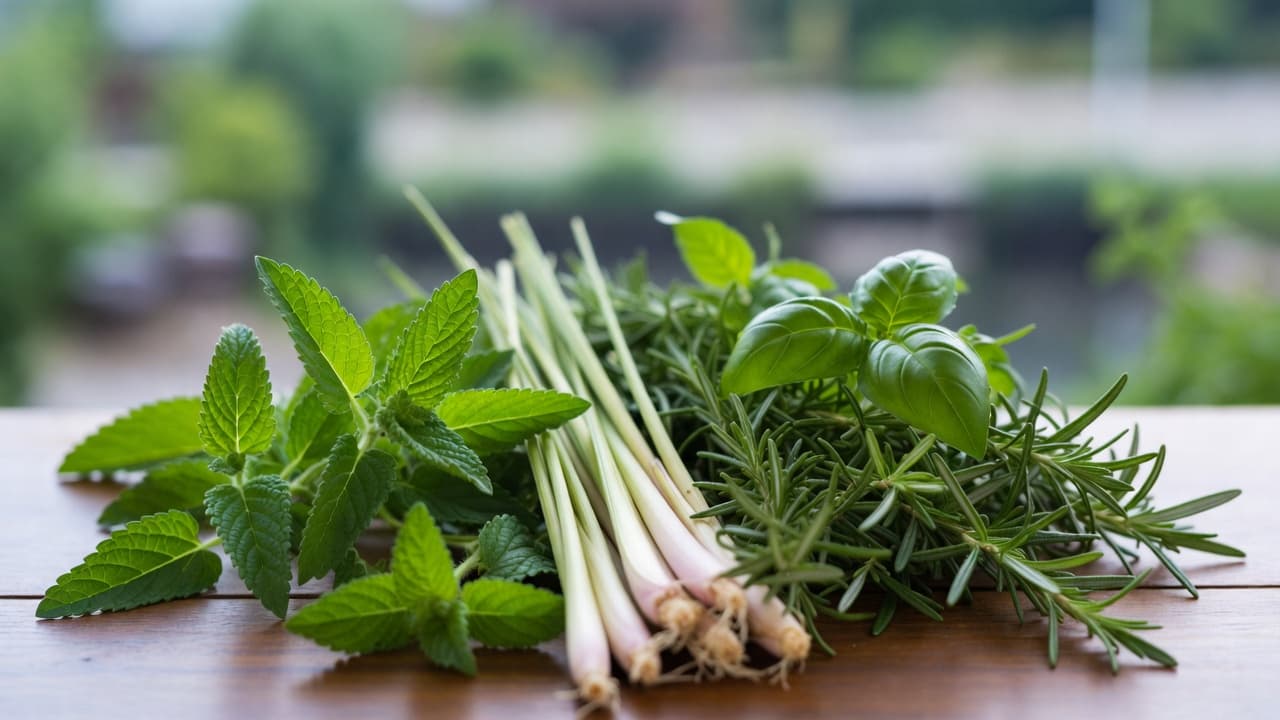
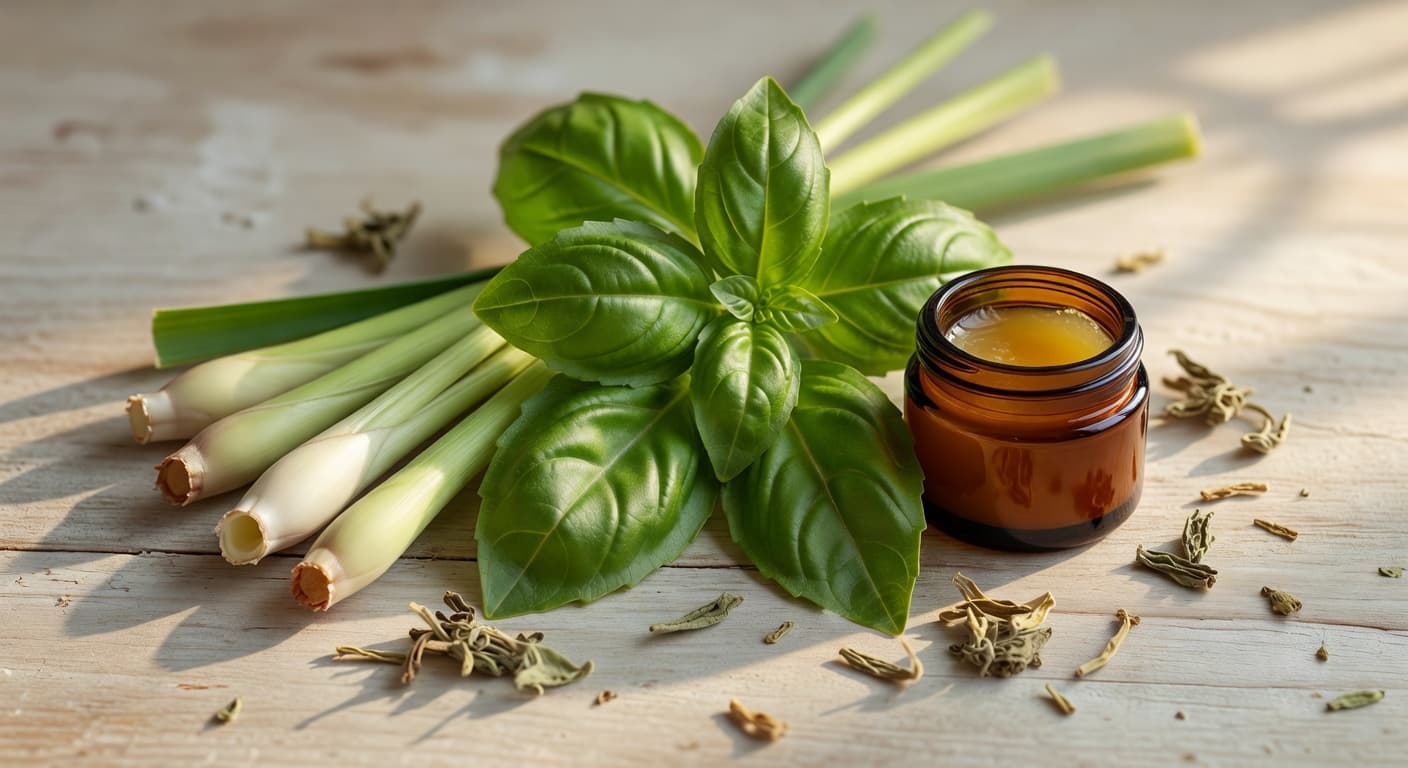
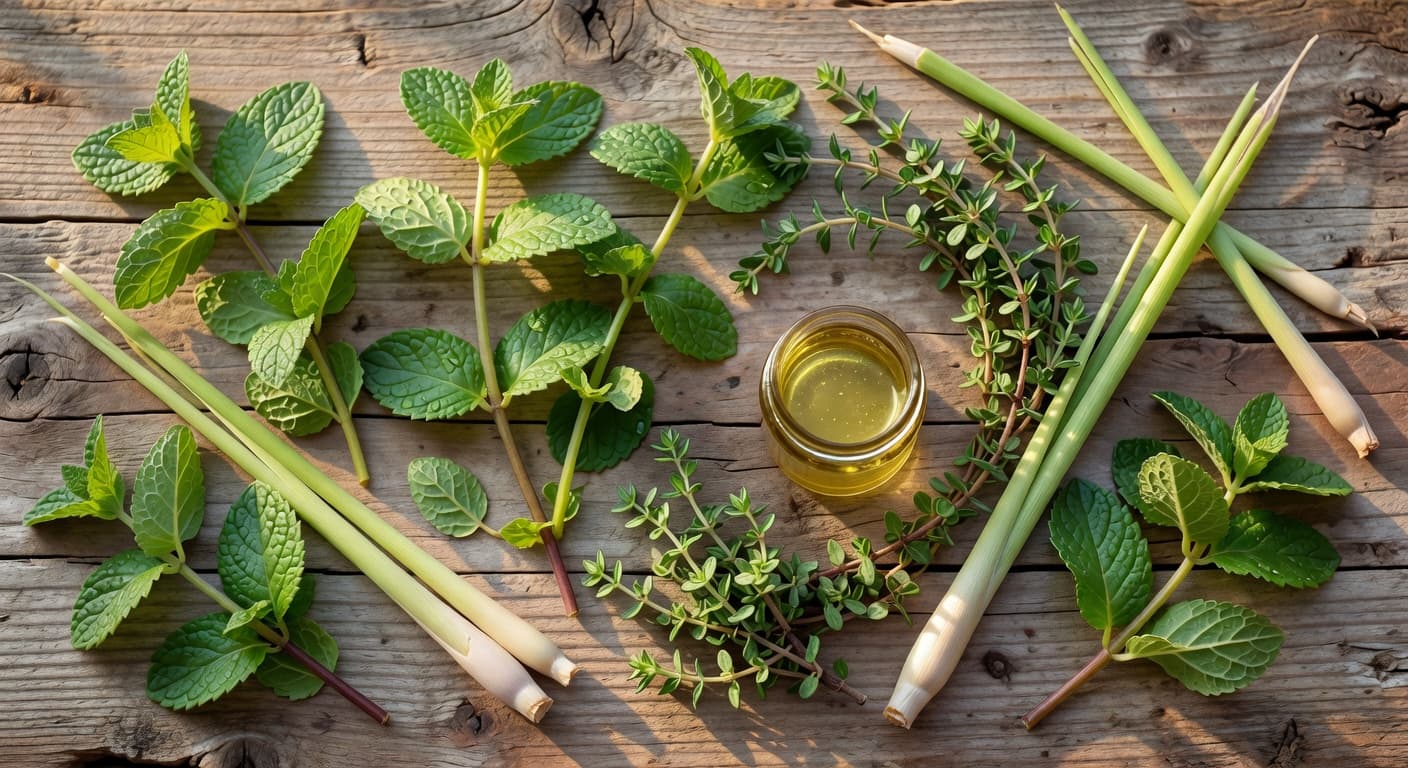
From our garden, InVine's Bug Bite Balm uses this whole-herb infusion method for lemongrass, lemon balm, sweet basil, and rosemary (plus garden-grown lemon mint), all grown in our Florida garden and slow-infused in cold-extracted organic oils for six to eight weeks depending on the herb. Tea tree essential oil is added at the finish at a low percentage. The infusion is blended with beeswax from a local Tallahassee beekeeper and Vitamin E for shelf life.
No petroleum. No synthetic fragrance.
Explore our whole-herb bug bite balm →
Next time you're reaching for something after a bug bite, consider reaching for the plant, that's where the conventional products got their ideas in the first place.
Want the full picture, the formula, the herbs, and the most-asked questions in one place? Start with our Natural Bug Bite Balm guide.
Garden season rough on your hands as well? We covered seven herbs for dry, hardworking hands too.