Quick answer: Biofreeze is a menthol gel (4% menthol in a water, alcohol, and carbomer base) sold as an over-the-counter pain relieving drug. If you want that cool-then-fade sensation for a specific ache, Biofreeze and its label are the right guide. If what you are after is a slow, layered warming-and-cooling feel worked into the skin, with a base you can name, a whole-herb balm made from ginger, turmeric, cayenne, rosemary, and three mints infused in plant oils and beeswax is the natural alternative.
Biofreeze has a Florida story, which is part of why I wanted to write about it carefully. The formula made its public debut at the Florida Chiropractic Association in 1991, after the rights were bought from its original developer and Performance Health was founded to sell it. It built its reputation as the green gel in chiropractors' and physical therapists' offices before it reached drugstore shelves across the country. In 2021 Reckitt, the company behind Lysol and Mucinex, bought the brand. It now runs to gels, roll-ons, sprays, creams, patches, and a pen.
So this is not a fringe product. It is one of the most trusted names in the aisle. That is exactly why it is worth reading the label slowly.
What's Actually in Biofreeze
Here is the current Biofreeze gel and roll-on label as filed with the FDA on DailyMed (the roll-on lists the same ingredients as the gel):
Active ingredient: Menthol 4%, labeled "Pain Relieving Gel."
Inactive ingredients: Aloe barbadensis leaf extract, arctium lappa (burdock) root extract, arnica montana flower extract, Blue 1, boswellia carterii resin extract, calendula officinalis extract, camellia sinensis (green tea) leaf extract, camphor, carbomer, glycerin, ilex paraguariensis (yerba mate) leaf extract, isopropyl alcohol, isopropyl myristate, melissa officinalis (lemon balm) leaf extract, silica, tocopheryl acetate, triethanolamine, water, Yellow 5.
Sorted by job, the list reads like this:
- The active: menthol, the single ingredient the label credits for the product's purpose.
- The chassis: water, isopropyl alcohol, carbomer, and triethanolamine. Carbomer is the polymer that thickens water into a clear gel, and triethanolamine neutralizes it so it sets. Isopropyl alcohol helps the gel dry fast. Glycerin and isopropyl myristate soften the finish.
- The color: Blue 1 and Yellow 5 together make the signature green. (A colorless version exists for people who would rather skip the dyes.)
- The botanicals: arnica, calendula, lemon balm, boswellia, burdock, green tea, yerba mate, and aloe, as extracts down the list. Camphor appears too, as an inactive ingredient.
Two honest observations. First, the botanicals are real, and lemon balm and calendula are plants I grow myself. They sit below the gel-making ingredients on the list, though, so they are the supporting cast rather than the base. Second, the base is mostly water and alcohol, and that tells you a lot about how the product feels, which is the next section.
When Biofreeze Is the Right Tool
Credit where it is due, because Biofreeze earns its place:
- It is genuinely clean to use. A water-and-alcohol gel absorbs and dries fast. No greasy film, nothing on your shirt, and the roll-on means you never touch it. For a work day or a gym bag, that is a real advantage over any balm, ours included.
- It is a labeled drug with a labeled purpose. The gel's label lists temporary relief of minor aches and pains of muscles and joints associated with simple backache, arthritis, strains, bruises, and sprains. When you want a product built and regulated for that job, that is what an OTC drug is for, and a cosmetic is not a substitute.
- It is single-active and simple. One labeled active, menthol, at 4%. Some competing rubs stack menthol with methyl salicylate or camphor at much higher strengths, which matters if you are sensitive to salicylates (more on that below).
- Its professional roots are real. Plenty of people met Biofreeze on a treatment table, and that trust is earned.
If any of that is what you need, keep the green tube. This post is for the reader who has been wondering what the other path looks like.
How That Icy Feeling Actually Works
Menthol does one specific thing very well: it activates TRPM8, the cold-sensing receptor in your skin, the same one that fires when you breathe in after a peppermint candy. Nothing gets colder. Your skin reports cold anyway.
In a gel, a second effect stacks on top. Water and isopropyl alcohol evaporate off warm skin, and evaporation pulls heat with it, the same way rubbing alcohol feels cold on your arm. So the first minutes of Biofreeze are a real temperature drop at the surface plus a receptor reporting cold. That is why the feeling is so immediate and so strong.
It is also why the feeling is front-loaded. Once the water and alcohol are gone, what is left on the skin is a thin film of polymer, menthol, and the extracts. The sensation peaks fast and tapers.
A balm works on a different clock. There is nothing to evaporate. The herbs are carried in oil and beeswax that you massage in, and the aromatic compounds release from that base gradually. The feel builds rather than spikes, and it lasts longer at a gentler intensity. Neither is better in the abstract. They are different tools.
Biofreeze vs Icy Hot vs Tiger Balm
These three get compared constantly, usually as if they were interchangeable. They are not. Here is what their US labels on DailyMed actually say, with our balm alongside for reference:
| Biofreeze Gel | Icy Hot Balm | Tiger Balm Red Extra Strength | Muscle Revive Balm (InVine) |
|---|
| Labeled actives | Menthol 4% | Menthol 7.6%, methyl salicylate 29% | Camphor 11%, menthol 10% | None (a cosmetic) |
| Base | Water, isopropyl alcohol, carbomer gel | Paraffin and white petrolatum | Paraffin and petrolatum | Organic olive and coconut oils, beeswax |
| Sensation | Fast, sharp cold that fades | Cold first, then heat | Strong cool-then-warm | Slow, layered warmth with a cool mint lift |
| Finish | Dries clean, no residue | Waxy | Waxy | Rich, massages in |
| Labeled as | OTC pain relieving gel | OTC topical analgesic | OTC topical analgesic | Cosmetic body balm |
Biofreeze or Icy Hot?
The biggest difference is the second active. Icy Hot pairs menthol with methyl salicylate, a close chemical relative of aspirin, which is where its "hot" comes from. Its label carries an allergy alert for anyone sensitive to aspirin or salicylates and its directions are for adults and children over 12. Biofreeze uses menthol alone, labeled for ages 2 and up. Icy Hot comes in a petroleum wax base, Biofreeze in a water gel. Which works better for a given ache is a question for their labels and your pharmacist, not a skincare blog, but those are the facts that separate them.
Biofreeze or Tiger Balm?
Tiger Balm is a camphor-and-menthol ointment in a paraffin and petrolatum base, considerably stronger on menthol than the Biofreeze gel, with camphor as a labeled active rather than a scent note. It is also the closer cousin to a balm like ours in texture, which is why we wrote a full natural alternative to Tiger Balm breakdown, including how it compares with Vicks.
Gel or Balm: The Real Choice
Once you strip away the brand names, the decision usually comes down to the base.
A gel is mostly water and alcohol. It is fast, invisible, and gone. What it leaves behind on the skin is minimal, which is the point. It is not trying to condition your skin.
A balm is mostly oil and wax. It takes a minute to massage in, and that minute is part of what you are buying. The oils are skincare in their own right: cold-pressed olive and unrefined coconut oil soften and condition the skin you are rubbing, which matters if you are applying something to the same shoulders, calves, or hands every day. And because there is no water, a balm needs no preservative system at all. (Why carrier oils are half the formula.)
If you have been reaching for a gel mostly out of habit, and you would rather your end-of-day routine also took care of your skin, that is the case for a balm.
The Whole-Herb Approach in Practice
This is where I can speak from my own garden.
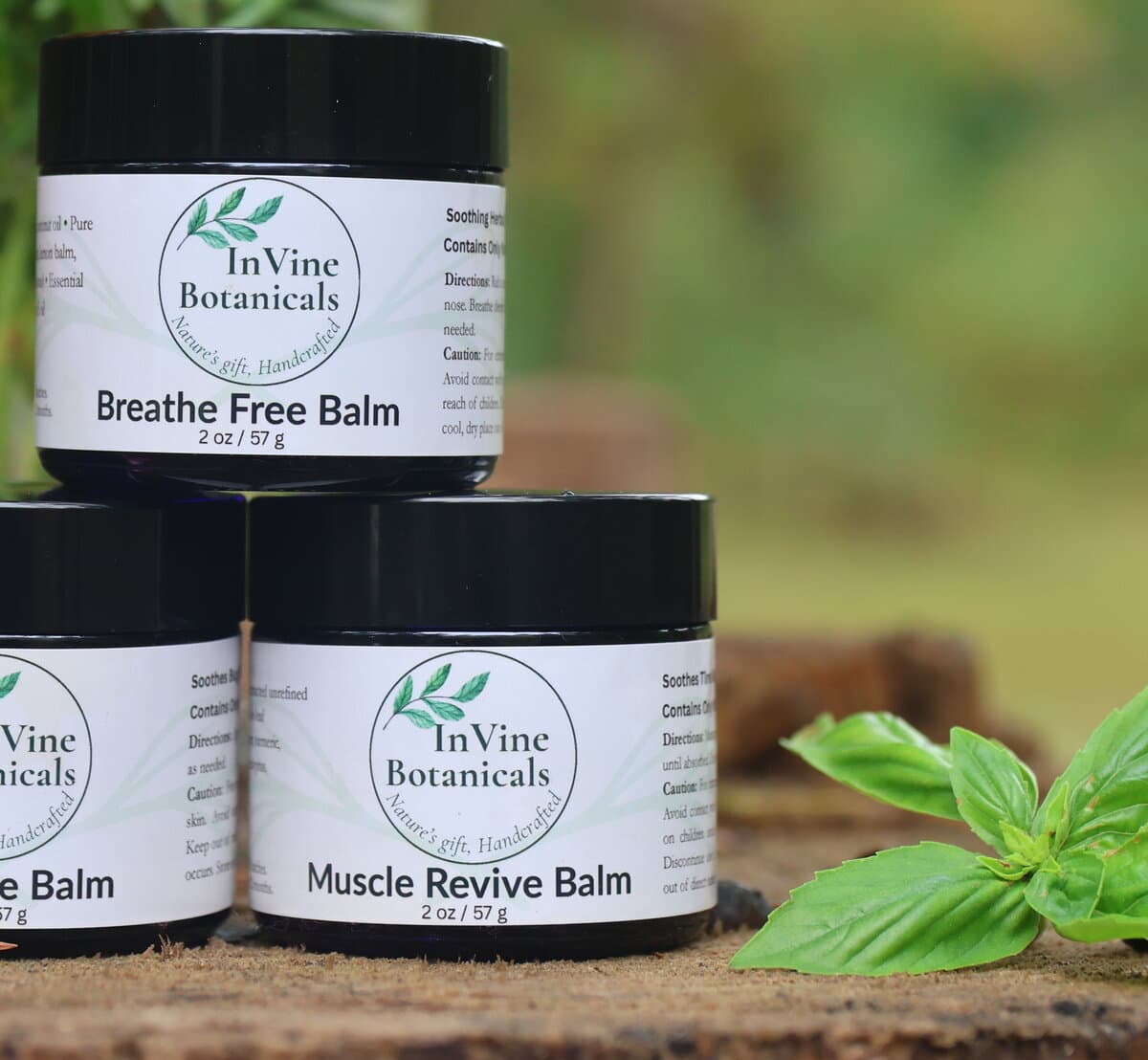
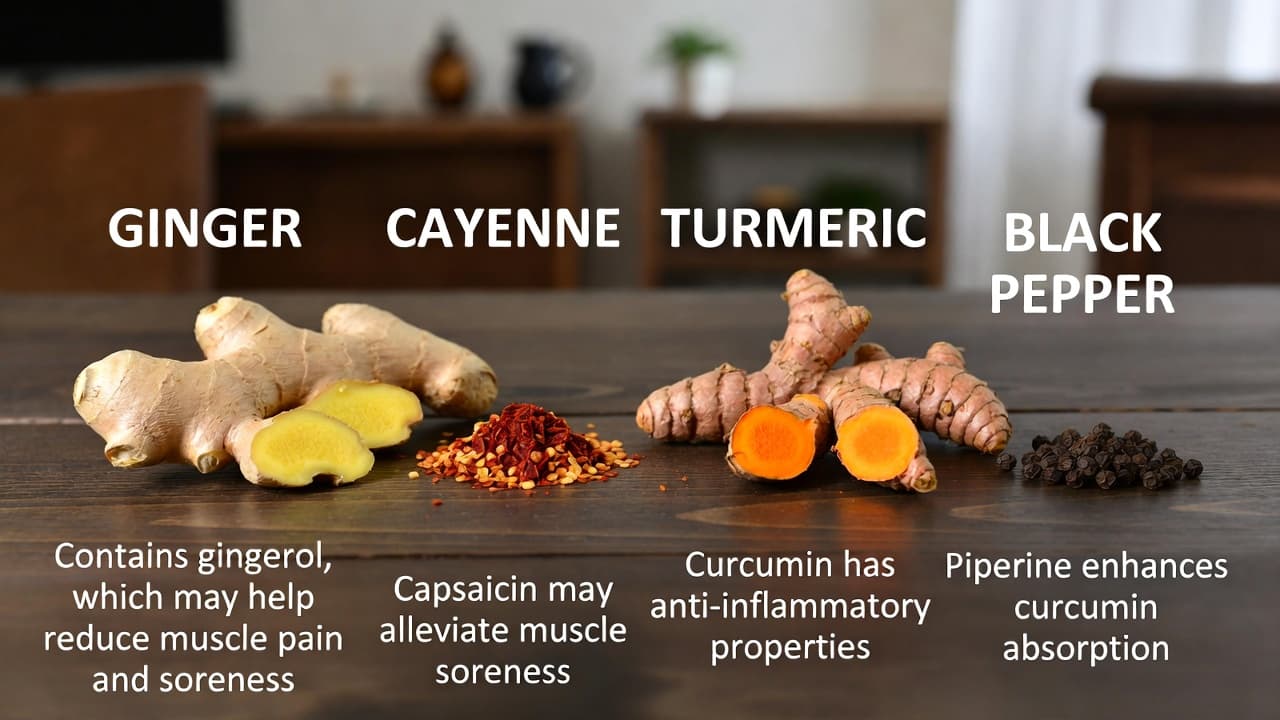
I formulated Muscle Revive Balm around warmth rather than cold. Ginger, turmeric, and cayenne carry the warming side. Ginger and cayenne bring pungent compounds, gingerol and capsaicin, which act on TRPV1, the receptor that reports heat. Rosemary adds its resinous, herbal depth. For the cool lift, peppermint brings its own natural menthol, spearmint its sweeter carvone, and lemon mint a bright citrus-herb note. So yes, there is menthol in our balm too. It simply arrives inside a whole leaf, alongside dozens of other aromatic compounds, rather than as an isolated active.
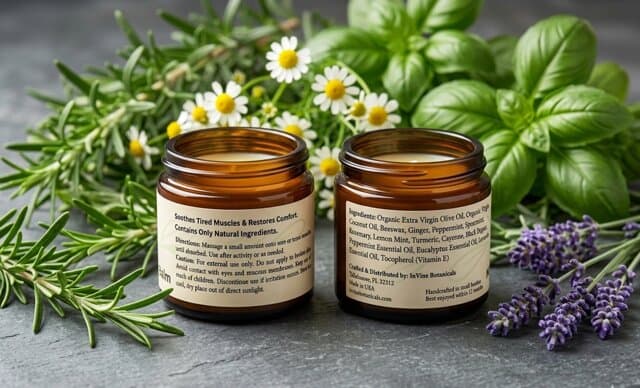
Every one of those herbs is grown in our Tallahassee garden. They are dried, then infused whole in cold-pressed organic olive oil and unrefined coconut oil for six to eight weeks in cool, dark conditions. That long, slow infusion is how the oil takes on the character of the whole plant, not just its most volatile oils. (See how it is made.)
After straining, the infused oil is blended with beeswax from a local Tallahassee beekeeper and a touch of Vitamin E, an antioxidant that keeps the oils fresh. Eucalyptus, peppermint, and lavender essential oils go in at the finish, at a whisper, for aroma. It is poured and capped by hand in small batches, never stockpiled.
What it feels like: a slow warmth that rises over a few minutes and lingers, with a clean mint brightness on top. Not a blast of cold. A balm you massage in after yard work, a long run, or a day on your feet, because the massage is half the ritual.
No dyes. No alcohol. No petroleum.
Explore Muscle Revive Balm →
If you want to try it before committing to a full jar, it also comes in a 0.5 oz travel tin sized for a gym bag.
Which One to Reach For
A few honest reads:
- For a specific ache you want a labeled product for: that is OTC-drug territory. Use the product whose label matches what you are dealing with, and ask a pharmacist when in doubt.
- For the middle of a work day, or under clothes: a fast-drying gel or roll-on is hard to beat. No residue is its superpower.
- For the end of the day, after the garden, the gym, or a long shift: this is where a whole-herb balm shines. The massage, the slow warmth, the scent of real herbs, and skin that feels conditioned afterward.
- For daily use on the same patches of skin: the base matters more the more often you apply. A plant-oil and beeswax base nourishes as it goes; a water-alcohol gel does not try to.
Plenty of people keep both: the green tube in the gym bag and a jar of balm on the nightstand. That is a perfectly sensible answer.
What You Are Really Choosing
Biofreeze is a well-made, single-active menthol gel with a clinic pedigree and a clear label. A whole-herb balm is a different kind of product entirely: a cosmetic, built on oils and plants you can name, designed for a slower, warmer experience and for the skin underneath.
The choice is less "natural versus not" than "what do you want this moment to feel like." If the answer is quick, clean, and cold, you already know where to find it. If it is slow, warm, and built from a garden, that is what we make.
The information in this post is for educational purposes and reflects published product labels and traditional herbal knowledge. Product details for Biofreeze, Icy Hot, and Tiger Balm are from their US labels on the FDA's DailyMed database as of October 2026 and may change. InVine products are cosmetics, not drugs.
Want the full picture, the formula, the method, and the most-asked questions in one place? Start with our Natural Muscle Balm guide.