
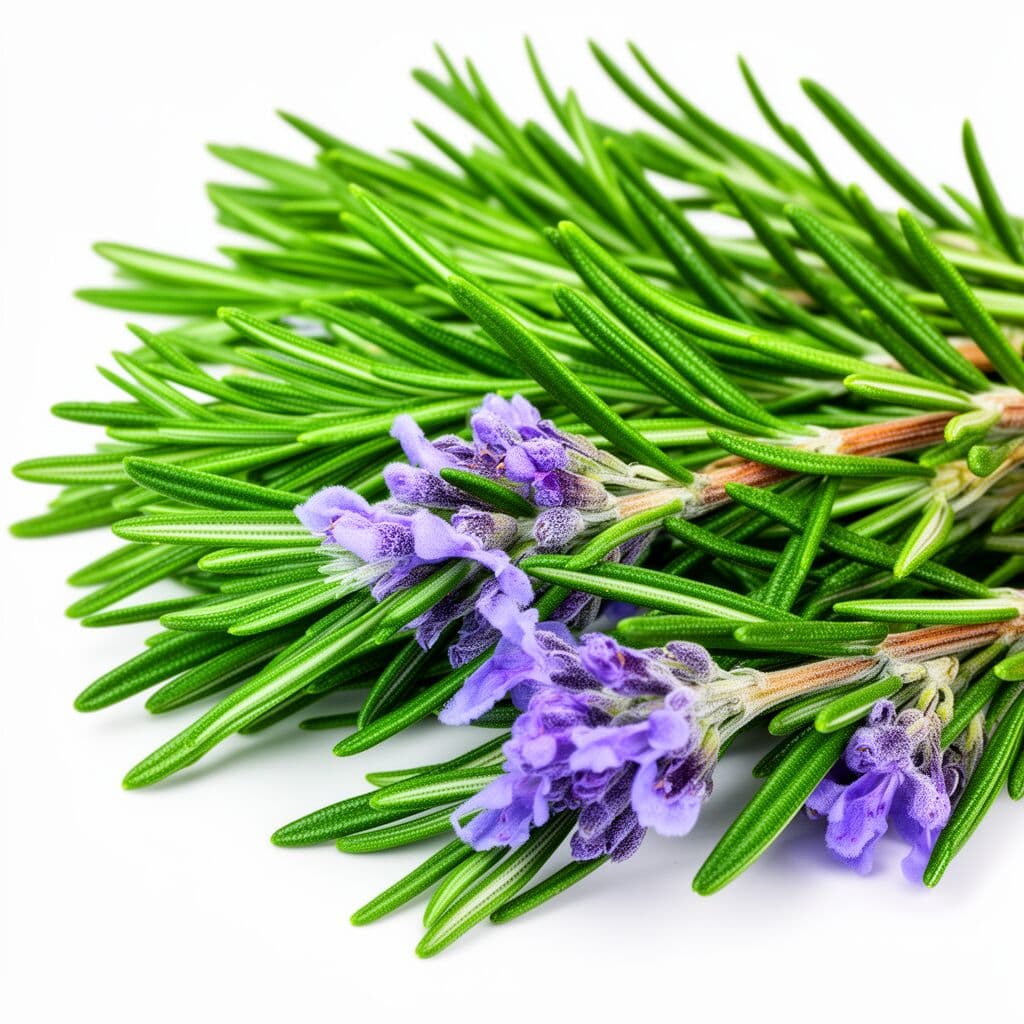
Meet the Herb
Rosemary for Skin: Why It’s in Four of Our Formulas
From Queen of Hungary’s Water to our own Tallahassee garden, what rosemary brings to skin, and why this one herb goes into four of our small-batch formulas.
Read article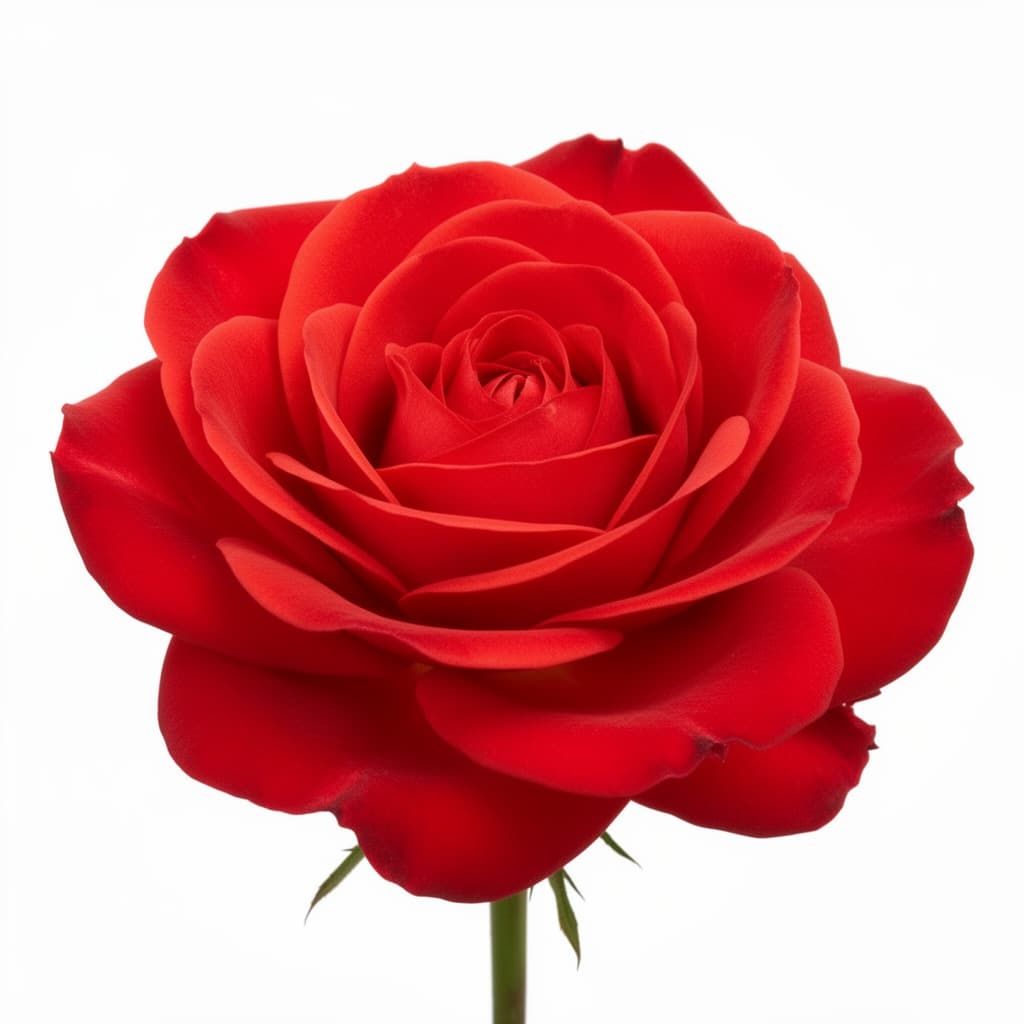
Rose may be the single most storied ingredient in the history of skincare. Rosewater was a fixture of beauty rituals from ancient Persia to Cleopatra's Egypt; rose oils anchored European cosmetics for centuries; and the flower still commands some of the highest prices of any botanical in modern perfumery and skincare. Few plants have held their place on the vanity for three thousand years.
The appeal is partly sensory, that soft, unmistakable fragrance, and partly what rose does in a formula. Rose petals are rich in natural compounds that formulators prize for their conditioning, softening character, and rose preparations have a long reputation for being gentle: the kind of botanical that suits skin that objects to stronger ingredients. In a face crème, rose contributes aroma, color, and that quietly luxurious skin feel that's made it a staple of facial care for centuries.
Most rose skincare today gets its character one of three ways: rosewater (the water left from steam distillation), rose essential oil (extraordinarily concentrated, it takes roughly ten thousand pounds of petals to make a pound of oil), or a synthetic fragrance imitating both. We take a fourth path, and it starts in our own garden.
At InVine Botanicals, we treat rose exactly like the rosemary and mint it grows alongside: as a working garden herb. Our roses grow in our Tallahassee, Florida garden, tended by hand through North Florida's long, warm season, in the same raised beds that supply every other botanical we use.
When a bloom reaches full flower, open, fragrant, at its peak, we pick it by hand, one bloom at a time. Like everything in the garden, we only harvest what the next small batch needs. The flowers come indoors fresh, the same morning they're cut.
From there, the petals dry slowly on screen racks in our climate-controlled drying room: around 76°F, low humidity, and always dark, for four to nine days. Dried gently this way, rose petals come out soft and papery, holding onto their color and their scent, which is the whole point. High heat or sunlight would cook away exactly the character we grew them for.
The dried petals then go into glass jars and are covered completely with organic oils for a slow, whole-herb infusion: six to eight weeks in cool, dark conditions, the same unhurried method behind every InVine product.
The rose infusion is one of the prettiest things in our studio. Over the weeks, the oil takes on a warm blush color from the petals alone, no dye, no additive, just what the flower gives up to the oil when you give it enough time. By the time we strain it, the oil looks and smells like the roses it came from, because for two months it essentially lived inside them.
This is the difference between whole-petal infusion and a drop of rose fragrance: the infused oil carries the fuller character of the flower, the color, the aroma, the lipid-soluble compounds in the petals, as the literal base of the formula, not a note added at the end.
Also see: the best natural face creams for mature skin, an honest guide with picks that aren't all ours.
That blush-colored infusion is the heart of our Rose Renewal Crème, a botanical face crème built around three herbs from our garden:
The infusion is blended into nourishing apricot kernel and grapeseed oils, lighter-bodied carriers chosen for facial skin, along with precious prickly pear seed oil and velvety mango butter for the crème's rich, silken body, a waterless formula, and Vitamin E as a natural antioxidant. No synthetic fragrance, no fillers, no parabens. The rose you smell is the rose we grew.
Like everything we make, each jar is poured and capped by hand in small batches, never stockpiled, and labeled with its batch number and infusion date, traceable back to the garden bed the petals came from.
Rose is not an efficient crop. The blooms come when they come, each one is picked by hand, and two ounces of finished crème represents a full growing season plus months of drying and infusing. We make it anyway, because the result is a face crème with a provenance almost nothing on a beauty shelf can match: flowers grown in our own soil, in a garden we walk every morning.
If your skin leans sensitive and you've been curious whether a gentler, plant-based routine could work for you, we've written about choosing plant-based skincare for sensitive skin. And if you'd like to meet the crème itself, the Rose Renewal Crème is in the shop, garden roses, whole-herb infused, made in Tallahassee.
From Queen of Hungary’s Water to our own Tallahassee garden, what rosemary brings to skin, and why this one herb goes into four of our small-batch formulas.
Read article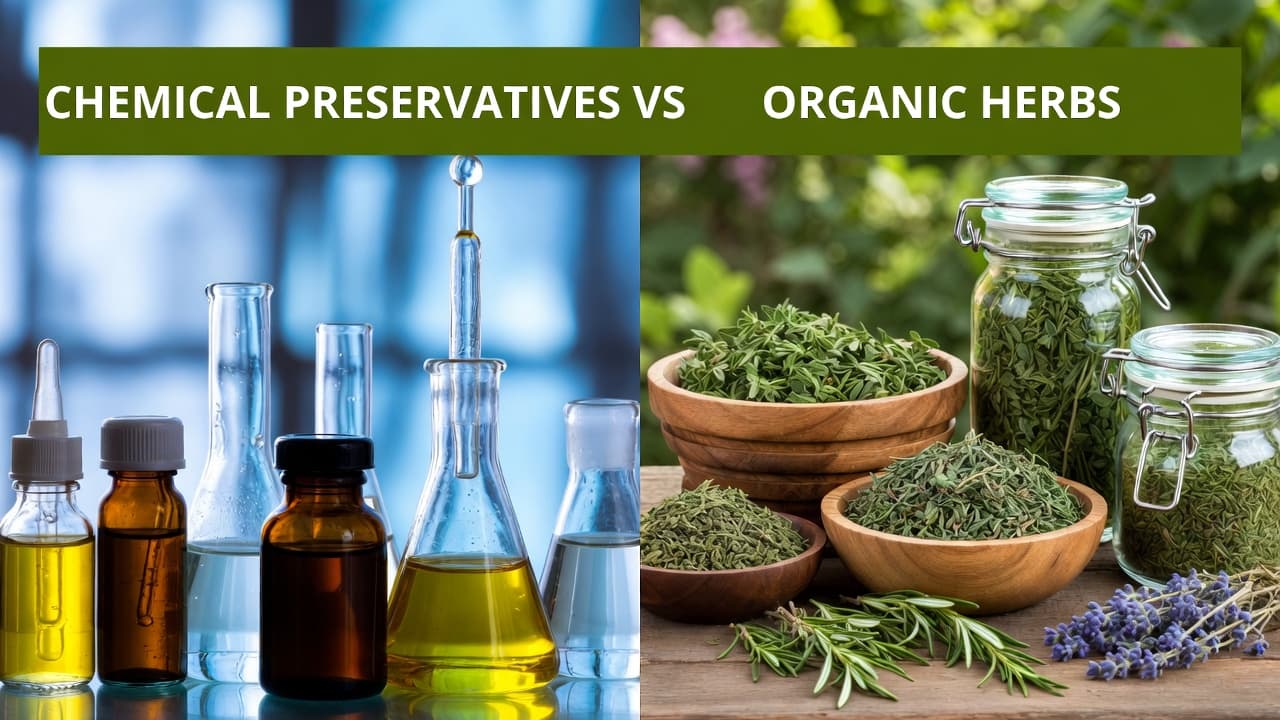
There are only two honest ways to make a preservative-free face cream: remove the water, or sterilize the formula and seal it from air forever. How to tell the honest versions from wishful labeling, and where whole-herb waterless cremes fit.
Read articleYour cart is empty
Add some products to get started.