Herbal Education
Florida Garden Skincare: Small-Batch, Whole-Herb
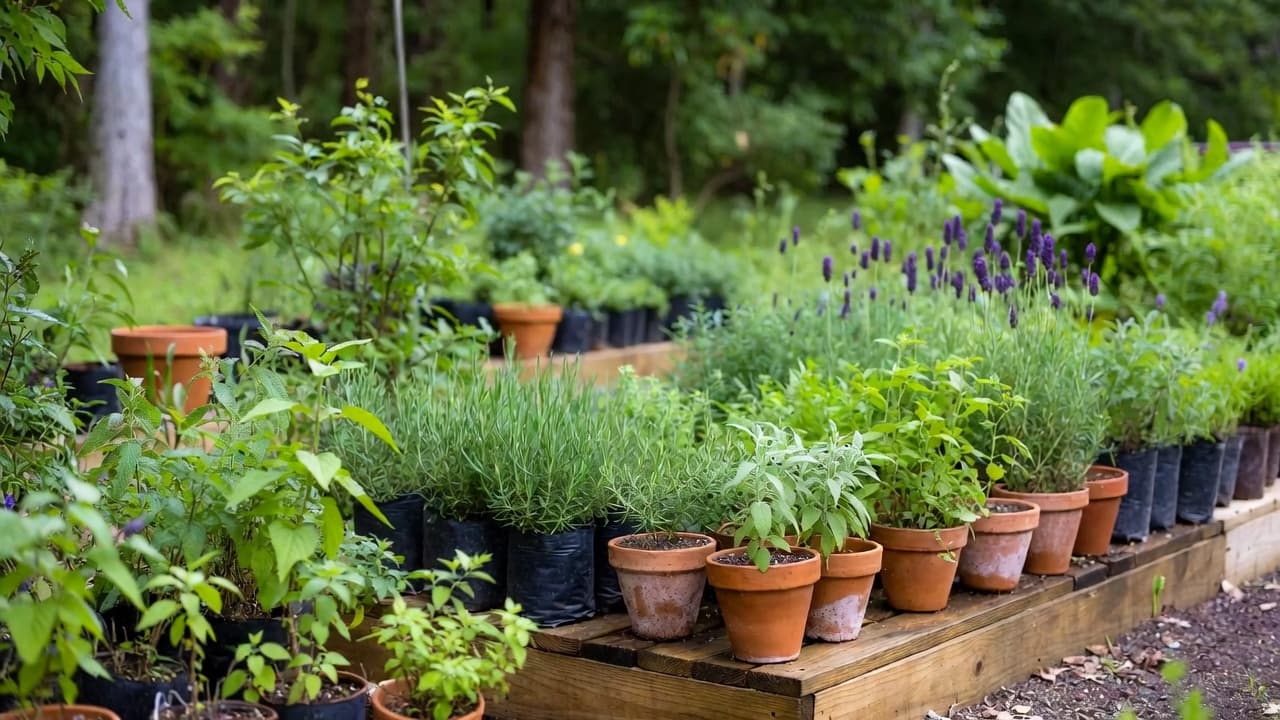
The herbs in InVine's jars are grown in our Tallahassee garden and slow-infused for 6-8 weeks. Here's what 'Florida garden skincare' actually means in practice.
Read article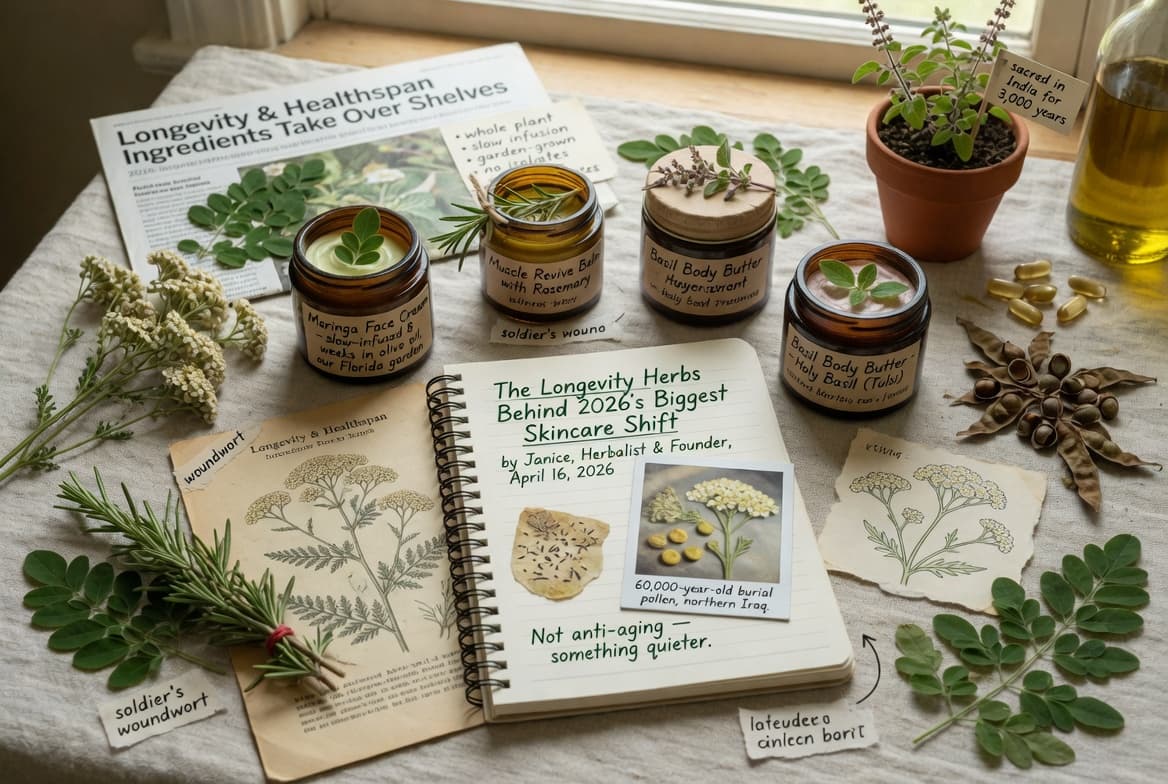
Not anti-aging, something quieter.
The skincare industry has been building a new vocabulary around "longevity" and "healthspan" ingredients. Retailers are reorganizing shelves. Magazines are writing features. Brands that never talked about botanicals before are suddenly featuring them front and center.
We did not pivot into any of this. The herbs showing up in these conversations are the same ones that have been in use for thousands of years, plants with deep traditional heritage that herbalists have valued quietly for a very long time.
This is a look at a handful of them, what the historical record actually says, and why we've been using them all along.
In 1960, archaeologists excavating Shanidar Cave in northern Iraq documented pollen from yarrow and several other medicinal plants clustered around Neanderthal burial remains. The interpretation has been debated, some researchers argue rodents may have carried the pollen in, rather than humans placing it deliberately. Either way, yarrow's traditional use goes back thousands of years in the written record alone.
In European herbalism, yarrow was called "soldier's woundwort" and appears in household apothecary manuals going back to the Middle Ages. In Traditional Chinese Medicine, yarrow stalks were used in I Ching divination, a marker of how culturally embedded the plant has been.
We grow white yarrow in our Florida garden and work with it the way herbalists always have, as a whole plant, in slow infusion, not isolated into a single compound.
Moringa oleifera has been cultivated in India, Africa, Southeast Asia, and the Caribbean for centuries. The leaves, seeds, and oil have all been used in traditional skincare preparations across these regions.
Moringa is exceptionally nutrient-dense, carrying a distinctive mix of plant compounds, quercetin, kaempferol, chlorogenic acid, and zeatin. Those are the compounds researchers keep returning to when they study the plant, and they are the reason moringa keeps showing up in modern ingredient lists.
Our Moringa w/ Echinacea Face Cream uses moringa grown in our own Florida garden, slow-infused into organic apricot kernel and grapeseed oils for six to eight weeks depending on the herb used in the infusion.
Rosemary (Rosmarinus officinalis) contains carnosic acid and rosmarinic acid, two of the most studied antioxidant compounds in botany. In industrial skincare, rosemary extract is often used at low concentrations specifically because of how well these compounds protect oils from oxidative breakdown.
Traditional Mediterranean herbalism figured this out without ever isolating the compounds. Rosemary was added to oils, ointments, and preserved foods for centuries, not just for aroma, but because people noticed that rosemary-infused oils simply kept better.
You'll find rosemary in our Muscle Revive Balm, our Bug Bite Balm, and our Breathe Free Balm. It's grown in our garden and infused whole.
Holy basil (Ocimum sanctum, or tulsi) has been cultivated in India for roughly three thousand years. It's considered sacred in Hindu tradition, and tulsi plants are still grown in courtyards and temple gardens across South Asia.
In Ayurvedic tradition, holy basil preparations were used for a wide range of topical and internal applications. Modern research has examined its compound profile, including eugenol, ursolic acid, and rosmarinic acid, and found a plant whose chemistry matches what the tradition has long claimed.
Holy basil (Tulsi), Thai basil, and sweet basil all appear in our Basil Body Butter, available now for pre-order.
There is a difference between a new ingredient marketed as a longevity compound and an herb that has been used the same way across many cultures for many centuries.
The difference is not that one is "better" than the other in a lab sense. The difference is that plants with deep traditional heritage come with a track record, generations of people who grew them, prepared them, and kept using them. That track record is the reason the ingredients keep showing up in modern skincare, even when the industry rebrands them every few years.
We use these plants the way they've always been used: whole, slow-infused, caught at peak potency, and stabilized naturally with vitamin E. No isolation. No standardization to a single compound. No fractionation.
If you are drawn to this conversation about traditional herbal heritage, the products we've been making all along are already built around it. This is not a new line. The garden was already growing these herbs. The infusions were already being made.
Our Moringa w/ Echinacea Face Cream, Muscle Revive Balm, and Basil Body Butter all draw on herbs with thousands of years of traditional use. They are made the same way an herbalist would have made them a century ago, grown in our own garden, harvested by hand, and infused slowly into organic carrier oils.
That's the only kind of "longevity ingredient" we know how to make.
This product is not intended to diagnose, treat, cure, or prevent any disease. The information in this post is for educational purposes and reflects traditional herbal knowledge and published research, not medical advice. Consult your healthcare provider for any health concerns.
The herbs in InVine's jars are grown in our Tallahassee garden and slow-infused for 6-8 weeks. Here's what 'Florida garden skincare' actually means in practice.
Read article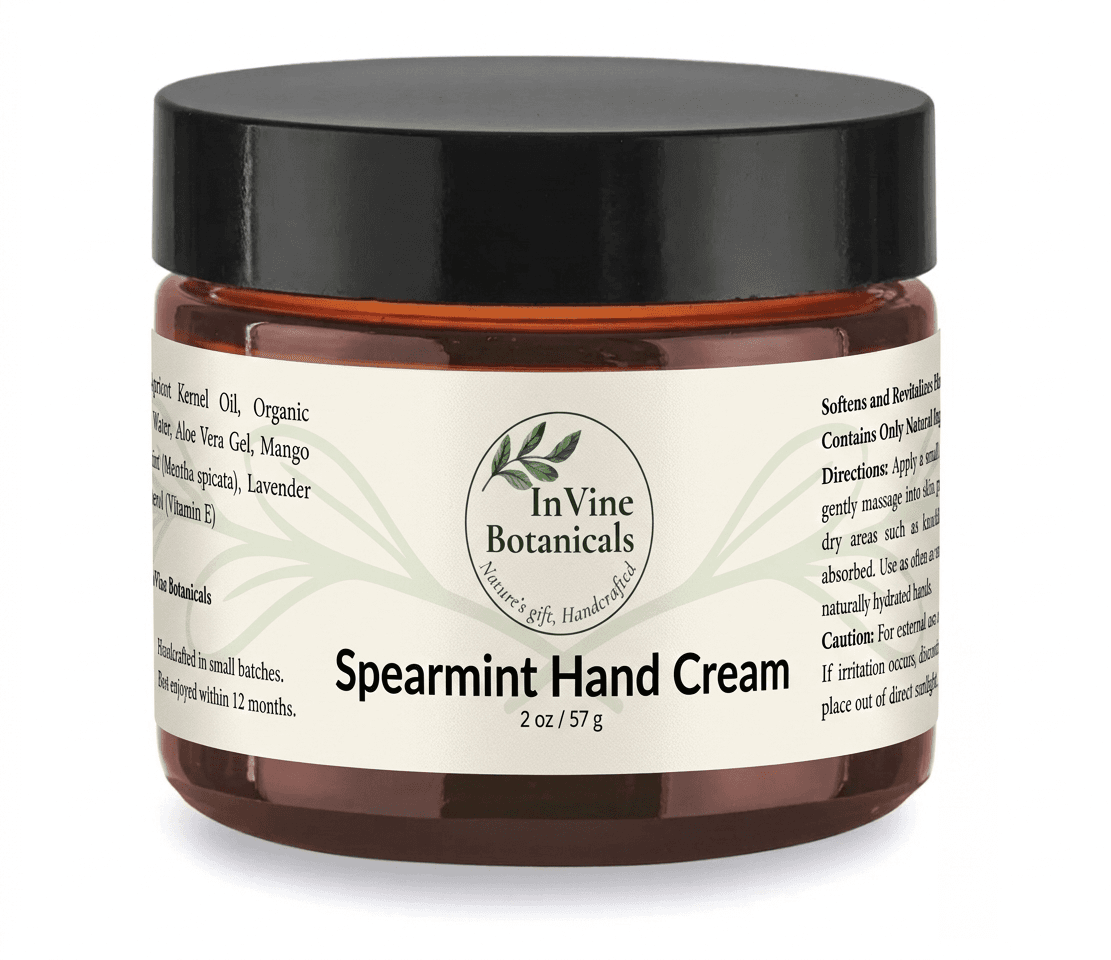
Twenty-five washes, hot water, and dish soap that strips skin like pan grease. An herbalist’s honest guide for kitchen hands, including when NOT to wear cream.
Read articleYour cart is empty
Add some products to get started.