Herbal Education
Florida Spring Bug Season: Herbs for Your Skin
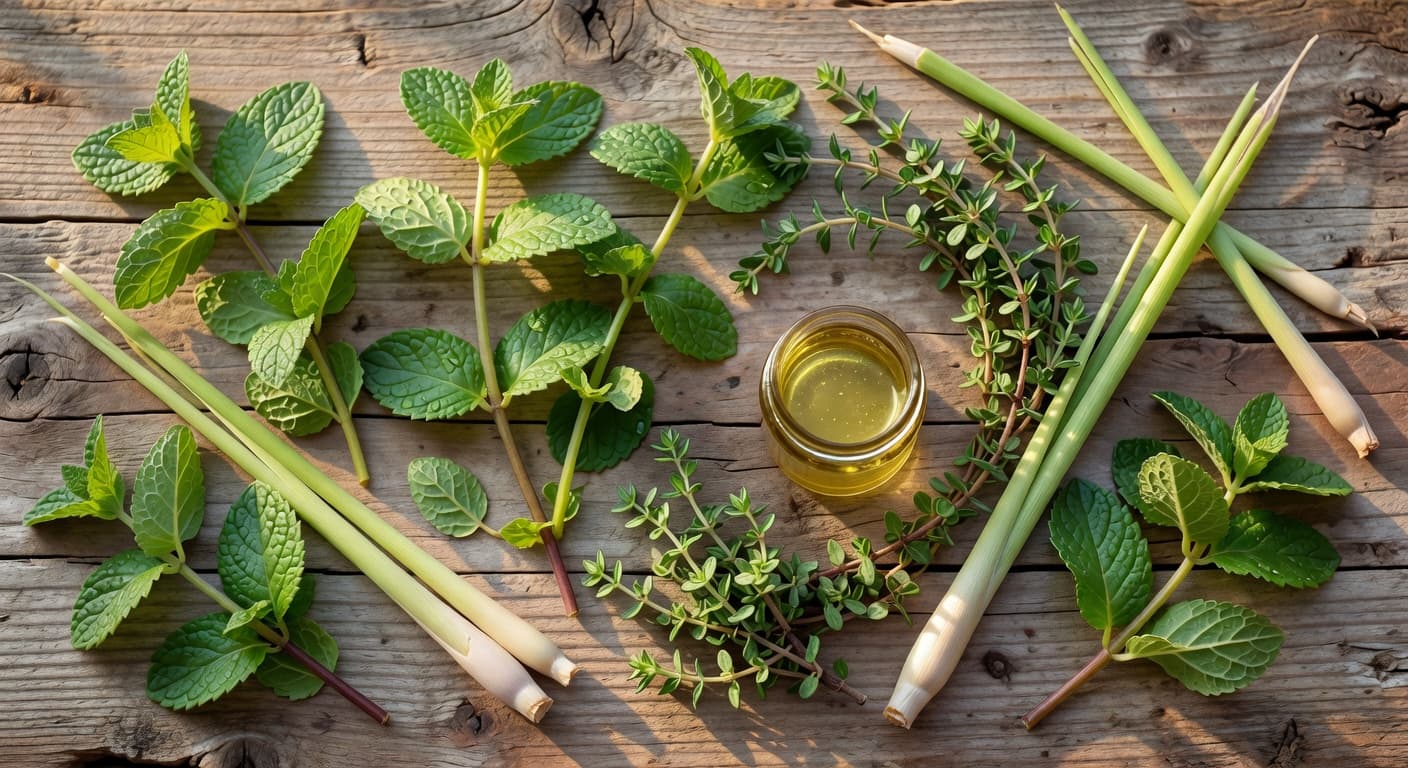
Florida spring is stunning, and buggy. Here's what herbalists have traditionally reached for, and how whole-herb infusions bring those botanicals straight to your skin.
Read article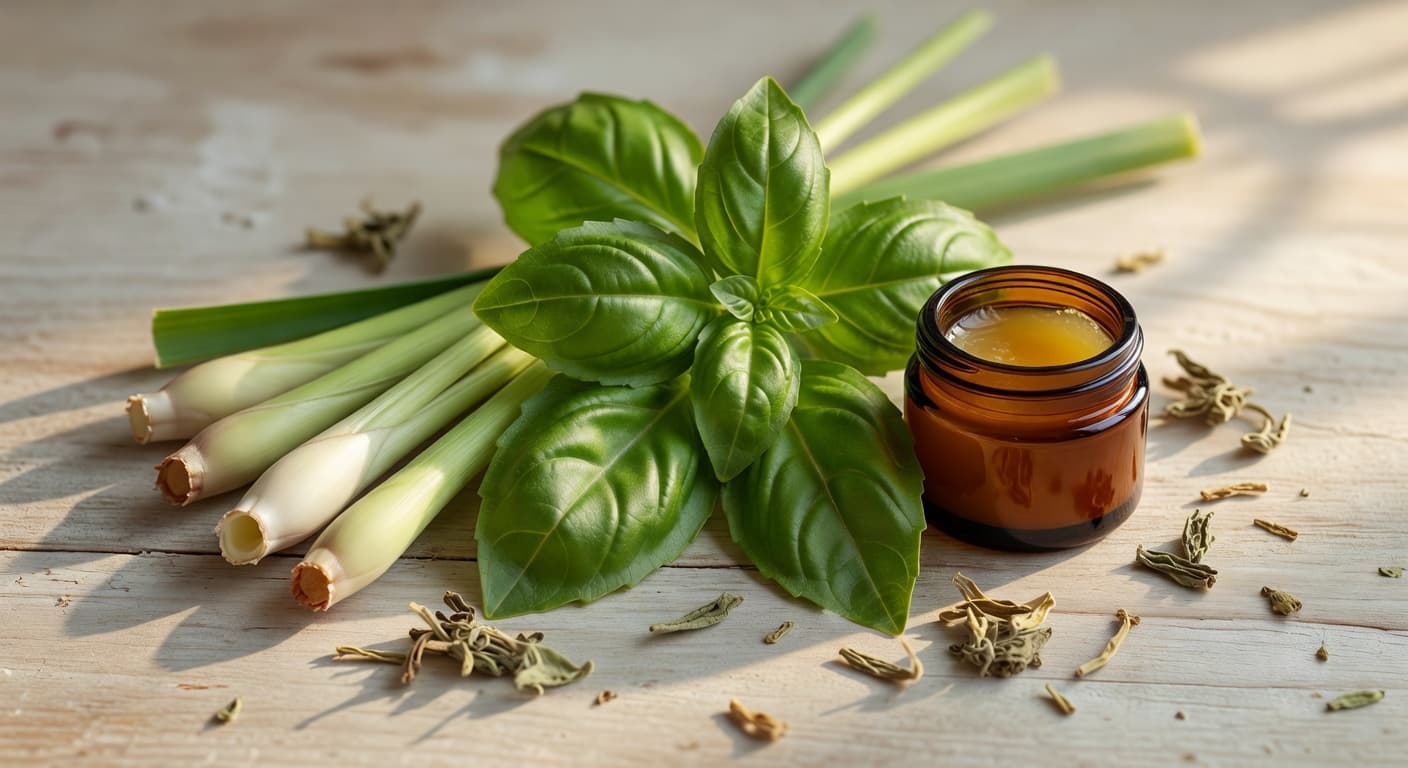
You step inside after an evening on the porch, maybe you were watering the garden, catching the last of the sunset, or just enjoying a glass of wine with a friend, and somewhere between the back door and the kitchen, you feel it. That familiar, maddening prickle spreading across your ankle or forearm. The mosquitoes got you again.
I've lived that moment hundreds of times. And as someone who grows lemongrass and basil just a few steps from my back door here in Tallahassee, I've spent years thinking carefully about the best way to actually use these plants on irritated skin, not just which plants to reach for, but how the preparation method shapes what you experience.
That question, how you prepare an herb, not just which herb you choose, is at the heart of everything I do at InVine Botanicals. So today I want to walk you through what the research says about lemongrass and basil for bug-bitten skin, and then explain why a whole-herb infusion behaves so differently from the essential oil products that dominate the market.
Lemongrass (Cymbopogon citratus) is one of those plants that has been a fixture in traditional wellness practices across Southeast Asia, South America, and the Caribbean for a very long time. When it comes to bug-bitten skin specifically, a few things make it interesting from an educational standpoint.
The plant contains citral as its dominant compound, the constituent responsible for that bright, lemony-green scent. Research has explored citral for its effects on the skin surface environment, and studies have looked at how lemongrass extracts interact with the conditions that follow insect contact. There's also a meaningful amount of geraniol in the plant, a compound that turns up repeatedly in the aromatherapy and botanical skincare literature.
On the skin, most people describe the experience of lemongrass as refreshing and cooling, a lightness that feels genuinely pleasant on hot, flushed-feeling skin. That sensory quality alone is worth understanding, because the way a product feels in the first moments of application matters. Skin that feels uncomfortable wants something cooling and aromatic. Lemongrass delivers that in a way that feels immediate and grounding.
Most people encounter basil in a pasta dish or a caprese salad. Far fewer people have explored what sweet basil brings to a topical preparation, and I think that's a genuine gap in the conversation.
Sweet basil (Ocimum basilicum) contains rosmarinic acid, a polyphenol compound that researchers have been studying with increasing interest. It also contains linalool and eugenol, both of which are aromatic compounds with their own distinct skin-conditioning profiles. Eugenol in particular has a pleasantly warming, clove-like quality that creates a noticeable sensory contrast to the cooler feeling of lemongrass.
Traditionally, basil leaves were used in folk practices across many cultures when skin had been bitten or irritated, often simply crushed and applied directly to the site. That long history of use is worth respecting, even as we approach it through a modern botanical skincare lens rather than a clinical one.
For the skin itself, basil is a conditioning herb. It nourishes. It brings a richness to an infused oil that you can feel under your fingertips. When I harvest basil from the InVine garden at its aromatic peak, just before the plant starts to flower, when the volatile oil content is highest, the scent alone tells you that something significant is happening in those leaves.
Here's where I want to slow down and spend some real time, because this is the question I hear most often and the one I feel most passionate about answering clearly.
The vast majority of 'natural' bug bite products on the market are built on essential oil dilutions. You take a highly concentrated, steam-distilled essential oil, lemongrass EO, basil EO, lavender EO, and you dilute it into a carrier oil at somewhere between 1-3%. The result is a product that smells recognizably like the plant and delivers some aromatic compounds to the skin surface.
That's a legitimate approach. I'm not dismissing it. But it's a fundamentally different thing from what I make.
A whole-herb infusion starts with the actual plant, leaves, stems, the full matrix of botanical material, and submerges it in a carrier oil for weeks. In the InVine process, after I harvest each herb at peak vitality, it goes into a climate-controlled drying room: 76°F, 35% humidity, fan-driven air, no light, for four to nine days depending on the plant. That drying step is critical. Residual moisture in the plant material can compromise the infusion, so I don't rush it.
Then the dried herb goes into cool, dark, climate-controlled conditions at 74°F and stays there for six to eight weeks, slowly surrendering its full spectrum of botanical compounds into the carrier oil. The result is an infused oil that carries not just the volatile aromatic compounds that survive steam distillation, but the broader range of constituents present in the whole plant, including waxes, chlorophylls, and plant compounds that never make it into an essential oil at all.
When you apply the Bug Bite Balm to irritated skin, you're not experiencing a diluted extract of one concentrated compound. You're experiencing the full botanical character of lemongrass and basil as the plant actually produced them, transferred slowly and completely into a nourishing oil base.
Lemongrass and basil are the headliners in the Bug Bite Balm, but they share the formula with a few other herbs from the InVine garden that are worth understanding.
Lavender is a classic companion herb for irritated skin. Its linalool-rich profile brings a softening, calming aromatic quality that most people find immediately pleasant. Traditionally valued for skin comfort in countless preparations across European herbalism, lavender in a whole-herb infusion carries a gentleness that pairs beautifully with the brighter, sharper energy of lemongrass.
Lemon balm (Melissa officinalis) is another herb I grow in the InVine garden specifically for its value in skin-conditioning preparations. It contains rosmarinic acid, a compound it shares with basil, along with citronellal, which contributes its own lemony, fresh aromatic quality. Lemon balm has a long history of use in traditional European botanical preparations for skin that has been disturbed or irritated.
Peppermint brings menthol's unmistakable cooling sensation to the blend. That immediate coolness on application is one of the most pleasant sensory experiences you can offer skin that feels warm and uncomfortable, and menthol achieves it through a simple mechanism: it activates cold-sensitive receptors in the skin, creating a cooling sensation without any actual change in temperature.
An infused oil, however beautifully made, needs a vehicle that will stay put on skin and allow all of those botanical compounds to do their conditioning work. That's where beeswax comes in.
After straining the finished infused oil, I warm it gently and blend in beeswax at just the right ratio to give the balm its characteristic texture, firm enough to travel in a bag without melting, soft enough to melt instantly against warm skin. Beeswax also creates a light, breathable layer that helps keep the botanical-rich oil in contact with the skin rather than simply wiping off.
Vitamin E is the final addition, a natural antioxidant that protects the freshness of the infused oil and contributes its own well-documented skin-conditioning properties. I blend it in with the beeswax so that it's fully incorporated throughout the balm.
The finished product is poured by hand in small batches at the InVine studio, never stockpiled. Each jar is labeled with its batch number and infusion date so you always know exactly how fresh your balm is.
The application is simple, but a few details make a difference.
First, clean the skin gently if you can. You don't need anything elaborate, just removing surface debris helps the botanical-rich balm make better contact with the skin.
Then warm a small amount of balm between your fingertips before applying. Body heat is enough; the beeswax base softens beautifully against warm skin. Apply directly to the bite site and massage gently in small circles. The act of gentle massage itself feels pleasant on irritated skin, and it helps work the infused oil into the surface layers.
Reapply as often as feels good. This is a cosmetic preparation, not a once-and-done pharmaceutical application. The more consistently you give your skin access to those conditioning botanicals, the better your experience.
For bites in awkward spots, the back of the ankle, behind the knee, the solid balm format is genuinely more practical than a liquid oil or a spray. You can apply exactly where you want, with no dripping or waste.
I want to be honest with you here, because I think honesty is what premium skincare customers deserve.
No botanical preparation, essential oil or whole-herb infusion, is going to make a bug bite vanish instantly. What I can tell you is that reaching for something aromatic, cooling, and botanically rich is a far more pleasant experience than scratching (which almost always makes things worse), and that the consistent use of a nourishing botanical preparation creates a genuinely different skin environment than doing nothing.
The women who come back to the Bug Bite Balm season after season, and many of them do, reordering before summer even officially starts, describe the experience primarily in sensory terms: the immediate coolness, the complex herbal scent that shifts as it warms on skin, the way the beeswax base settles in without feeling greasy. That's the whole-herb difference, and it's one that's genuinely hard to describe until you've felt it.
Every jar of Bug Bite Balm starts with plants I tend myself, lemongrass growing in tall, fragrant rows, basil in its aromatic peak just before flowering, lemon balm and peppermint filling in around the edges of the InVine garden here in Tallahassee. I harvest by hand when conditions are right, dry with care, and infuse slowly over weeks.
That's not a romantic story I tell for marketing purposes. It's the actual production sequence that determines what you experience when you open the jar. The quality of the plant at harvest, the patience of the drying process, the full six to eight weeks of cool, dark infusion, each step is non-negotiable for me, because each step is what makes this a whole-herb preparation rather than a few drops of essential oil stirred into a finished carrier oil.
If you're curious about the full botanical cast of the garden, including some of the other plants I grow specifically for our skincare preparations, exploring the ingredients section of the site is worth a few minutes of your time. Every herb there has a story, and every story connects back to something growing a few steps from my back door.
Florida summers are long and the mosquitoes are relentless. You deserve something genuinely thoughtful to reach for.
Want the full picture, the formula, the herbs, and the most-asked questions in one place? Start with our Natural Bug Bite Balm guide.
Florida spring is stunning, and buggy. Here's what herbalists have traditionally reached for, and how whole-herb infusions bring those botanicals straight to your skin.
Read article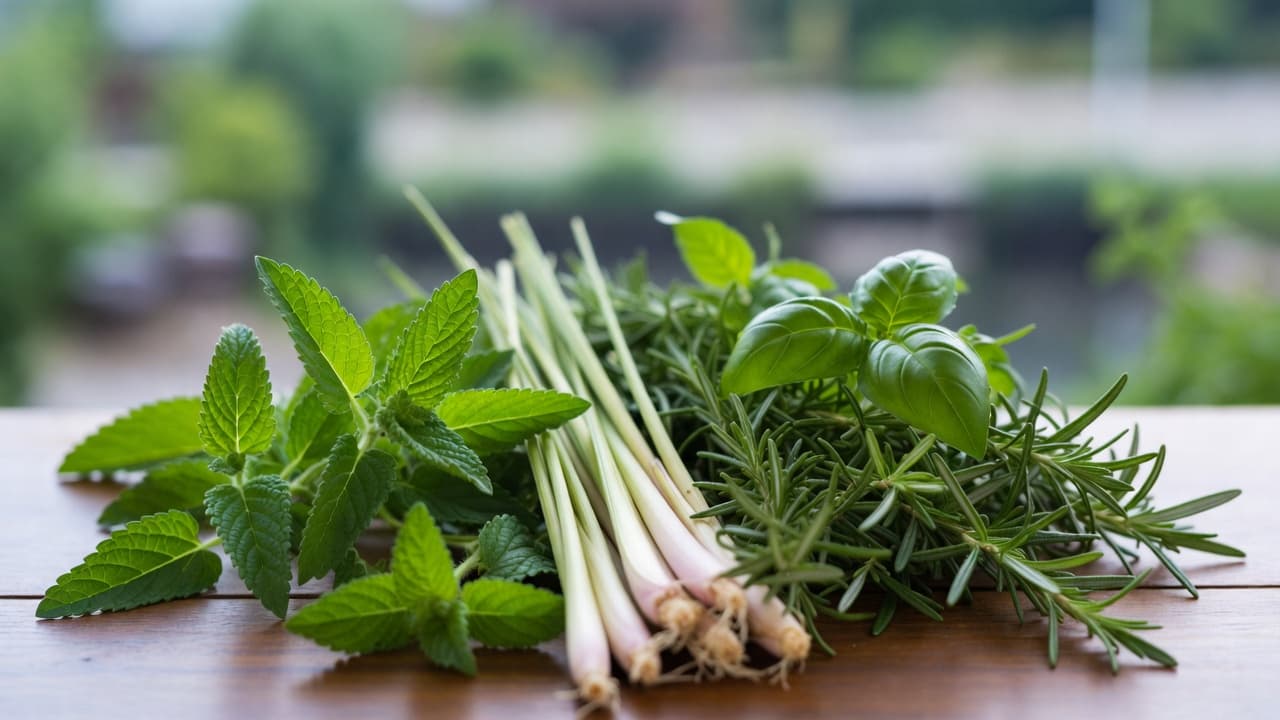
Bug bites are part of life, especially in humid climates. Here are five botanicals with real science behind them, and why whole-herb infusion delivers more than a few drops of essential oil ever could.
Read articleYour cart is empty
Add some products to get started.