What Is Herb-Infused Oil?
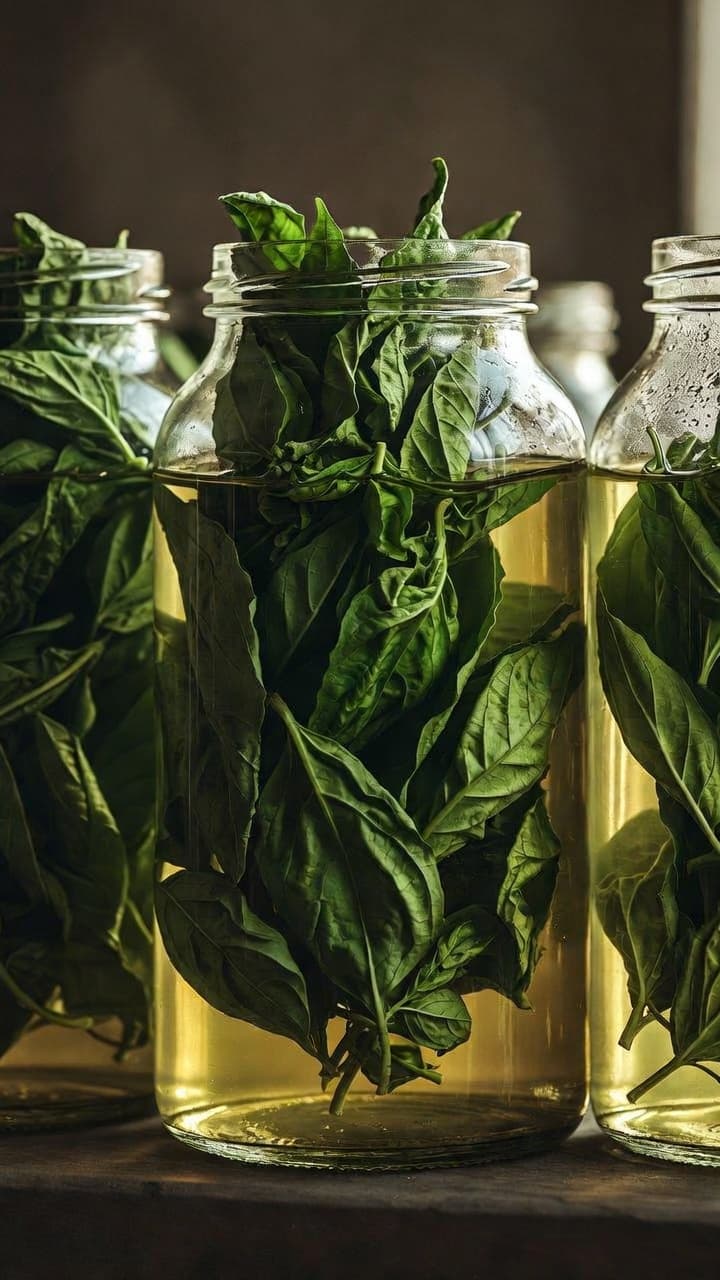
Herb-infused oil is exactly what it sounds like: a carrier oil, olive, coconut, apricot kernel, that has had whole herbs steeped in it long enough for the oil to take on the plant's character. The color, the scent, the lipid-soluble compounds held in the leaves and petals: all of it migrates slowly from the herb into the oil.
For skin, that matters in two ways. First, the carrier oil itself is the moisturizer, rich, occlusive, and conditioning, the lipid side of skincare that softens and smooths. Second, the infusion turns that plain oil into a botanical ingredient: an olive oil that spent eight weeks with rose petals or rosemary is carrying far more of the plant than a formula that got a drop of essential oil stirred in at the end.
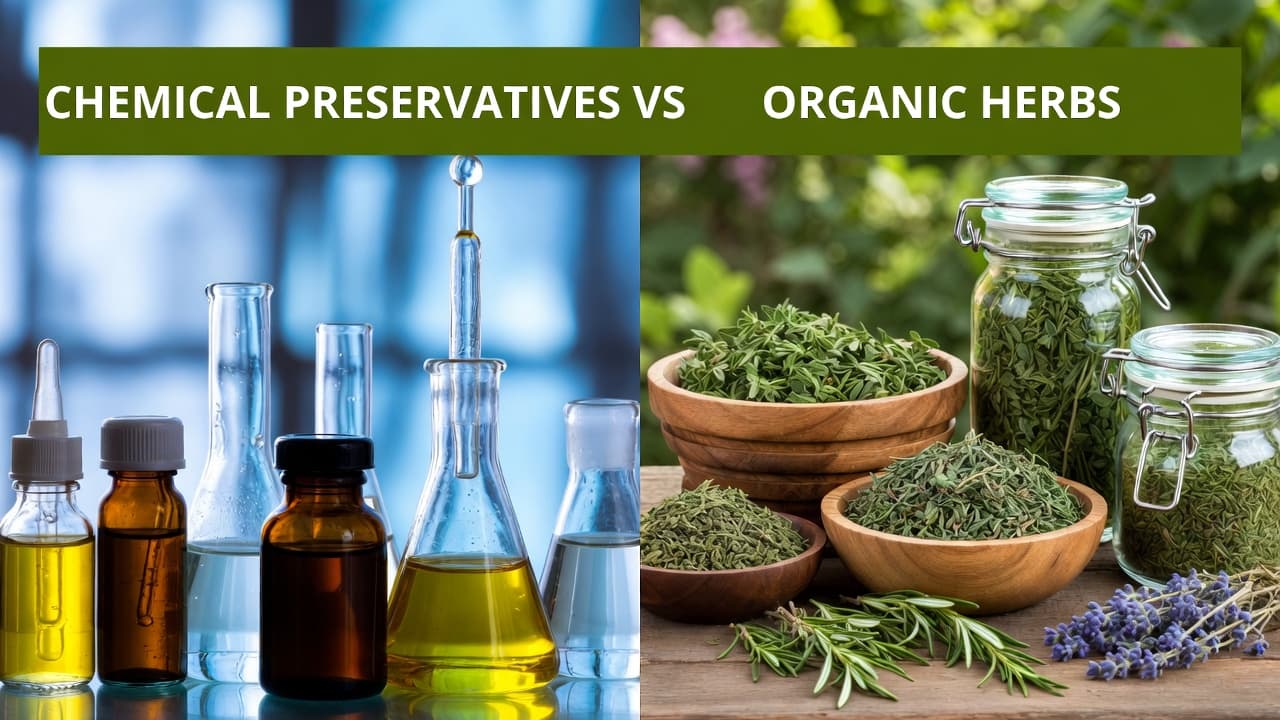
That distinction, whole herb steeped over weeks versus essential oil added in seconds, is the entire foundation of how we make skincare at InVine Botanicals. We call our version whole-herb infusion, and this is what it actually involves.
The Oil Comes First
Most skincare starts with a formula. Ours starts with a garden.
Whole-herb infusion is one of the oldest ways to work with plants, and it is the foundation of every product we make. The idea is straightforward: take the whole dried herb, steep it slowly in organic oil until the oil itself carries the natural character of the plant, then let that infused oil do the work. No isolates, no shortcuts. Just the plant, the oil, and time.
Before a single jar is ever poured in our Tallahassee studio, weeks of slow work have already gone into the oil inside it. Here is that full journey.
It Starts in Our Garden
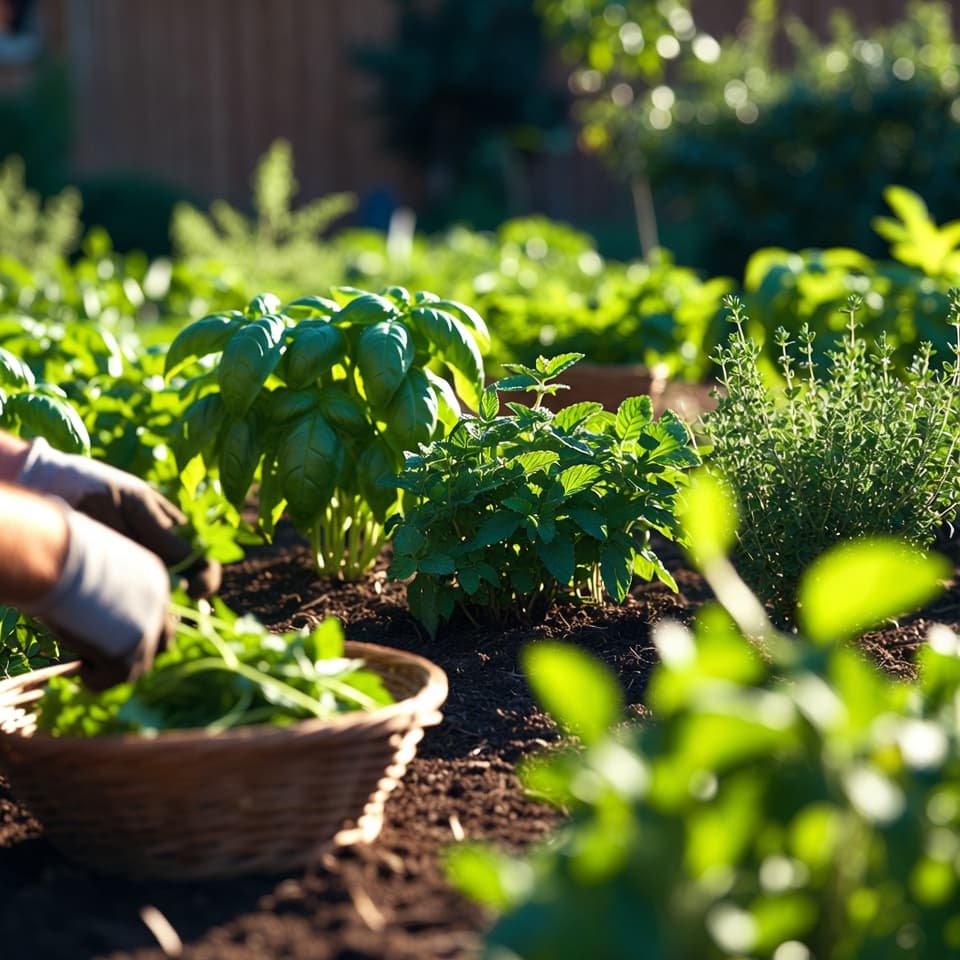
Every herb we infuse is grown right here in Tallahassee, lemon balm, rosemary, the mints, basil, roses, and more. Growing our own herbs is the part most skincare skips, but it is the part that matters most to us. We know exactly what went into the soil, what was used to tend the plants, and when each one reached its peak.
When an herb is ready, we harvest it by hand. Rosemary cut sprig by sprig with shears. Mint gathered by the handful straight into a basket. Rose blooms picked at full flower. This is the whole-herb part: we take the entire plant top, leaves, flowers, stems, not a single isolated component. That wholeness carries through every step that follows.
Drying: Slow and Dark
Fresh herbs hold moisture, and moisture is what makes an infused oil go off. So before anything goes into oil, everything gets dried.
We dry our herbs on screen racks for four to nine days, depending on the herb. The drying room is climate-controlled: around 76°F, roughly 35% humidity, and kept dark. Warm enough to dry, dry enough to prevent mold, and dark enough to protect the color and the natural aromatic compounds in the leaves. Every tray is tended by hand, turned, checked, given room for air to move freely around each stem and petal.
Rosemary is done when its needles are brittle and snap cleanly. Oregano transforms from soft and green into something concentrated and intensely fragrant. Rose petals dry down soft and papery. When an herb is fully dry, it is finally ready for the oil.
Six to Eight Weeks: The Infusion
This is where the patience really lives.
The dried herbs go into clean glass jars and are covered completely with cold-extracted organic oils, usually a blend of olive and coconut. The oil is poured right over the herbs until every leaf and flower is fully submerged. Then the jars are set aside to infuse for six to eight weeks, depending on the herb, in cool, dark conditions.
Slowly, over days and then weeks, the oil draws the natural character out of the dried plant. It takes on color and fragrance directly from the herbs themselves. We stir the jars periodically to keep all of the herb in contact with the oil, and the infusion stays cool and dark throughout. Never warmed under a lamp, never rushed. Slow and dark is what protects the qualities we spent a whole growing season cultivating. (We've written more about why we infuse this way instead of in sunlight in Cold, Dark Infusion vs. Solar Infusion.)
Some infusions are quietly golden. Others come out richly colored, our rose infusion takes on a warm blush from the petals alone. The oil you end up with looks and smells like the herb it came from, because for weeks it essentially lived inside it.
Straining, Blending, Pouring
When an infusion is finally ready, we strain it. The spent herbs are pressed through fine mesh and filtered out. What remains is a clear, herb-infused oil, this is the heart of every balm we make. (The choice of carrier oil shapes the finished product more than most people realize, we've covered that in Why Carrier Oils Matter.)
To turn that oil into a finished balm, we warm it gently and blend in two things: pure beeswax from a local beekeeper, which gives the balm its smooth, spreadable structure, and a small amount of Vitamin E, a natural antioxidant that helps keep the oil fresh. At this stage we also add a few pure essential oils as finishing aromatic notes. Then every jar is poured and capped by hand, in small batches.
The balm sets up soft and smooth, carrying the color and the scent of the infused oil it came from. Each jar is labeled with its own batch number and infusion date, traceable all the way back to the garden.
Why the Slower Path
We chose whole-herb infusion because we believe the whole plant brings more of its natural character into the oil than any shortcut can replicate. It takes months from seed to finished jar, not minutes. But it means the herbs in our balms are the ingredient, present in the oil from the first step, not just a fragrance note added at the finish line. (For a closer look at how the two approaches differ, see Essential-Oil Dilution vs. Whole-Herb Infusion.)
Our balms are made in small batches, never stockpiled. We pour regularly so that what reaches you came from a recent, fresh infusion.
Want to go deeper? Our free 6-page Whole-Herb Infusion Guide walks through the entire method, start to jar. And if you'd like to bring a little of this slow work home, you'll find our full collection, balms, creams, and the Nature's Finest Trio gift set, in the shop.