Botanical Ingredient
Yarrow, White
Achillea millefolium
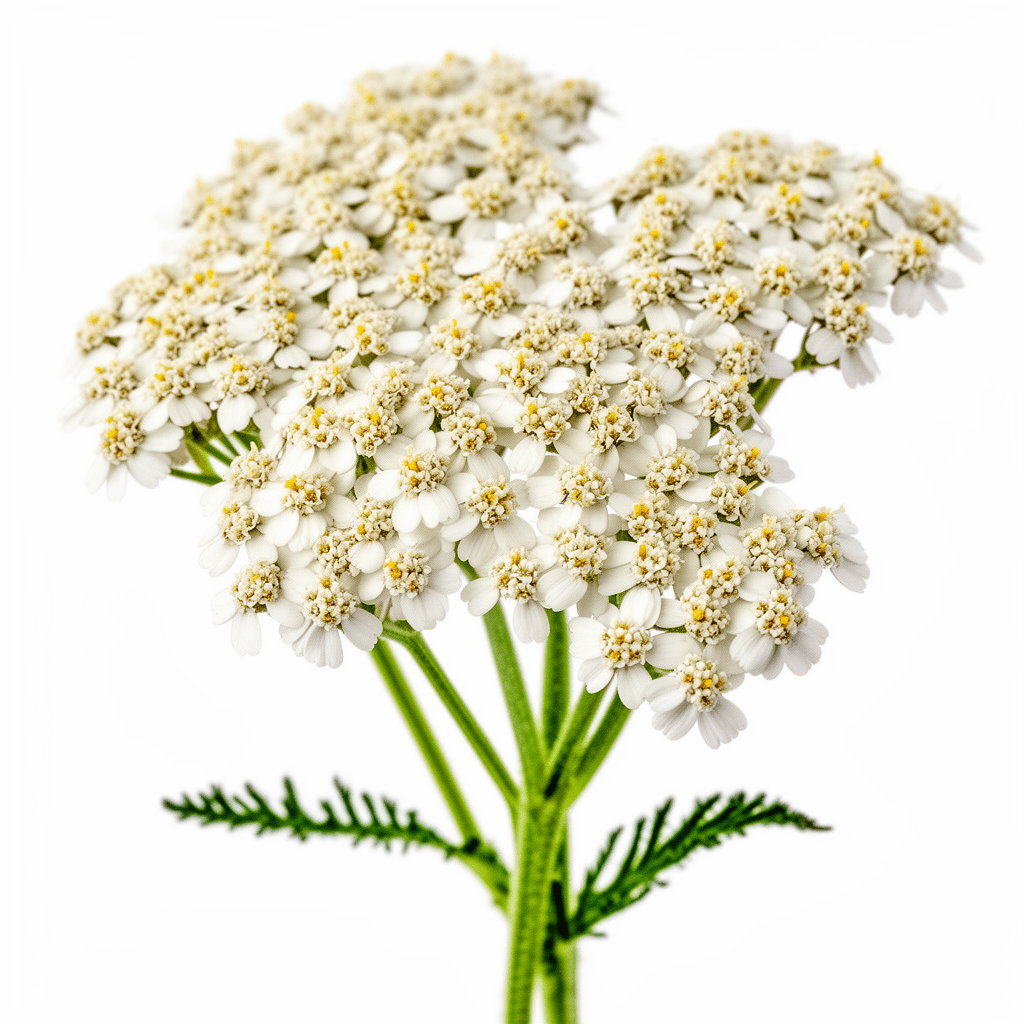
White yarrow (Achillea millefolium) is one of the oldest herbs on record, its use has been documented for over 60,000 years, evidenced by yarrow pollen found with Neanderthal remains at a burial site in Shanidar Cave, Iraq. Named for Achilles, who legend holds used it for his soldiers, yarrow remains one of the most historically significant herbs in the botanical world. Its compounds, achillin, azulene, and flavonoids, contribute to its rich botanical profile.
Traditional Uses
- Traditionally used for skin conditioning across global traditions
- Historically valued as a comforting topical poultice
- Traditional herb across European and Native American herbalism
- Historically valued in topical skin care preparations
- Traditionally used for soothing and calming skin
Key Properties
Did You Know
Yarrow's botanical name, Achillea, refers to the Greek hero Achilles. Ancient accounts describe him using yarrow for his soldiers during the Trojan War, a tradition echoed across countless cultures on every continent where the plant grows wild.
Our Sourcing
White yarrow grows abundantly in InVine's Florida garden, naturalizing freely once established. We harvest the aerial parts, leaves and flower heads, during full bloom when azulene and flavonoid content peak. The plant's feathery foliage and flat-topped white flower clusters are unmistakable in the garden.
Why We Use It
Yarrow is the herb that made me take traditional plant knowledge seriously. When I read that yarrow pollen was found with a 60,000-year-old burial, that humans were placing this plant with their dead before recorded history, something shifted in my understanding of what botanical heritage means. This is not a trend or a wellness product. This is something humans have carried with them through the entirety of our existence. I grow yarrow because it is one of the most historically significant herbs on earth, because it has been so for longer than civilization, and because having it in the garden feels like keeping a living connection to the deepest roots of herbal practice.