Botanical Ingredient
Sage
Salvia officinalis
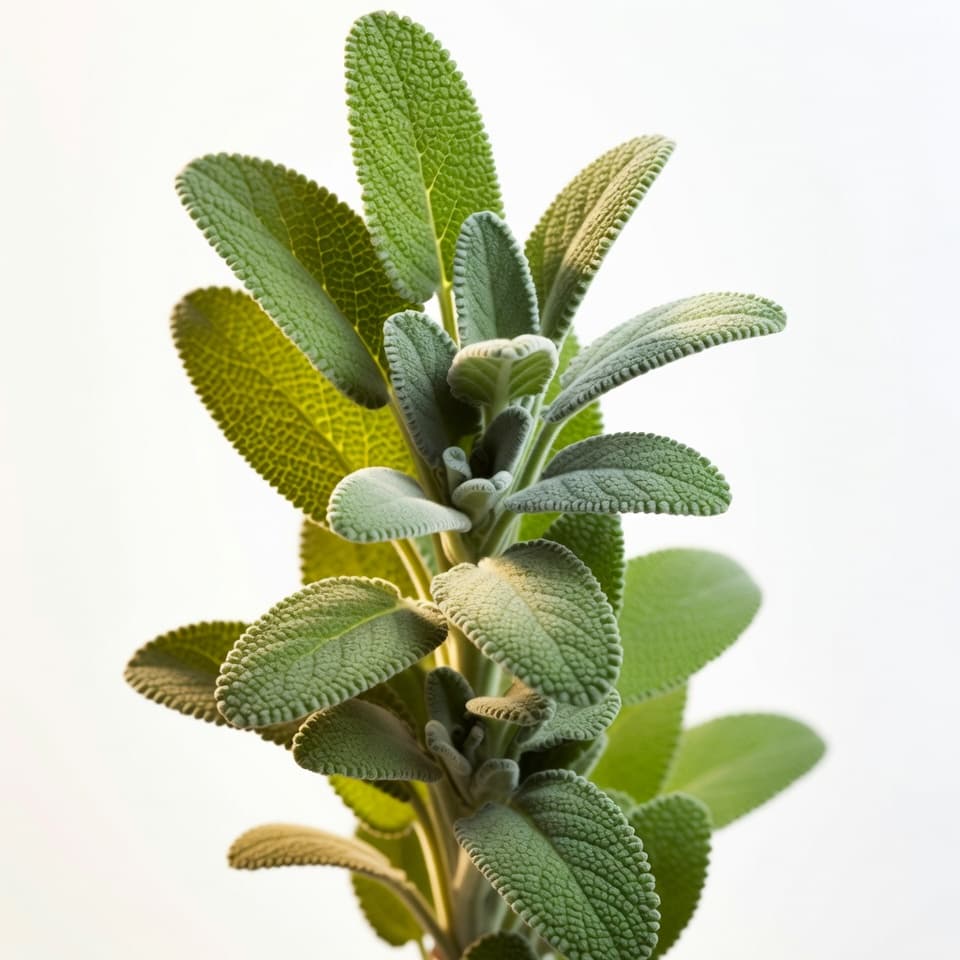
Sage is one of the pillars of European herbalism, with a name derived from the Latin 'salvere', to be saved or to heal. Its leaves are rich in rosmarinic acid, carnosic acid, thujone, and camphor, compounds that contribute to its powerful aromatic character and skin-conditioning qualities. Sage has been valued continuously in Western herbalism for over 2,000 years and was considered so important in medieval Europe that the saying went: 'Why should a man die whilst sage grows in his garden?'
Traditional Uses
- Traditionally valued in European herbal skin care
- Historically valued as an astringent and skin-toning topical
- Traditional herb used for skin conditioning
- Historically valued for comfort in European folk herbalism
- Traditionally valued for mental clarity in Greek and Roman tradition
Key Properties
Did You Know
The medieval School of Salerno posed the famous question: 'Cur moriatur homo cui Salvia crescit in horto?', 'Why should a man die whilst sage grows in his garden?' Charlemagne ordered sage planted in every monastery garden in his empire.
Our Sourcing
Sage is grown in InVine's Florida garden in Tallahassee, where it performs well as a perennial in well-drained soil with full sun. We harvest the leaves before flowering when the essential oil content is most concentrated, then dry them slowly to preserve the volatile compounds.
Why We Use It
Sage is the herb that most clearly bridges the gap between kitchen and apothecary. The same rosmarinic acid that makes it a valued skin-conditioning botanical makes it an exceptional culinary herb, and the astringent quality that tones skin is the same one that cuts through rich food. I grow it because a botanical garden without sage would be like a library without a dictionary, it is foundational. The antioxidant richness is robust, the plant is reliable, and the history behind it is deeper than almost any other herb we grow.