Botanical Ingredient
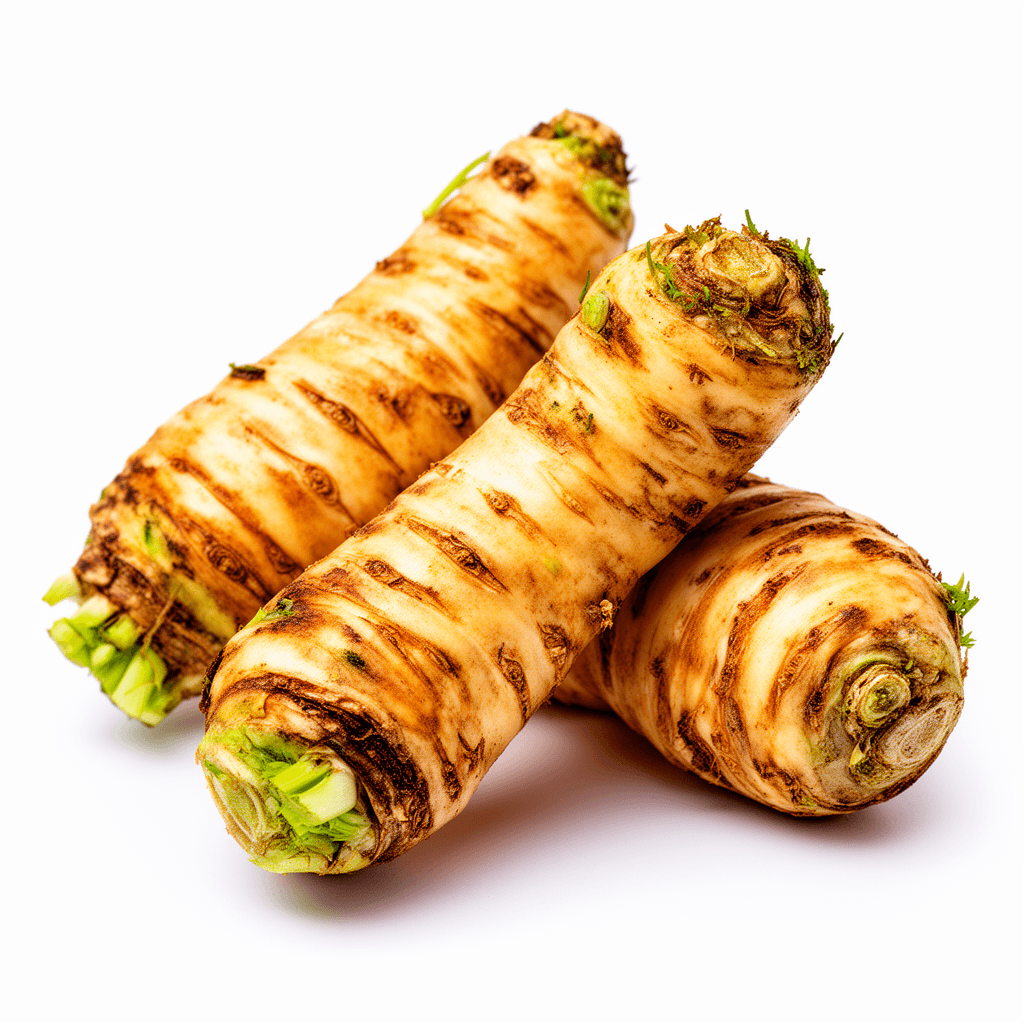
Horseradish
Armoracia rusticana
Horseradish is a bold, pungent root herb in the Brassicaceae family, native to southeastern Europe and western Asia. Its potency comes from sinigrin, a glucosinolate that converts to allyl isothiocyanate when the root is cut, the volatile compound responsible for its sharp, unmistakable heat. Topically, horseradish has been valued in traditional European herbalism as a warming herb.
Traditional Uses
- Traditionally used as a warming poultice
- Historically valued for its invigorating warmth
- Traditionally valued for its sharp, aromatic qualities
- Historically used in skin care preparations
- Traditional European folk herbal preparation
Key Properties
Our Sourcing
Horseradish is grown in InVine's Florida garden. The roots are harvested in cooler months when the allyl isothiocyanate content is most concentrated, then processed fresh for maximum potency.
Why We Use It
Horseradish is the boldest plant in the InVine garden by a significant margin. Nothing else announces itself quite like a freshly cut root. I grew it because I was curious about rubefacient herbs, plants that warm the skin and stimulate circulation, and horseradish is one of the most direct examples in the botanical world. The allyl isothiocyanate it produces is powerfully warming in a way that reaches deep into tissue. It is an herb I approach with respect and grow with intention, understanding that its strength, handled carefully, is exactly what makes it useful.