Botanical Ingredient
Elderberry
Sambucus nigra
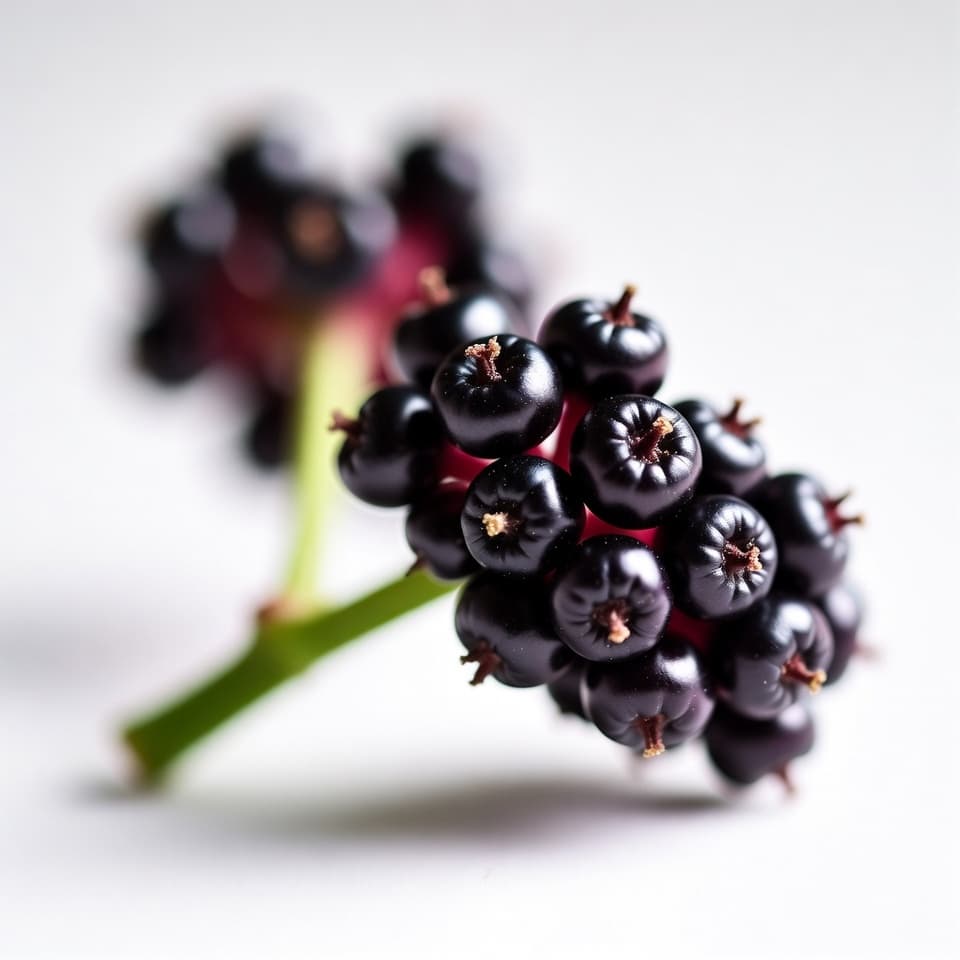
Elderberry (Sambucus nigra) is one of the most widely used botanical plants in European folk herbalism, documented in herbal texts from Hippocrates through the medieval period and still among the most researched botanicals today. The berries are rich in anthocyanins, particularly cyanidin-3-glucoside and cyanidin-3-sambubioside, potent antioxidants that contribute to its deep purple color and rich botanical profile. The flowers are equally valuable, containing flavonoids and triterpenes that have been used in topical skin care preparations for centuries.
Traditional Uses
- Historically valued for general wellness in European folk herbalism
- Traditionally used as an elder flower skin rinse for complexion
- Traditional seasonal herb across European and Native American traditions
- Historically valued for skin conditioning and care
- Rich in antioxidants (anthocyanins)
Key Properties
Did You Know
Every part of the elder has a traditional use: flowers for skin care, berries for wellness, bark in folk preparations, and leaves as a topical herb, making it one of the most complete botanical plants in the European tradition.
Our Sourcing
Elderberry is grown in InVine's Florida garden where the shrub establishes readily in the warm, humid climate. We harvest the flowers in spring and the ripe berries in late summer, drying each at optimal timing to preserve their active constituents.
Why We Use It
The elder is the most complete botanical plant I grow. Flowers in spring, berries in late summer, two distinct harvests from one shrub, each with its own profile and use. I was drawn to elderberry for its skin care applications as much as its wellness reputation. The anthocyanins in the berries transfer beautifully into oil infusions, and the flavonoids in the flowers have a long tradition in European skincare, elder flower washes for complexion were recorded as far back as the 16th century. Growing an elder feels like tending something with genuine historical weight, and I find that meaningful.