
Botanical Ingredient
Catnip
Nepeta cataria
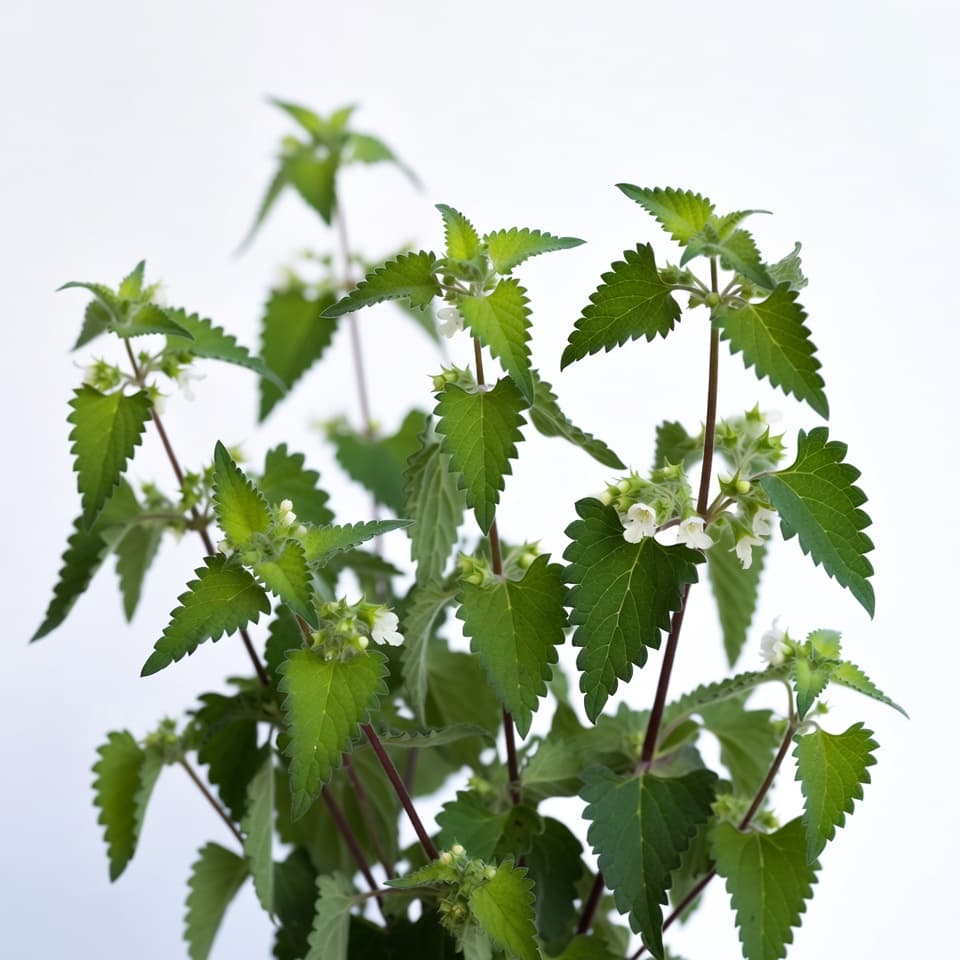
Catnip is a perennial herb in the mint family (Lamiaceae), native to Europe and Asia and widely naturalized across North America. While famous for its effect on cats, catnip has a long history in human herbalism as a calming nervine and aromatic herb. Its primary compound, nepetalactone, is a potent insect repellent, studies have shown it to be up to ten times more effective than DEET at repelling mosquitoes. The leaves also contain rosmarinic acid, thymol, and citronellol.
Traditional Uses
- Traditionally used as a calming nervine in European folk herbalism
- Natural insect repellent, historically and in modern research
- Historically valued for soothing and conditioning skin
- Traditional herb used gently for children in folk herbalism
- Traditionally used as a calming aromatic across European traditions
Key Properties
Did You Know
A 2001 study at Iowa State University found that nepetalactone, the essential oil in catnip, is roughly ten times more effective at repelling mosquitoes than DEET, the most widely used synthetic repellent in the world.
Our Sourcing
Catnip is grown in InVine's Florida garden in Tallahassee, where it returns reliably each season as a hardy perennial. We harvest the leaves and flowering tops just before full bloom when nepetalactone content is at its peak, then dry them gently for use.
Why We Use It
Catnip is one of those herbs that most people dismiss because of its association with cats. But the nepetalactone research is hard to ignore, it is one of the most effective natural insect repellents ever studied, outperforming DEET in controlled conditions. I grow it because a natural bug repellent that also carries calming, skin-soothing qualities is exactly the kind of multi-purpose herb that belongs in a botanical garden. It is also a vigorous, low-maintenance perennial that thrives in Florida's climate, which makes it practical as well as useful.